Fascinated by Gallo-Roman history? Click Here to download > > > Here are 6 ways Rome affected France





Follow me on
- Home ›
- Destinations ›
- Normandy ›
- Ouistreham-Riva Bella
Ouistreham-Riva Bella: Complete Guide To 6 Best Things To See And Do
Published 9 December 2025 by Leyla Alyanak — Parisian by birth, Lyonnaise by adoption, historian by passion
Here's what to see and do in Ouistreham-Riva Bella, where World War II history meets a working Normandy beach and spa town, from D-Day landing sites to fresh seafood and seaside walks.
It may seem odd that war and water together make for a fascinating resort but here you are, Ouistreham-Riva Bella, a combination of D-Day beaches, spa waters, Belle Epoque architecture, and charm that just won't end.
You can come here for the history, or you can come here to "take the waters" and laze on the beach, but this tiny village 15 minutes from Caen can be savored in an afternoon or, as I did recently, in a week.
Here are six ways to keep busy in this delighful town.
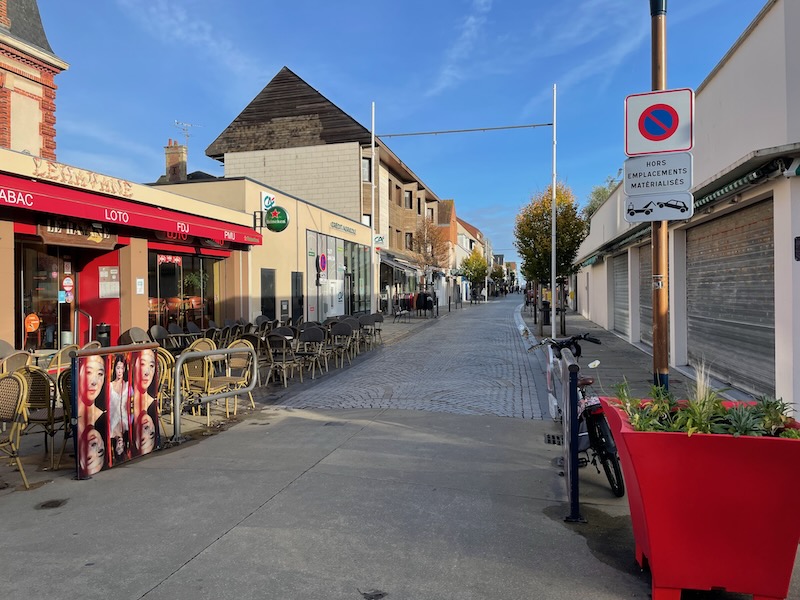 An early start before the shops open in Riva-Bella Ouistreham ©OffbeatFrance
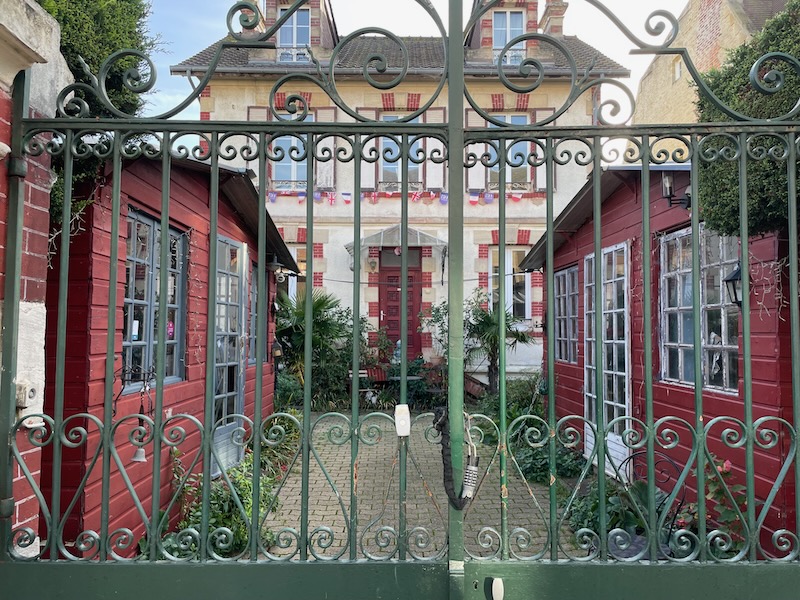 An example of the local architecture ©OffbeatFrance
1. Learn about Ouistreham's coastal heritage
Ouistreham sits at the point where the Orne River and the Caen Canal meet the English Channel, and that convergence is part of its history.
On the one hand, it is a gateway to Normandy's interior and the city of Caen, and on the other, it is a port for fishermen and for daily ferries to Portsmouth, providing an interesting mix between artisanal fisheries and commercial maritime traffic.
In the morning, especially on weekends but not only, a stroll through the port-side fish market will be magnetic, and you won't leave without a bag full of shrimp or scallops or whatever the season requires.
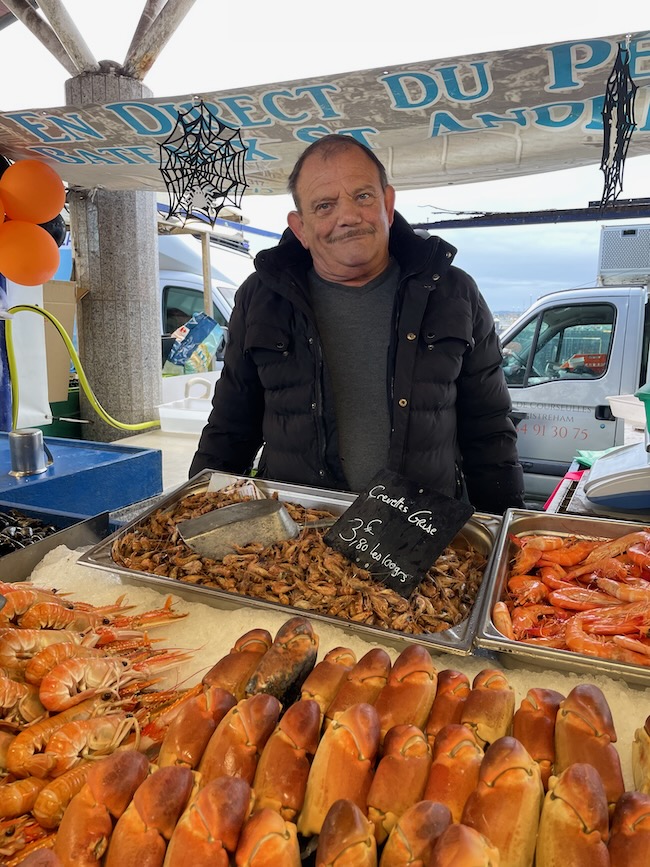 A smile and fresh fish and seafood is what you can expect at Ouistreham's fish market ©OffbeatFrance
Harder to believe is the history carried by this same stretch of land: Ouistreham Riva-Bella finds itself at the eastern end of Sword Beach, where British and French troops landed on D-Day in 1944, fighting their way from the beach, into the dunes and onto the village streets, many of which were damaged during the invasion.
Once the war over, postwar rebuilding fashioned the town into a quiet resort, but much of the earlier street plan remained. So Ouistreham-Riva Bella is both, a place of remembrance, and a seaside resort, and you'll find both standing side by side, memorials along the beach, and restaurants next to former bunkers.
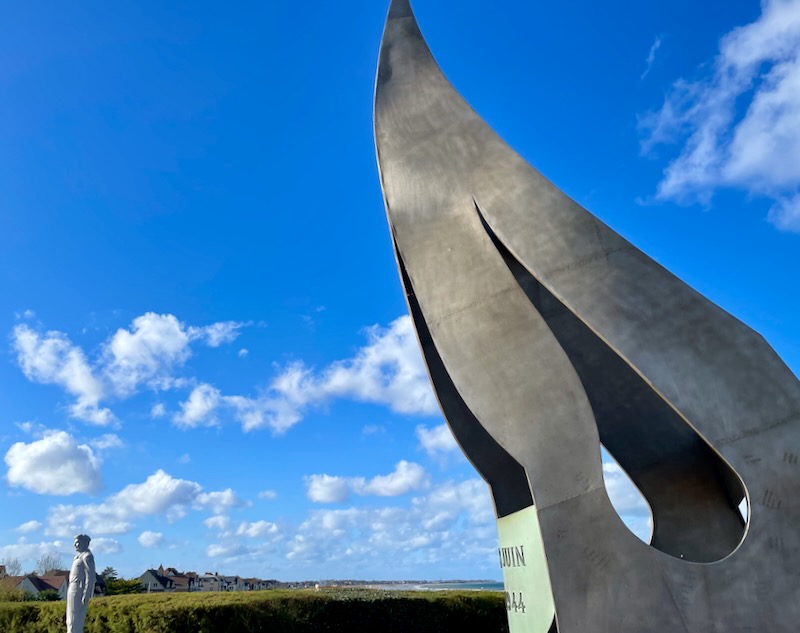 The Flame, one of many monuments to the 1944 Normandy landings you'll find scattered along the beach ©OffbeatFrance
This balance between the war and what came after is often visible along the coast of Normandy, but particularly strong right here, with historic sites nearly overlapping a modern port and picturesque streets.
The older name, Ouistreham-Riva Bella, comes from its 19th-century resort development. Promoters drew on the image of the Italian Riviera to signal a new seaside identity for a community long tied to the river and the sea. The name persists in the beach district and gives a clue to the ambitions that shaped the town before the war.
WHAT'S WITH THE RIVA-BELLA?
In the mid-19th century, it was simply Ouistreham, a small port and fishing village set slightly inland. Then the Caen-à-la-Mer canal opened and maritime traffic increased.
In 1866, as the shoreline gained value, a villa rose on the nearby dunes and its first owner called it Belle-Rive. A few years later, an artist friend rechristened it Riva-Bella, inspired by evenings that reminded him of the Italian Riviera.
The name caught on, first for the villa, then for the expanding line of beachfront homes and bathing facilities that signalled Ouistreham’s metamorphosis into a seaside resort.
Now, both sides of its history are acknowledged by the double-barreled name, the old harbor town on one side, and the resort district of Riva-Bella on the other. But... is it Ouistreham-Riva Bella, or Riva Bella-Ouistreham?
2. Follow the Commandos’ footsteps
At dawn on 6 June 1944, soldiers ran ashore on Sword Beach in the first minutes of the invasion. Among them were the 177 French men of the Kieffer Commandos, integrated into the British No. 4 Commando. They were the only French troops to land that morning, and their role has become central to Ouistreham’s memory of the liberation.
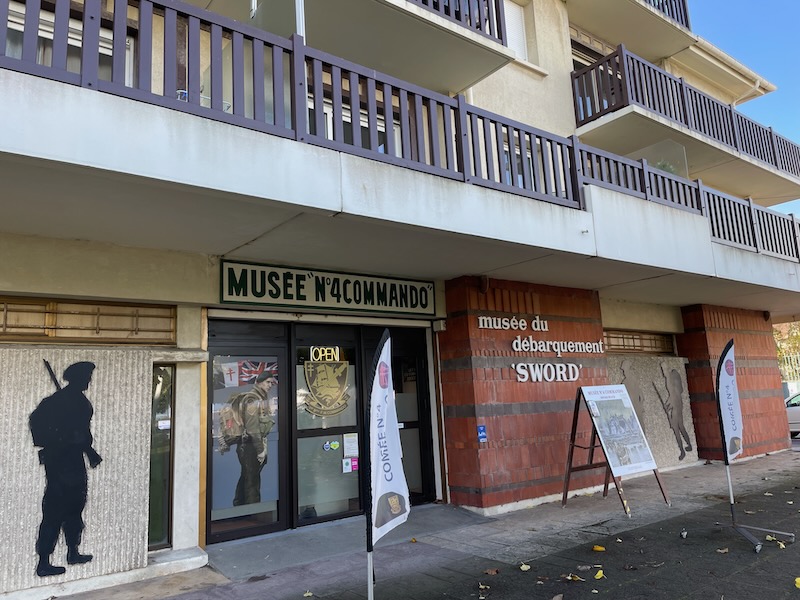 This little museum is unprepossessing on the outside, but absolutely worth the visit ©OffbeatFrance
At the foot of a modest residential building, the Musée du Commando n°4 pays homage to these soldiers and to the Franco-British cooperation that took place at a time when the invasion's success was far from certain.
Opened in 2019, it tells their story through personal mementoes and first-hand accounts. Uniforms, weapons and personal letters, many of which were donated by individuals, show how the unit trained and operated. An even clearer picture comes from the reconstructed bunker which explains how they advanced through German defences.
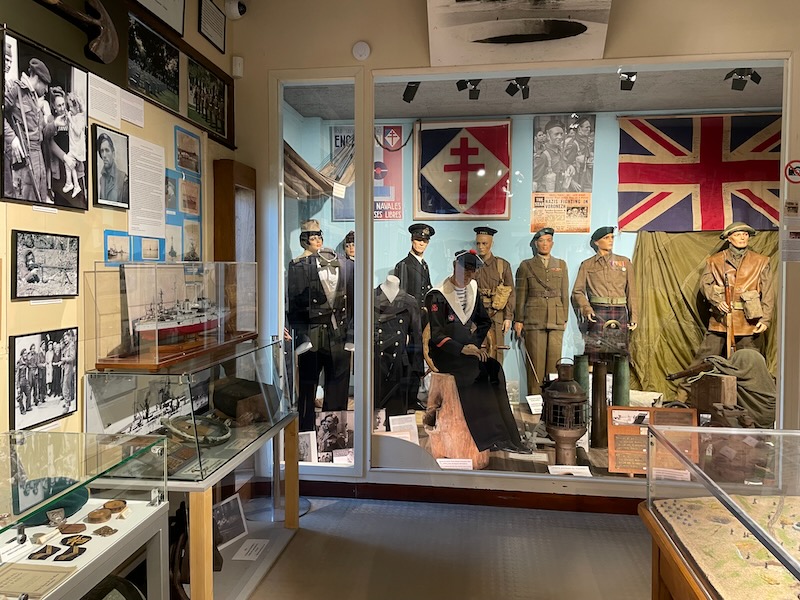 The museum itself is small but its collection is impossible rich for anyone interested in the landing at Sword ©OffbeatFrance
It isn't a large museum, but it's packed with history and absolutely worth the visit if you're interested in either Ouistreham's history or in the French soldiers who took part in liberating their own country. Particularly striking are the visuals that show just how defended the beach was and what obstacles the troops had to overcome to get ashore.
There are several reminders outside nearby – a bronze sculpture of a commando wearing the No. 4's green beret, plaques with the names of those who fell... all this sits close to the beach where they landed, which helps visitors connect the displays inside with the geography of war outside.
3. Explore the Grand Bunker museum
For a village this tiny, you'd think one war museum would be enough but no, there's another, even larger one.
The Grand Bunker stands as a tall concrete block, a rare vertical structure in a landscape where most wartime bunkers sit half-buried in sand and houses are three storeys at most.
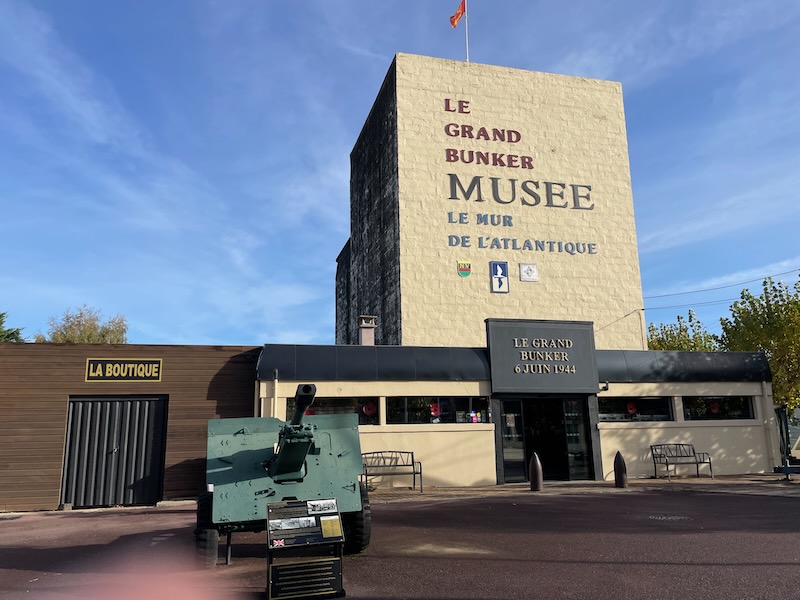 Outside the Grand Bunker Museum of the Atlantic Wall ©OffbeatFrance
The bunker was built by German troops in 1942 to coordinate the Atlantic Wall along this part of the coastline, and its height served a clear purpose: better lines of sight. When you step inside, you enter a space built for war.
Each floor restores part of the original command post:
- the radar room shows how crews tracked approaching aircraft
- the infirmary reveals the cramped setup medics worked in, shelves packed with supplies along a narrow corridor.
- the living quarters have bunks that line the walls next to ammunition crates and field telephones.
The reconstruction follows the bunker’s original layout, and that gives us an idea of how days here would unfold.
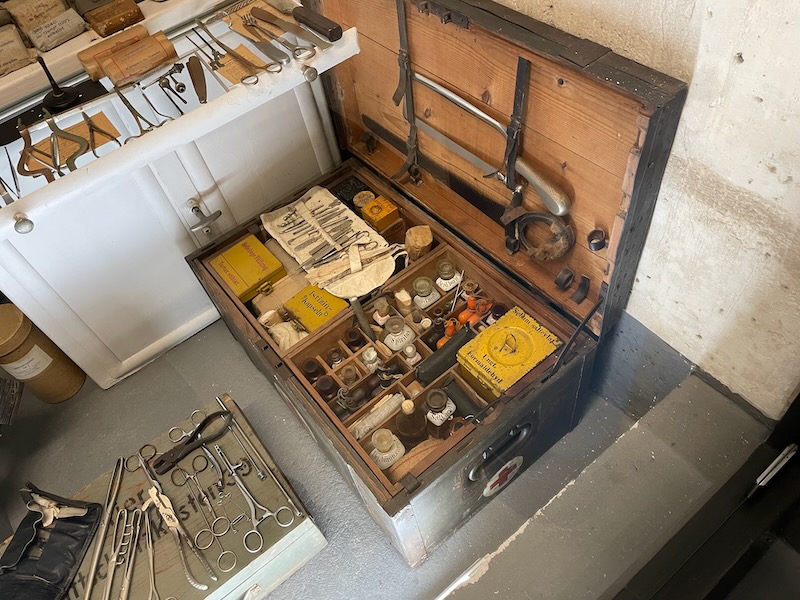
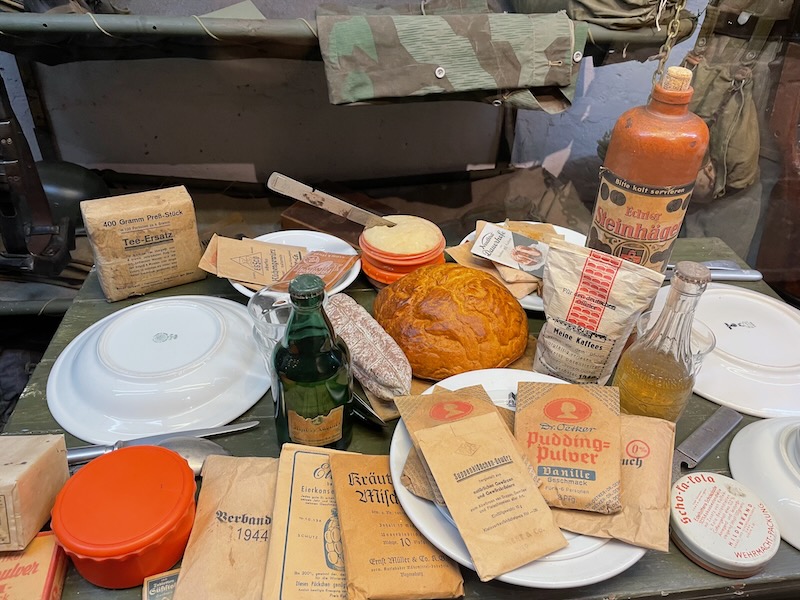 Just a few of the displays at the Grand Bunker Museum of the Atlantic Wall in Ouistreham. Top, medical kit, bottom, food rations ©OffbeatFrance
The climb ends on the roof, where you can see toward Sword Beach and follow the same coastline German officers watched in June 1944 as the Allies disembarked on D-Day.
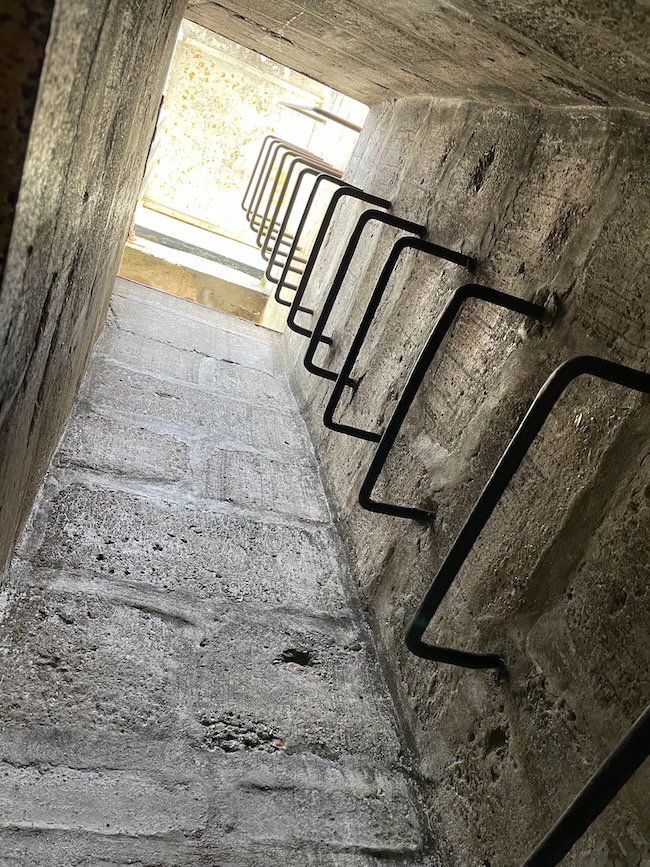 Ladder leading to the rooftop of the Grand Bunker Museum - and you might understand why I decided to forgo the view! ©OffbeatFrance
IF YOU'D LIKE TO VISIT THE D-DAY BEACHES...
Here's my full guide, whether you're driving, using public transportation, or prefer to take a tour.
4. Stroll along the seaside promenade
This is an area of long, broad beaches, with calm seas and few crowds, even in summer. Visiting in winter, I was greeted with sunshine, a breeze, and families walking children and dogs along the water or the long boardwalk, about 3km long (1.8mi).
Just up the coast, in some of the better-known resorts, beaches will be crowded so this is a welcome respite.
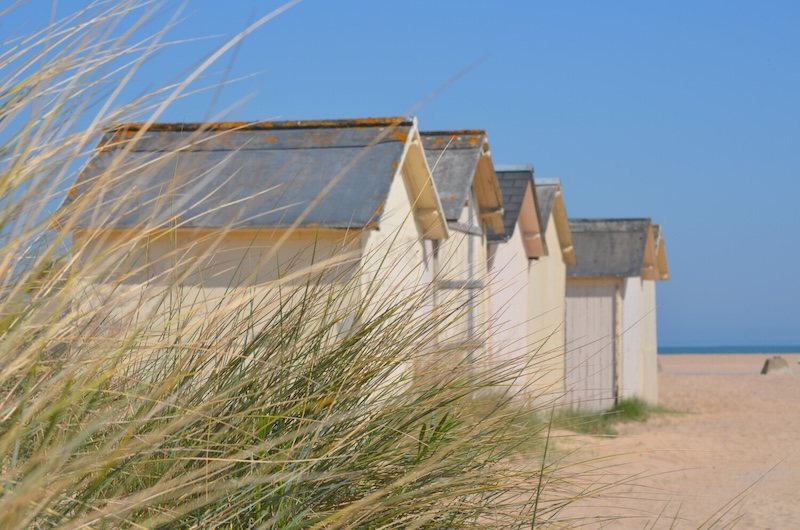 Iconic cabins along the beach at Riva Bella ©Caen la Mer Tourisme
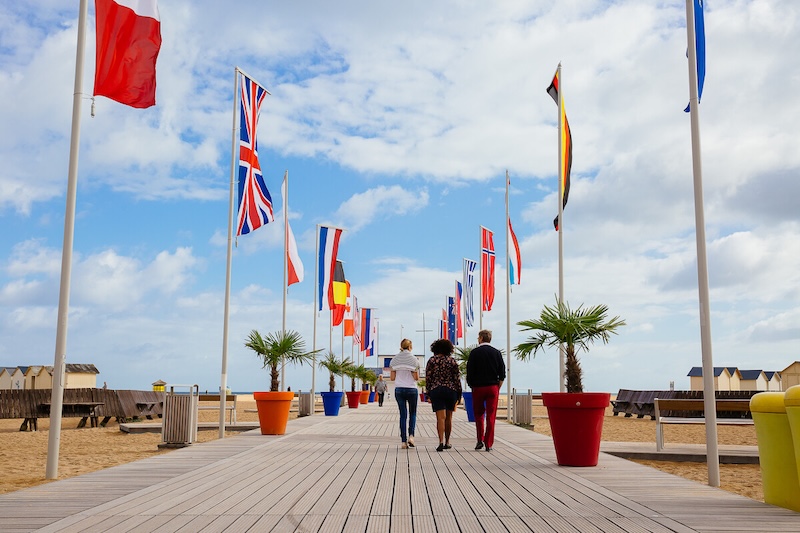 The aptly named Promenade de la Paix (Peace Promenade) along the shore in Ouistreham ©Caen la Mer Tourisme/Les Conteurs
You'll find all sorts of interesting artefacts along the promenade:
- Belle Époque villas that survived the war
- the new casino rebuilt over the ruins of the old German command post
- the iconic beach cabins once used as changing rooms by 19th-century bathers
- wartime monuments in memory of sword beach
If you don't feel like walking, rent a bike: the seafront path connects directly to the Caen Canal towpath, making it easy to continue your walk or ride inland past the canal locks and all the way toward Caen
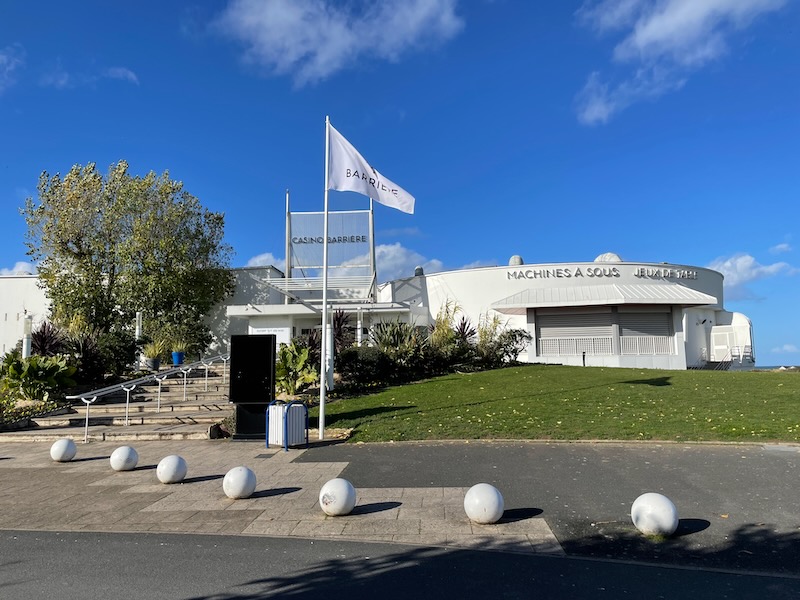 The new casino, rebuilt right on the beach ©OffbeatFrance
5. Take the waters
This, in fact, is what brought me to Ouistreham in the first place. Each year, I visit a French spa for a week of de-stressing and re-energizing, and this year I chose Ouistreham, mostly because I like to try a new place each time.
The Thalazur spa is right on Riva-Bella beach, a beautiful backdrop against which to regain your energy. The seawater and marine mud are used in treatments, which range from massages to shower jets.
Even if you can't go for a week, a day or a weekend will already make a difference. France does, after all, have a tradition of wellness that stretches all the way back to Rome.
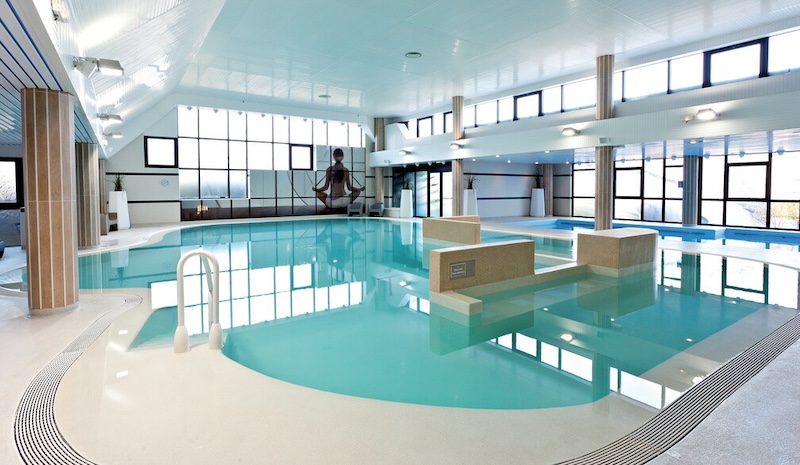 The pool at the Thalazur spa - it's usually a bit more crowded but not very... ©Thalazur
6. Discover the port and the canal
Just when I thought I'd exhausted this small village, I discovered an entire new neighborhood by the port, with cafés and restaurants, a fish market overflowing with seafood, and fishing boats moored nearby heavy with the day's catch.
It's still the sea, but at a different pace. The ferry docks spill out their British visitors daily, turning the port into a bright and busy scene, belying the quiet just across the canal, where families dig for clams at low tide and fishermen prepare nets and repair their equipment.
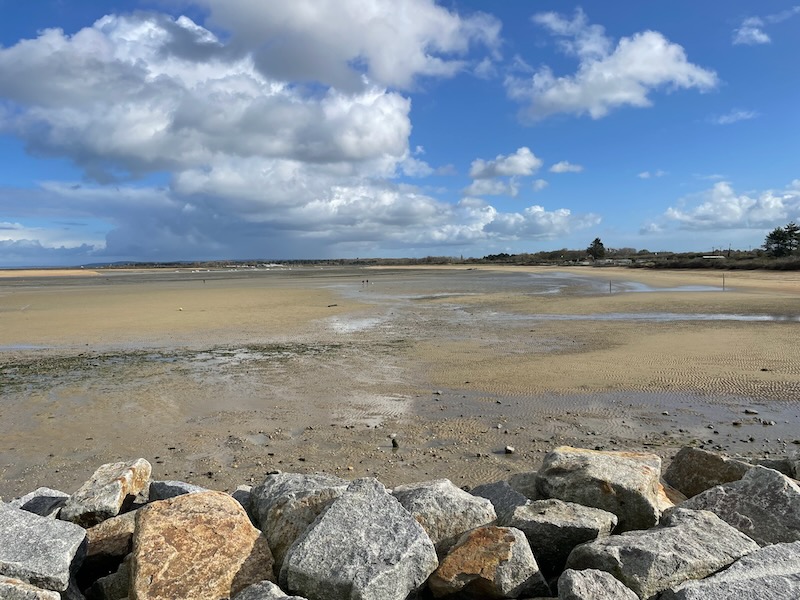 This is behind the port. You can hardly see them in the distance but people are strolling on the beach digging for clams ©OffbeatFrance
To cross the water between the open sea and the Caen Canal means navigating two narrow walkways (well protected) over the locks, providing a clear view of how all the pieces fit together - port, land, canal system.
This is also where you'll find the lovely 38m (125ft) lighthouse, whose 171 steps you can climb in season for a full view of the area.
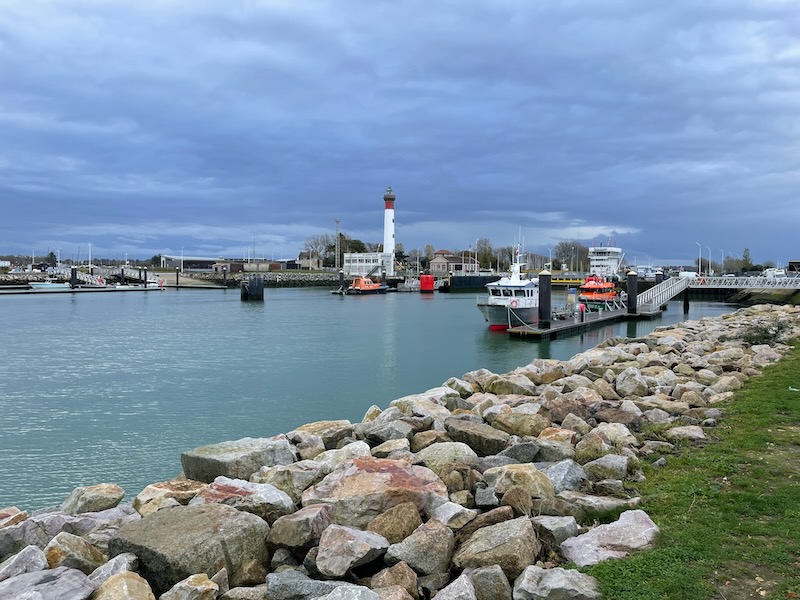 Ouistreham port, with the lighthouse in the distance ©OffbeatFrance
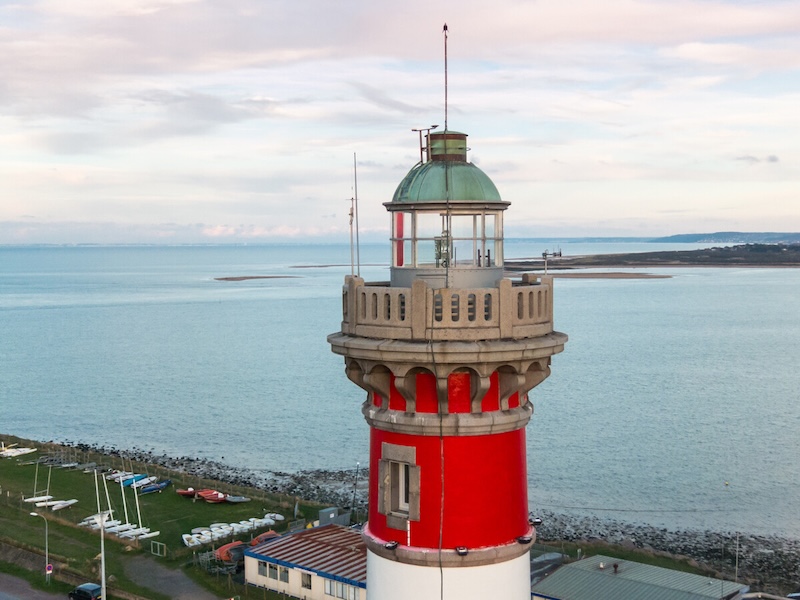 An aerial closeup of the lighthouse. This is the view you'll get from the top ©Caen la Mer Tourisme/Michel Dehaye
This stretch of Ouistreham feels quieter and more local than the beach, a haven for photographers looking for clear lines and changing light. This is also where the canal bike path begins, joining up with others along the coast. It follows the Caen Canal for roughly 15 kilometers, passing small inlets, occasional herons and a steady sequence of bridges as the canal approaches the city.
Keep going and you'll reach Pegasus Bridge, where British glider troops landed before dawn on D-Day in a daring operation to secure this vital crossing before German forces could destroy it.
PLACES TO VISIT NEAR OUISTREHAM
If you'd like to get out of town and visit the environs (there's a lot to see!) here are a few ideas, with their drive times:
- Pegasus Bridge, now displayed at Pegasus Memorial Museum, is the site of the first Allied victory on D-Day (15min)
- Caen Memorial Museum, a world-class WWII museum, a quick bus or bike ride along the canal into Caen (15min outside rush hour)
- Deauville and Trouville, elegant twin beach towns famous for their Belle Époque architecture, boardwalks and great seafood (50min)
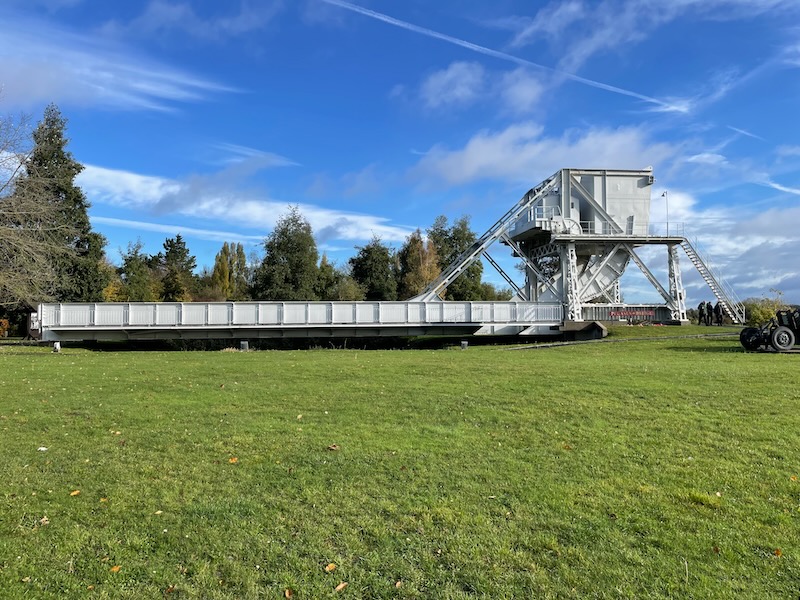 Pegasus Bridge in nearby Ranville was moved and now has its own museum. Here it is, in its entirety ©OffbeatFrance
A few practical considerations
Getting to Ouistreham can be tricky if you don't have a car. It's only a 15-minute drive from Caen, although that can stretch significantly during rush hour. If you're coming by train (a two-hour ride from Paris) you can either catch the Twisto Line 12 bus from the train station or organize a taxi.
For accommodations, I've already mentioned the Thalazur hotel and spa, but there are plenty of other hotels and guest rooms in Ouistreham. You'll find midrange hotels near the seafront and a number of family-run guesthouses in the streets behind the promenade.
It's easy to find good food in Ouistreham: oysters and mussels arrive from nearby beds, and many restaurants serve fish landed on the same wharves you walked past earlier.
- Le Channel is on the harborfront and serves classic preparations; I ordered fish and chips – the fish was excellent, the fries a little less so.
- La Moulerie du Port draws steady crowds for its mussels and I concur. Just make sure you reserve because restaurants can get quite crowded, especially during holidays.
- And if you've had too much seafood (is that even possible?) then head for Mamma Mia, which I did twice, no regrets.
 One of my meals at home, although the restaurant meals outdid themselves as well (I had several) ©OffbeatFrance
Staying in Ouistreham works well if you plan to visit D-Day sites along the coast. You can move between the beach, the museum district and the ferry terminal with little effort, which avoids the pace and traffic of central Caen. My other option for visiting the beaches is Bayeux.
Before you go...
Ouistreham-Riva Bella has an unusual legacy of bridging the past to the present, and history here feels close enough to touch.
It's not a heavy vibe – one minute you're pausing on the beach where the Commandos landed, and the next you're buying fresh scallops right off the boat.
And if you'd like to explore a little further afield, here are a few more Normandy travel ideas.
Did you enjoy this article? I'd love if you shared it!

🇫🇷

Bonjour! I'm Leyla.
Born in Paris and now based in eastern France between Lyon and Annecy, I've spent years exploring the places and stories that explain why France is the way it is.
Offbeat France is for curious francophiles, whether you're planning a trip or simply fascinated by France. Here you'll discover the history behind the villages, castles, traditions, landscapes and everyday details that most visitors notice but few can explain.
Alongside practical travel advice, I share the context that helps you make sense out of France. The more you understand, the more rewarding every visit becomes.
If you finish an article thinking, "I never knew that... now I want to know more," then I've done my job.
Learn more about me!
Read my Substack historical essays
🇫🇷

🇫🇷
Booking.comWhat's New!


-
The Strange Story of Compiegne’s Armistice Wagon
Oct 07, 26 04:08 AM
Discover the strange story of the Compiegne Armistice Wagon, where Germany signed an armistice in 1918 and France signed one in 1940. -
Arras, France: Where Things Are Not What They Seem
Sep 30, 26 04:34 AM
Discover things to do in Arras France, from grand Flemish-style squares to a hidden underground city, a curious citadel and a rebuilt historic center. -
Chateau De Pierrefonds: The Strange Curse Of A Fairy-Tale Castle
Sep 26, 26 02:16 PM
Discover Château de Pierrefonds, a fairy-tale castle in northern France with a turbulent history, spectacular restoration and plenty of strange surprises. -
The Louvre-Lens Museum: How A Former Mining Town Got The Louvre
Sep 21, 26 07:51 AM
Discover why the Louvre-Lens Museum brought the Louvre to a former mining town, plus 11 remarkable works worth the trip from Paris. -
Poitiers in France: Why This Historic City Deserves More Visitors
Aug 02, 26 03:05 PM
Discover the best things to do in Poitiers, France, from Roman ruins and medieval streets to Eleanor of Aquitaine's legacy and remarkable architecture.