Fascinated by Gallo-Roman history? Click Here to download > > > Here are 6 ways Rome affected France





Follow me on
- Home ›
- Destinations ›
- Northern France ›
- Saint-Quentin
Saint-Quentin, France: The Art Deco City No One Talks About
Published 3 July 2026 by Leyla Alyanak — Parisian by birth, Lyonnaise by adoption, historian by passion
Saint-Quentin is one of France's most ambitious Art Deco cities, rebuilt almost from scratch after World War I reduced it to rubble. This guide covers what to see, where to go, and why it belongs on any serious architectural itinerary.
Saint-Quentin sits in the Aisne department of the region once known as Picardy, about 90 minutes north of Paris by train. Most people pass it by, or associate it only with the battlefields that still mark the surrounding landscape. It rarely appears on anyone's France tourism itinerary.
That's a mistake, at least if you care about architecture.
WHERE TO FIND MORE ART AND ARCHITECTURE IN FRANCE
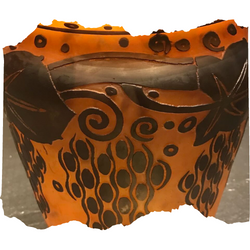
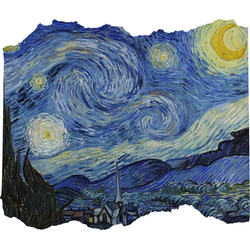
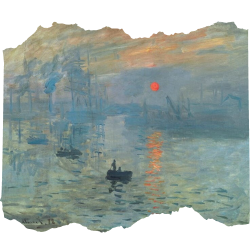

When I decided to visit, it was precisely because I'd heard of its Art Deco heritage. But unlike other Art Deco beacons, like Paris or Reims, Saint-Quentin did not become an Art Deco showcase by choice.
The city was devastated during World War I, requiring a massive rebuilding campaign just as Art Deco was becoming fashionable. The result is a city where cinemas, department stores, private homes, public buildings and even the former train station buffet reflect the style that defined the 1920s and 1930s.
Saint-Quentin has been recognized as a Ville d'art et d'histoire – France's official designation for towns with exceptional architectural or cultural heritage — and its Art Deco concentration is a large part of why.
QUICK FACTS ABOUT SAINT QUENTIN
- Population: approximately 53,000
- Region: Hauts-de-France
- Département: Aisne (02)
- Known for: Art Deco architecture, World War I history
- Historic industry: Textiles, mechanical manufacturing
- Major landmark: Basilique Saint-Quentin
- Status: Ville d'art et d'histoire
- Art Deco count: around 3000 buildings erected in the interwar years
Saint-Quentin's Art Deco history
Saint-Quentin fell to German forces in late August 1914 and remained under occupation for four years. The German Second Army was based here, making the city an important logistics hub. Kaiser Wilhelm II even visited a few times.
Meantime, daily life continued, with the city lodged well behind the front.
In early 1917, all that changed: the Germans decided to build a new defensive position, the Hindenburg Line, and withdrew to it. The new line ran directly alongside Saint-Quentin, which meant the city went from being safely in the rear to sitting on the front line overnight.
The civilian population was cleared out in March 1917 but German forces still held firm. The Allies bombarded it continuously and by the end of the war, their artillery had destroyed 75-80% of the city.
 Entrance to the german commander's office in St. Quentin, 1917 or 1918
At war's end, reconstruction began almost immediately. Architects and planners faced a huge challenge – how to rebuild homes, businesses, public buildings and infrastructure as quickly as possible.
A new urban plan, drawn up by architect Paul Bigot in 1919, guided the reconstruction, at precisely the moment Art Deco was emerging as the dominant architectural style in France.
Not every building followed the new style. Some were rebuilt in neoclassical or regional styles, others were restored to their pre-war appearance, but Art Deco took hold from around 1923 onwards and never really let go.
As a result, some 3000 Art Deco buildings went up during the interwar years.
WHAT NOT TO MISS IN SAINT-QUENTIN
- The Art Deco walking route through the city center — pick up the free map from the tourist office before you start
- The former station buffet (Buffet de la Gare), one of the finest Art Deco interiors in northern France, accessible by guided tour (tourist office again)
- The council chamber inside the Hôtel de Ville, a complete 1925 Art Deco interior hidden behind a Gothic Flamboyant façade — guided tour only
- The Casino building on rue du Général Leclerc, with its Comedy and Tragedy faces watching from the roofline
- The Basilique Saint-Quentin and its medieval floor labyrinth, one of very few surviving in France
- The war memorial, partly the work of Paul Landowski, sculptor of Christ the Redeemer in Rio de Janeiro
More than a century later, Saint-Quentin remains one of the best places in France to see Art Deco architecture, and also one of the least visited.
Art Nouveau or Art Deco?
Art Nouveau, which flourished around the turn of the 20th century, drew heavily on nature, with its curving lines and vegetation.
Art Deco followed, in part as a reaction to all that organic decor. Flowers became geometric, and curves turned into straight lines. Modernity replaced nature as the goal.
Art Deco's designers also integrated more influences than Art Nouveau had – Cubism, ancient Egypt, African art and the harmony of East Asia all left their marks.
If you've visited Nancy and its Art Nouveau architecture, Saint-Quentin offers a chance to see how French architecture evolved from one movement to the next.
 This provides a clear example of the difference between Art Nouveau and Art Deco
What to look for
One of the pleasures of walking through Saint-Quentin is learning to recognize Art Deco details.
Look for stylized roses carved into façades. Notice the geometric patterns decorating balconies and doorways. Many buildings feature strong vertical lines designed to make structures appear taller and more modern.
 The town of Saint Quentin uses Art Deco-influenced styles for its public works, like these street railings ©OffbeatFrance
Other common features include:
- Decorative ironwork with spirals and geometric motifs
- Bow windows projecting from façades
- Mosaic decoration
- Cut corners (pans coupés)
- Fan and sunburst motifs
- Highly stylized flowers and foliage
One thing worth knowing before you start: the painted decoration you'll see on many façades – pink roses, green foliage – is not original. Art Deco was more into contrasts between materials than color.
In line with the current restoration policy, paint has been added to help visitors notice the details, and it works, but doesn't necessarily align with the spirit of the Art Deco movement.
 Here's a case in point - color used to highlight Art Deco elements ©OffbeatFrance
The tourist office produces a free Art Deco brochure and walking map (download) of the city center, which is worth picking up before you start. It marks the main façades and gives enough context to make sense of what you're seeing.
In the footsteps of Saint-Quentin's Art Deco
The obvious place to start is the Grand Place, dominated by the Hôtel de Ville.
The building itself predates Art Deco by quite a few centuries – its Gothic Flamboyant façade was finished in 1509, decorated with more than 170 sculptures ranging from civic scenes to figures that are, depending on your tolerance for medieval humor, either fantastical or outright rude.
The carillon tower above it houses 37 bells that ring every 15 minutes... it's remarkable this structure survived World War II, given what happened to the rest of the city.
 This is a study in contrasts: behind the 16th-century Gothic Flamboyant façade, the council chamber hides a complete Art Deco interior, rebuilt in 1925 ©Destination Saint Quentin/Luc Couvée
Inside, you're in a different era altogether: the council chamber was rebuilt in pure Art Deco style in 1925 and is one of the most complete interiors of its kind in the city. It's only accessible on a guided tour bookable through the tourist office, but it's worth the effort.
 And inside, a fabulous Art Deco council room ©OffbeatFrance
From the Grand Place, head along rue de Lyon to find the post office. Its interior features mosaics with Cubist influences highlighting the growth of communications and transport.
 Outside Saint Quentin's Art Deco post office ©OffbeatFrance
 Inside Saint Quentin's post office. This one of several examples in the city where the decoration tells you something specific about the building's function ©OffbeatFrance
The music conservatory nearby is another to look for, particularly in the evening when its illuminated bow windows make it hard to miss.
On rue du Général Leclerc, the former Casino cinema should stop you in your tracks.

Built in 1929, it was put up by a local family who had reinvented itself several times since the war, first as hardware merchants, then as brickmakers when reconstruction created insatiable demand for building materials, then finally as cinema owners when it became clear that entertainment was what a traumatized city needed most.
Despite the trauma, the city was driven by a fierce instinct to live, not only by escaping into films but also the dances and concerts hosted at the Casino.
 A better view of those two faces ©Destination Saint Quentin/Luc Couvée
At the very top of the building, two large faces look down over the street: Jean-qui-rit and Jean-qui-pleure, Comedy and Tragedy, watching over the crowds who once came for the shows.
The building closed in 1970 and had several afterlives – most recently as a furniture store – before being restored and reopened as a community center. The interior is only accessible on guided tours, but the façade alone is worth the detour.
Its soaring vertical lines and geometric decoration capture many of the defining characteristics of the Art Deco movement.
A few streets away on rue de la Sellerie stands the Palais de l'Art Déco, the former Nouvelles Galeries department store, with two monumental atriums framed by Egyptian-style columns, forged iron banisters, painted stucco decoration and a glass roof letting light pour through.
The building is currently being converted into a hotel.
The station buffet
My absolute favorite Art Deco venue in Saint-Quentin (and one of the city's finest Art Deco interiors) is next to the railway station, which survived World War I because of its logistical importance only to be destroyed by fire in 1922.
It was replaced by an elegant complex that included a buffet de la gare, designed during the height of the Art Deco period, and now listed as a historical monument which you can visit on a guided tour. If you love Art Deco, this is one absolute "must-see".
The interior is stuffed with incredible detail, the kind of place where you keep noticing things. A few worth looking for:
- The walls of the main room are covered floor to ceiling in grey glass-paste mosaics with gold tessellations, the curves reminiscent of vegetation or fish scales.
- The stained glass panels were designed by Auguste Labouret, who used more than 20 types of industrial glass in different textures to design stylized flowers. He based the design on a motif he had already used at the Hôtel Lutetia in Paris and then made his own. The guide who showed me around called it plagiarizing himself, which seems fair.
- Two large mirrors facing each other above the serving counters bounce natural light around the room.
- The floor mosaic is a star pattern in black and white ceramic with grey and yellow fill pieces – dazzling.

 Top: mosaic floor of the Buffet de la Gare; above, the famous stained glass windows ©OffbeatFrance
 What the buffet looked like then, taken from an old photograph, one of many filed away in a binder in the buffet
The War Memorial
The war memorial almost never became one.
The original design was for a monumental classical portico – impressive, but not necessarily commemorative.
The city debated for years about where to place its war monument, and eventually the portico became it, growing over time into a broader complex now called Les Allées du Souvenir, where memorials to multiple conflicts are remembered together.
The imposing monument was created by sculptor Paul Landowski, best known for Christ the Redeemer, the statue overlooking Rio de Janeiro, and Henri Bouchard, who later worked on the decoration of the ocean liner Normandie.
The names of 1361 civilian and military victims are carved into its ten columns. Several bas-reliefs depict the trenches, the 1917 evacuation, and earlier sieges of the city going back to 1557.

 Top: a view of the monument; above: a closeup of the bas-relief ©OffbeatFrance
More than Art Deco
Art Deco architecture is its main draw, but Saint-Quentin has other cultural attractions to entice you.
The basilica
The Basilique Saint-Quentin dominates the historic center and is hard to miss – it's the size of a cathedral, even though it never became one.
Construction began in the 12th century and continued, on and off, for 300 years, which means the building contains almost every variety of Gothic architecture from early to Flamboyant.
The façade that was originally planned (two towers, as on a standard Gothic cathedral) was never built for lack of funds, so it has a bit of an unfinished quality that is now simply part of its character.
 The Saint-Quentin Basilica, not cathedral ©Destination Saint-Quentin/Luc Couvée
The basilica was damaged during World War I, and took until 1956 to restore. That gap of more than a decade left traces: the stained glass is a mix of surviving medieval and Renaissance windows alongside Art Deco replacements. It's unusual but worth looking for, the contrast is quite striking and one of the more interesting things to trace as you walk through.
 One of the Art Deco stained glass windows at Saint Quentin Basilica ©OffbeatFrance
The basilica also contains a medieval labyrinth cut into the floor, dating from 1495 and original to the construction of the nave.
It was used as a symbolic pilgrimage by the faithful who couldn't make the journey to Jerusalem during the Crusades.
By the time the nave was built in the 15th century, the chapter no longer had the funds for the façade originally planned, with its three porches and two towers, and instead attached the new construction to the porch tower of the earlier Carolingian church.
 The labyrinth at Saint-Quentin Basilica ©OffbeatFrance
The organ, meanwhile, is the second largest in northern France after Notre-Dame de la Treille in Lille, with four keyboards and 6,430 pipes.
Free concerts are held regularly as part of Les Orgues de l'Aisne, a département-wide programme – worth checking the schedule before you visit.
The building has one other architectural quirk worth noting. Most Gothic churches follow a Latin cross plan — one transept crossing the nave. The Basilique Saint-Quentin has two, like a Lorraine cross. It's an unusual layout.
The marais d'Isle
Right next to the railway station, and therefore easy to visit either at the start or end of the day, you'll find a huge wetland right in the middle of the city: the Réserve Naturelle du Marais d'Isle.
It's a genuine nature reserve, not a manicured park: 47 hectares with 176 species of birds, reed beds, marked walking trails and the option of guided tours on a traditional boat, along with some nice spots for an afternoon or evening drink.
Along the edge of the reserve, a public footpath runs alongside the wilder sections, with two small animal parks and the Maison du Parc, a small interactive museum, all accessible without entering the protected zone.
PRACTICAL INFORMATION
- Getting there: Direct trains run from Paris Gare du Nord to Saint-Quentin in around 1 hour 20 minutes. Several services a day, including low-cost Ouigo options if you book ahead. The station is about 15 minutes on foot from the Grand Place, and the city center is compact enough to cover entirely on foot.
- How long to stay: A full day is enough for the main Art Deco sights and the basilica. Two days gives you time to book the guided tours (station buffet, Hôtel de Ville council chamber, Casino) and explore the marais d'Isle nature reserve at a less rushed pace.
- Where to stay: I stayed at a lovely guest house a block from the main square, La Filature. The city center is small enough that most hotels put you within easy walking distance of everything.
- Where I ate: My hands-down recommendation is Chez Jean, located in a classic Art Deco building a block from the Basilica – excellent, friendly, and Jean himself is in the kitchen. Good for an evening drink is La Java, a casual fusion restaurant at the water's edge in the Parc d'Isle.
- Best for: Travelers interested in architecture or Art Deco specifically, WWI history, and anyone looking for a low-key day trip from Paris that isn't on everyone else's list.
Did you enjoy this article? I'd love if you shared it!
🇫🇷

Bonjour! I'm Leyla.
Born in Paris and now based in eastern France between Lyon and Annecy, I've spent years exploring the places and stories that explain why France is the way it is.
Offbeat France is for curious francophiles, whether you're planning a trip or simply fascinated by France. Here you'll discover the history behind the villages, castles, traditions, landscapes and everyday details that most visitors notice but few can explain.
Alongside practical travel advice, I share the context that helps you make sense out of France. The more you understand, the more rewarding every visit becomes.
If you finish an article thinking, "I never knew that... now I want to know more," then I've done my job.
Learn more about me!
Read my Substack historical essays
🇫🇷

🇫🇷
Booking.comWhat's New!


-
Poitiers in France: Why This Historic City Deserves More Visitors
Aug 02, 26 03:05 PM
Discover the best things to do in Poitiers, France, from Roman ruins and medieval streets to Eleanor of Aquitaine's legacy and remarkable architecture. -
Limoges, France: Much More Than Porcelain
Jul 25, 26 09:14 AM
Limoges France is more than porcelain. Discover medieval streets, enamel masterpieces and centuries of history. -
Saint-Quentin, France: The Art Deco City No One Talks About
Jul 15, 26 05:31 AM
Saint-Quentin France rebuilt itself in Art Deco after WWI left it in ruins. It's now one of France's most striking architectural cities. -
Visiting France In A Heatwave: What You Need To Know
Jun 26, 26 12:45 PM
Visiting France during a heatwave? Learn how to stay cool and enjoy your trip despite the heat. -
Angoulême: From Medieval Stronghold To France's Capital Of Comics
Jun 26, 26 12:44 PM
Medieval streets, a Romanesque cathedral, five centuries of papermaking, and giant comic murals. Angoulême surprises most visitors.