Fascinated by Gallo-Roman history? Click Here to download > > > Here are 6 ways Rome affected France





Follow me on
- Home ›
- Destinations ›
- Northern France ›
- Citadelle d'Arras
Arras Citadel: The Beautiful Fortress That Was Never Attacked
Published 28 September 2026 by Leyla Alyanak — Parisian by birth, Lyonnaise by adoption, historian by passion
This is the story of the Arras Citadel, why it was built, and what happened after its military days ended. You'll know what to look for when you visit and find a few surprises you might not expect in a former military barracks.
They call it La Belle Inutile, the Beautiful Useless, and that's because it was built at great expense but never had to withstand the siege or assault for which it was designed.
But calling it useless misses the point. The Citadel is one of the most intriguing places in the northern city of Arras, a vast military complex that shows us a very different side than the city's famous squares.
ALSO IN NORTHERN FRANCE

When Louis XIV ordered it built in 1668, Arras had only recently become part of France. For centuries, Arras had belonged to the Spanish Netherlands, and the change of allegiance had not exactly won everyone over.
The king's military engineer, Vauban, was charged with turning it into a stronghold on the kingdom's northern frontier, but the Citadel had another purpose too: keeping a close eye on the people of Arras.
They were newly French: could their loyalty be trusted?
So the Citadel would not only protect Arras from an enemy outside its walls, but possibly from the population within. Arras had been French for less than 30 years, after all.
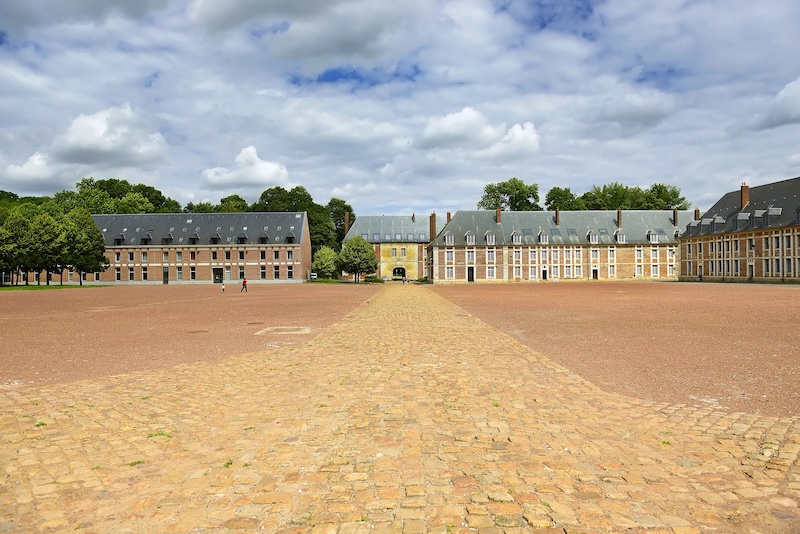
What emerged from two years of construction was not simply a fortress but a small military town, with barracks, officers' quarters, a chapel, an arsenal, powder magazines and accommodation for some 1500 soldiers.
Vauban cleverly made use of the local waterways: the Citadel was built where two streams met, and the surrounding area could be flooded in the event of an attack.
Today, the Citadel is part of the UNESCO World Heritage Site “Fortifications of Vauban,” listed in 2008 as a group of 12 fortified sites. It is massive, about 30 hectares (74 acres), and contains 15 buildings from the 17th century.
NOTE: Arras has two UNESCO World Heritage sites within the city itself: its famous belfry and Vauban's Citadel. Across the wider Arras area, the number rises to nine, including several World War I remembrance sites.
What to look for in the Citadel
Five sites around Arras were considered before the king settled on this one, including the Grand Place. The people of Arras must have been relieved when Louis XIV decided not to tear up their beloved main square to build his fortress.
To visit, start at the Porte Royale and walk into the Citadel – you'll see the gates don't lead straight in, and the road bends and twists, making it difficult for an attacking army to charge straight through the entrance.
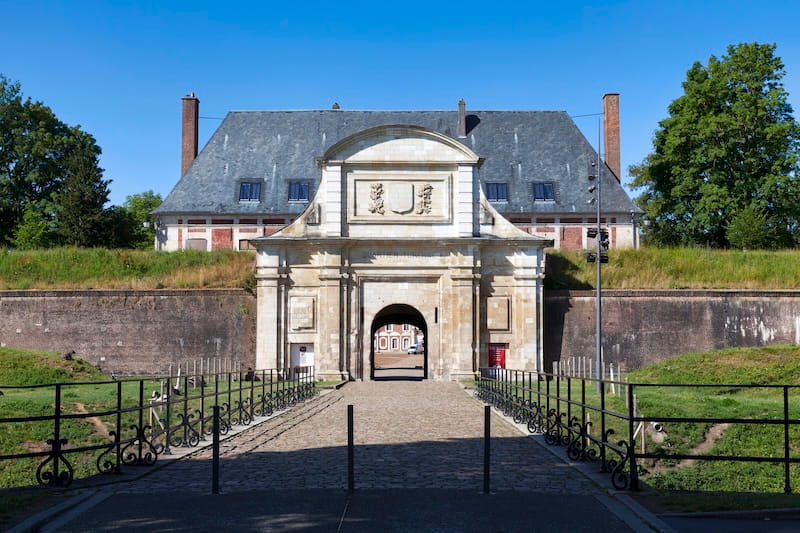 The Porte Royale entrance to the Citadel
The same applies around the walls. The sharp angles gave defenders a clear view along the ramparts and eliminated the blind spots that had made older fortifications vulnerable. Vauban didn't invent the star-shaped fortress, but he refined the design and added massive earthworks that could absorb cannon fire.
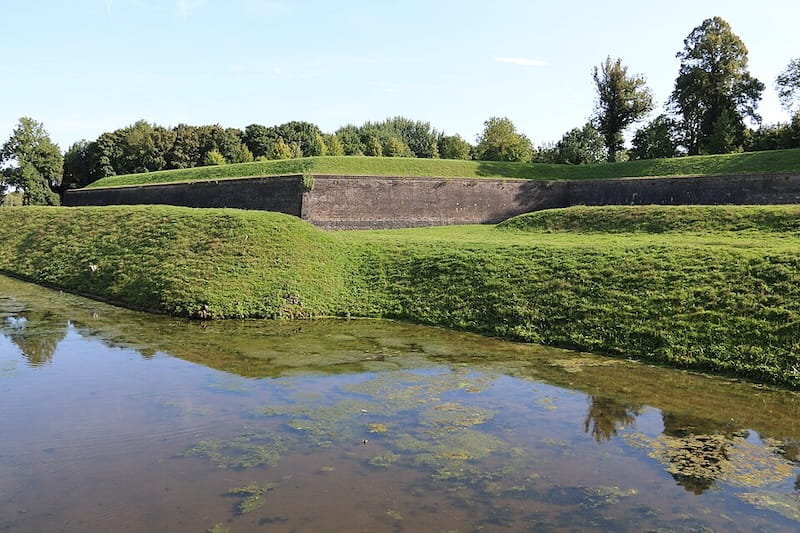 The walls of the Citadel, designed to repel invaders FrDr, CC BY-SA 4.0, via Wikimedia Commons
Everything was designed to repel attackers - as you would expect in a defensive fortress.
These days, the complex appears peaceful, with grassy gardens and plenty of open spaces that would in past have left the enemy exposed.
If you need a better sense of what it all looked like, stop at the Salle des Familles near the Porte Royale, where a model and historical exhibition explain the Citadel.
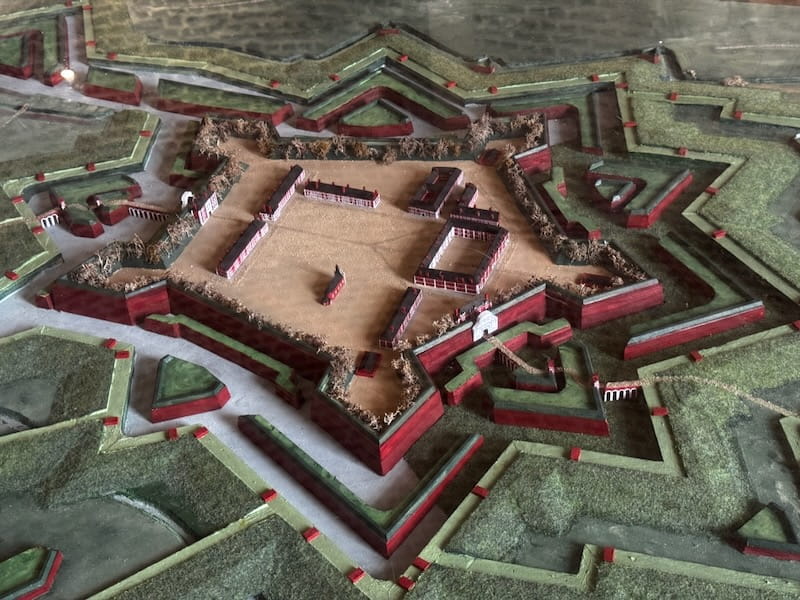 This small-scale model provides a clear vision of what the Citadel looks like and how well the defences are built ©OffbeatFrance
More than a fortress, a military town
The Citadel adopted a new approach: a full military town with living quarters for some 1500 soldiers. In the past, soldiers would have probably lodged with local families, who were responsible for feeding and housing them.
By building proper barracks, the king made military life more orderly while strengthening military logistics.
The barracks were divided into small apartments, with sleeping quarters for three or four soldiers at a time and a stove. They got their food from a separate canteen but with no dining room, they ate their meals back in their rooms.
Officers had separate (and better) accommodation, and cavalry was housed nearby in the Schramm district, with stables for up to 1200 horses.
The buildings changed with time and over the next three centuries would be adapted as warfare developed. For example, you can see the ceiling marks left by the antennas of military vehicles that once passed through, not something that could have been conceived in the earlier design.
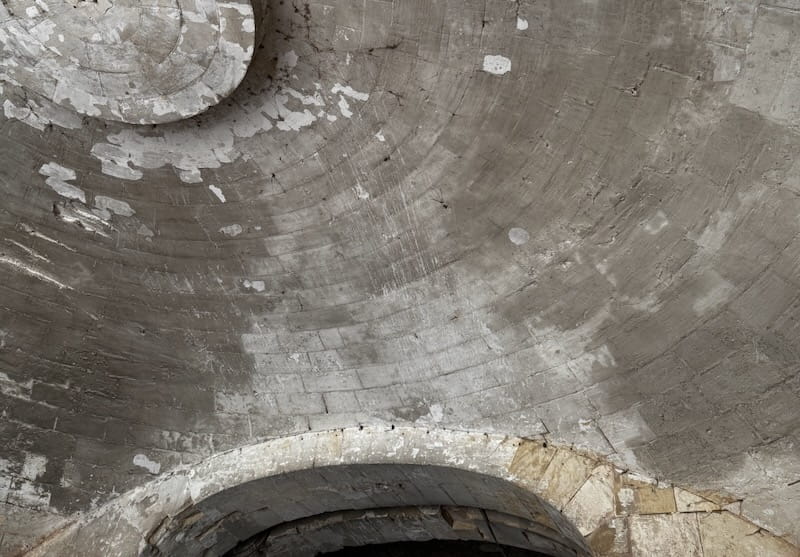 Those scratches you see are from the antennas of our more modern vehicles as they made their way through low entrances ©OffbeatFrance
And while the Citadel was never under siege, it wasn't immune to modern warfare: German bombardments during World War I damaged several of its buildings, including the Arsenal. Repairs to the brickwork are still visible in places if you look closely.
One of the buildings also has a rather more dramatic story. The Major building, just inside the Porte Royale, was destroyed by fire during a wedding in 1903. Soldiers from the surrounding barracks rushed to help people escape, but the bride was badly burned, the story dramatic enough to make the national press. The building was eventually rebuilt...
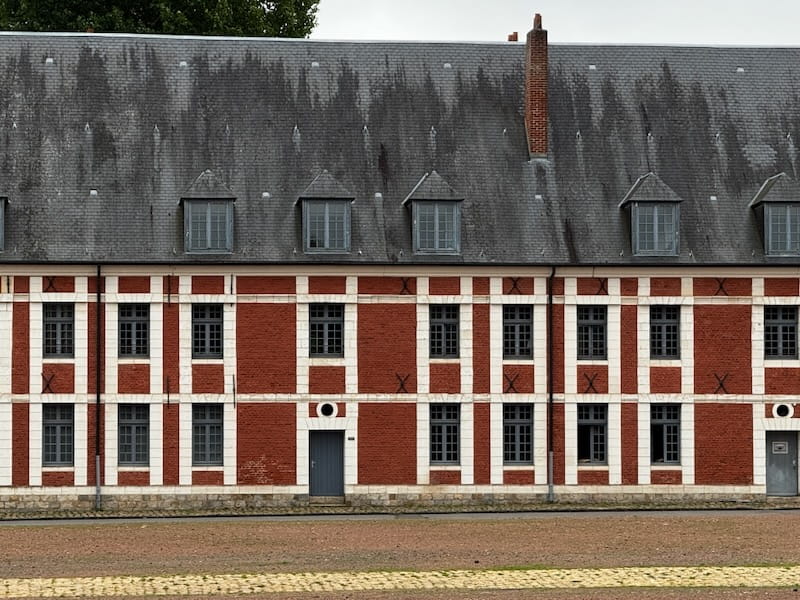 Modernized quarters, but not too far from the original which burned down during a wedding in 1903 ©OffbeatFrance
As I walked through, I could see that while the Citadel was a defensive fortress, it was also a place in which people lived and worked.
The Arsenal and the powder magazine
Look at the Arsenal for some wonderfully classical military decoration: columns shaped like cannons and cannonballs on the façade. The building housed the governor as well as weapons, ammunition and equipment.
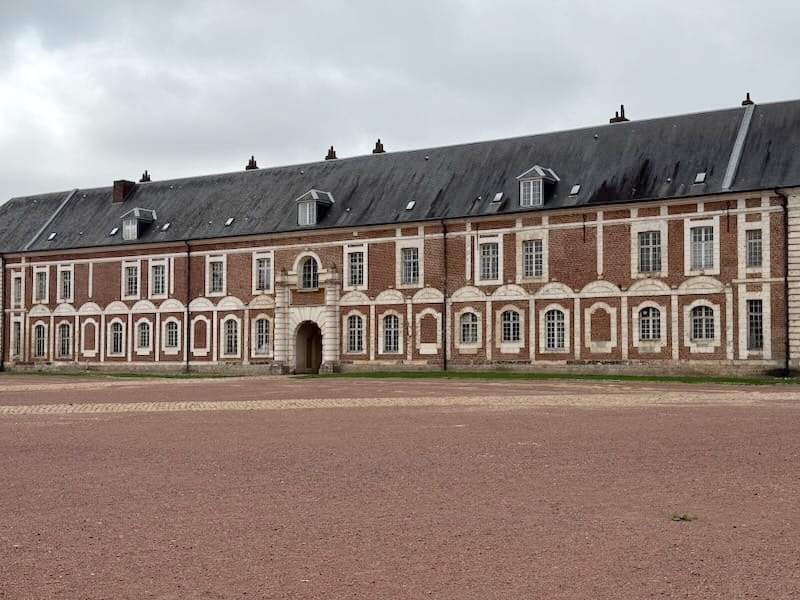 The Arsenal at the Citadel ©OffbeatFrance
One of the Citadel's governors was Pierre de Montesquiou d'Artagnan, a real cousin of Charles de Batz de Castelmore, the musketeer who inspired Alexandre Dumas's d'Artagnan.
Then find one of the poudrières, or powder magazines. These partly buried buildings were designed to keep gunpowder dry and, if the worst happened, contain an explosion.
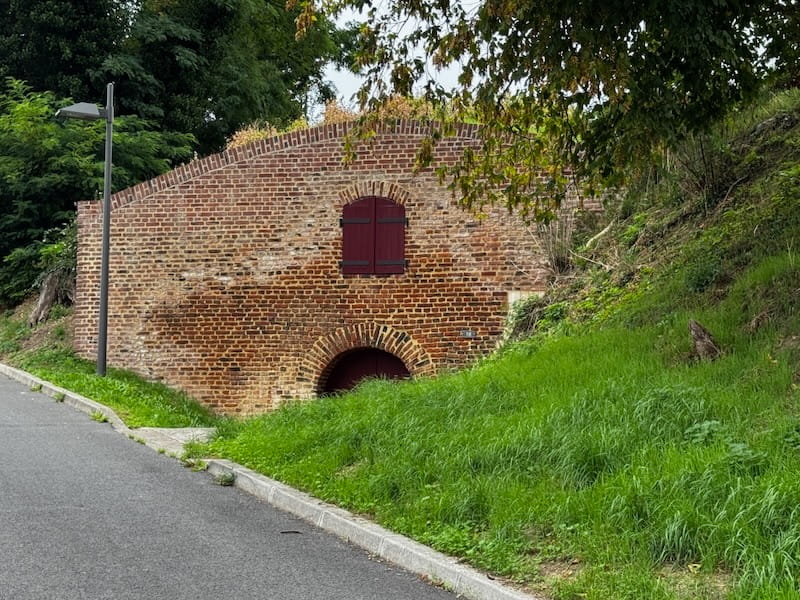 This former powder magazine is now a cheese factory ©OffbeatFrance
Gunpowder barrels were kept above the damp floor on wooden platforms, and soldiers entering the magazine had to remove their nailed footwear and wear wooden clogs to reduce the risk of sparks.
Metal fittings were avoided wherever possible. There could be no open flame, either, so mirrors and light wells were used to bring daylight into the building.
Today, some of those old powder magazines have an entirely different job: La Finarde uses their vaulted caves to age the local cheese, Coeur d'Arras. Another poudrière, meanwhile, has become a data center.
Saint-Louis Chapel
The Saint-Louis Chapel was built for the soldiers stationed at the Citadel. It is the oldest surviving religious building in Arras and one of the city's few remaining examples of Baroque architecture.
Its architecture is a mix of French Classicism and Flemish Baroque details, including the distinctive scroll-shaped decorations that you will also see on houses around the city's squares. Look up at the façade for a medallion of Louis XIV on the left, with a later medallion of Napoleon III on the right (you'll have to take a closer look when you visit!)
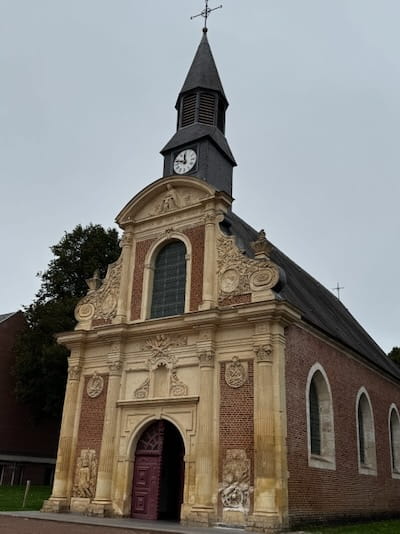
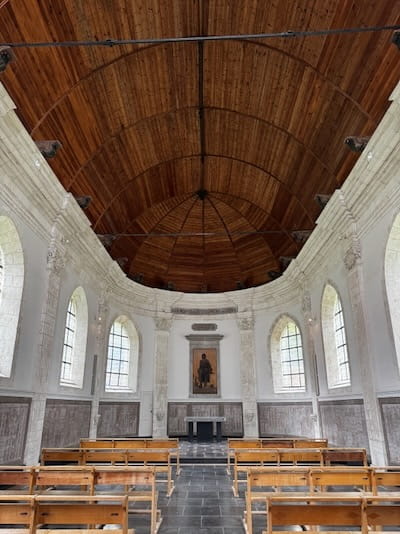
The chapel has had several lives.
During the French Revolution it was desacralized and used for military purposes, and later became a gym. It regained its religious use under Napoleon III, and the emperor's portrait was hung where a portrait of Saint Louis used to be.
Then came the Franco-Prussian War of 1870. Soldiers angry with Napoleon III damaged his portrait and attacked the face. The damage was never completely erased, leaving a physical trace of the anger around the emperor's downfall.
At the back of the chapel is a painting of a World War I soldier, while some 4000 names are inscribed on white marble plaques around the walls, commemorating soldiers of the military and engineers who died in conflicts from 1914 onward.
Don't miss the Mur des Fusillés
During World War II, the Citadel's history took a somber turn as German forces used it to execute prisoners. The Mur des Fusillés commemorates members of the Resistance who were shot here.
In total, 218 Resistance fighters were executed here between 21 August 1941 and 21 July 1944, aged 16 to 63. They included French, Polish and other Eastern European nationals, and many had worked as miners before joining the Resistance. Those tried by the German tribunal in Arras were imprisoned at the Citadel before being taken to the ditches and executed by firing squad.
Some residents of Arras hid in the vegetation near the execution site and secretly photographed the shootings. After the war, local residents recovered the bodies and helped return them to their families.
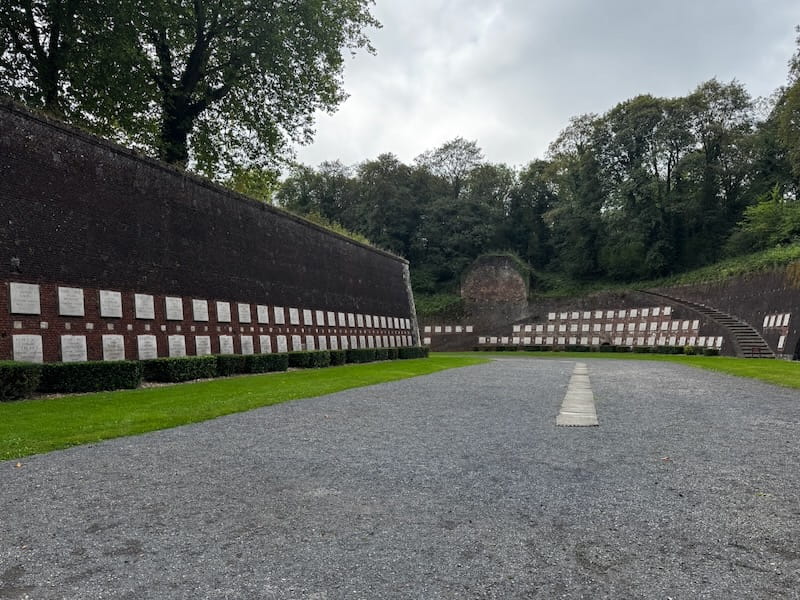 The 218 memorial plaques, one for each Resistance member executed at the Citadel between 1941 and 1944 ©OffbeatFrance
Read the plaques. They record each victim's name, date of birth, date of death, place of arrest and occupation, as well as their Resistance affiliation or role. These included the Francs-tireurs, the Partisans français, the Front National and people working with the British War Office to maintain links between Britain and the French Resistance.
It is a very different experience from standing on the ramparts and looking at Vauban's defensive works, but both were shaped by war.
Why “La Belle Inutile”?
If the Citadel is known as la Belle Inutile — the Beautiful Useless – it is because it never had to fulfil the role for which Vauban built it. Not only did it avoid attack, but it also happened to stand on the second line of the pré carré – Vauban's defensive border – rather than directly on the frontier.
But “useless” isn't quite fair.
The Citadel's military vocation lasted more than three centuries, until 2010, and its end presented the city with a major challenge: what to do with this huge complex.
The Citadel and land around it was purchased by local authorities who set out a redevelopment plan that would turn it into civilian use rather than simply preserve it as a monument.
The plan divided the new district into four broad uses: offices, housing, nature and leisure, and gastronomy.
Today, it is pretty much a town within the town: former military buildings contain homes, offices and businesses, while the surrounding grounds are filled with paths for walking through the former defensive landscape while enjoying the greenery. So yes, you can actually live in some of the Citadel's 17th-century buildings, and more redevelopment is planned.
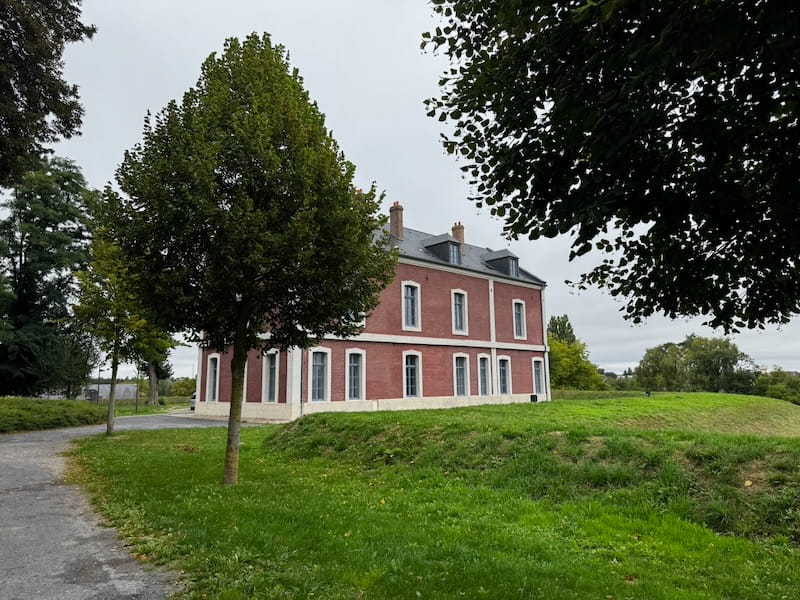 Military building turned into fashionable apartments ©OffbeatFrance
It's a strange fate – a fortress that never fought a battle, and yet survived not as a military monument but as part of a major city, moving with the times.
PRACTICAL INFORMATION
- Getting there: Arras, the Pas-de-Calais department of the Hauts-de-France region, is less than an hour on the high-speed TGV line from Paris Gare du Nord. It's a ten-minute walk downtown but you can also hop on the free shuttle, La Citadine.
- How long to stay? You can see the main sights in the historical center in a day, but a second day would also give you a chance to visit some of the less usual venues, especially those underground or those outside town, like the Canadian memorial at Vimy.
- Where to stay: I stayed at the very welcoming Mercure across from the train station (I arrived at the end of a long day) but you'll also find plenty of accommodations in the historical center.
- Where I ate: All around the Place des Héros. There are plenty of restaurants with terraces right on the square and you'll get your fill of regional food. I had a delicious lunch at Le Silex - definitely a stop for meat-lovers.
- Best for: travelers interested in military history and architecture, urban renewal, UNESCO sites, WWII and the Résistance.
Before you go...
Arras is a city of many faces – its great medieval squares hark back to a mercantile past, the Citadel takes us into the heart of royal France, and the underground city reminds us that modern warfare is never far away. That is what makes Arras worth the detour: you keep finding another city beneath the one you thought you knew.
Did you enjoy this article? I'd love if you shared it!

🇫🇷

Bonjour! I'm Leyla.
Born in Paris and now based in eastern France between Lyon and Annecy, I've spent years exploring the places and stories that explain why France is the way it is.
Offbeat France is for curious francophiles, whether you're planning a trip or simply fascinated by France. Here you'll discover the history behind the villages, castles, traditions, landscapes and everyday details that most visitors notice but few can explain.
Alongside practical travel advice, I share the context that helps you make sense out of France. The more you understand, the more rewarding every visit becomes.
If you finish an article thinking, "I never knew that... now I want to know more," then I've done my job.
Learn more about me!
Read my Substack historical essays
🇫🇷

🇫🇷
Booking.comWhat's New!


-
Chateau De Pierrefonds: The Strange Curse Of A Fairy-Tale Castle
Sep 26, 26 02:16 PM
Discover Château de Pierrefonds, a fairy-tale castle in northern France with a turbulent history, spectacular restoration and plenty of strange surprises. -
The Louvre-Lens Museum: How A Former Mining Town Got The Louvre
Sep 21, 26 07:51 AM
Discover why the Louvre-Lens Museum brought the Louvre to a former mining town, plus 11 remarkable works worth the trip from Paris. -
Poitiers in France: Why This Historic City Deserves More Visitors
Aug 02, 26 03:05 PM
Discover the best things to do in Poitiers, France, from Roman ruins and medieval streets to Eleanor of Aquitaine's legacy and remarkable architecture. -
Limoges, France: Much More Than Porcelain
Jul 25, 26 09:14 AM
Limoges France is more than porcelain. Discover medieval streets, enamel masterpieces and centuries of history. -
Saint-Quentin, France: The Art Deco City No One Talks About
Jul 15, 26 05:31 AM
Saint-Quentin France rebuilt itself in Art Deco after WWI left it in ruins. It's now one of France's most striking architectural cities.