Fascinated by Gallo-Roman history? Click Here to download > > > Here are 6 ways Rome affected France





Follow me on
- Home ›
- Destinations ›
- Northern France ›
- Laon
Laon, France: The Crowned Mountain
Published 27 June 2026 by Leyla Alyanak — Parisian by birth, Lyonnaise by adoption, historian by passion
Laon is one of France's oldest cities, where medieval streets, soaring Gothic architecture, hidden underground passages and spectacular views come together in a place that helped shape the kingdom of France. Here's how to explore its landmarks while uncovering the stories behind them.
Perched on a limestone plateau above the plains of Picardy, Laon is one of those French cities that makes an impression long before you arrive.
For miles around, its cathedral towers rise above the landscape, earning the city its nickname: the Montagne Couronnée, the Crowned Mountain.
Unlike many French cities that grew along rivers, Laon occupies a long ridge rising abruptly from the surrounding plain, a position that made it easy to defend and explains why rulers and bishops valued the site for centuries.
LOVE THE MIDDLE AGES?
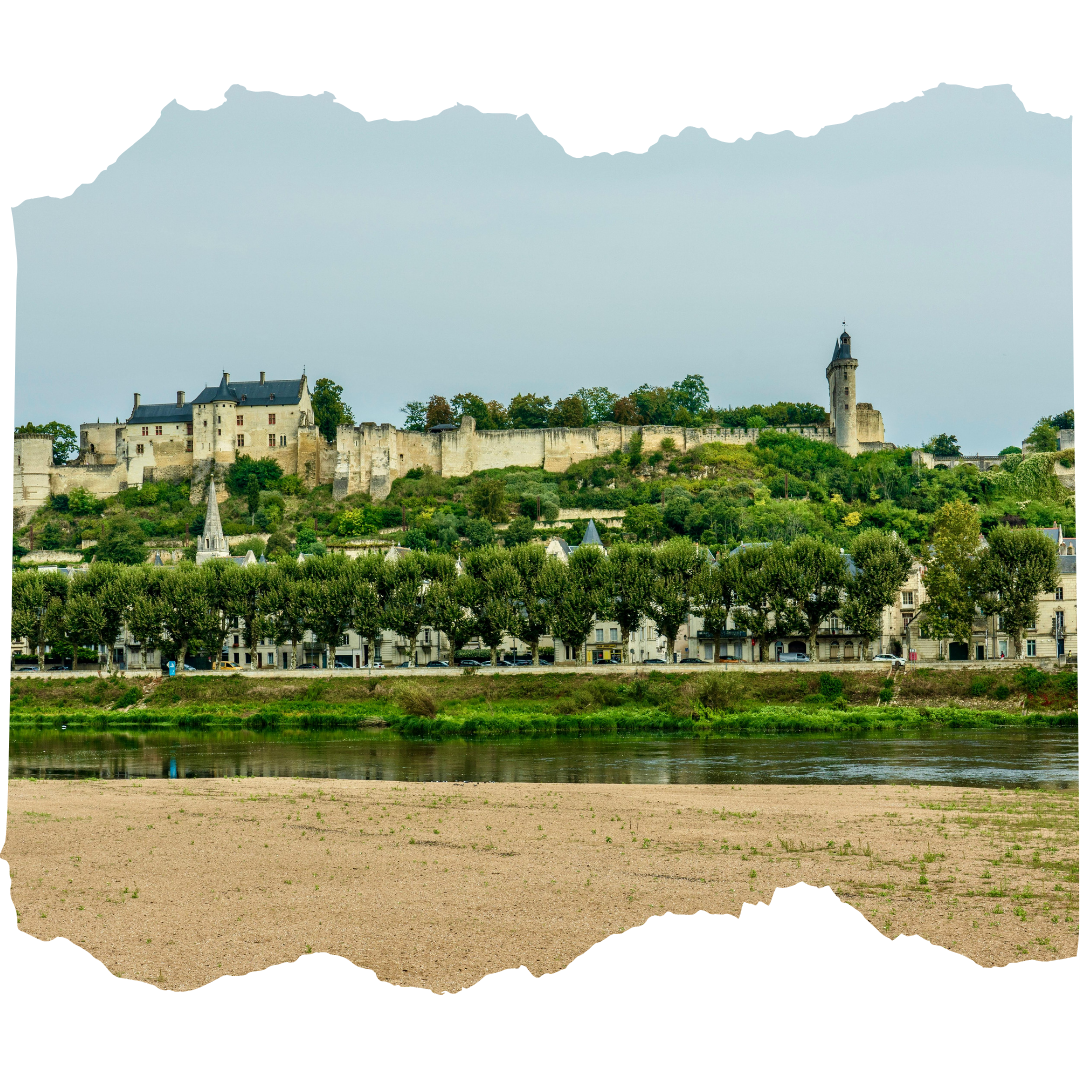


Yet despite its dramatic setting and remarkable history, Laon remains largely overlooked by visitors.
 Laon as seen in the distance
That's surprising, because this small city once stood at the center of French history: it was a Carolingian stronghold, an early Capetian royal city, the seat of powerful bishops, and home to one of France's earliest Gothic cathedrals.
Today, it is filled with medieval streets, hidden underground passages, a rare Templar chapel, and sweeping views across the surrounding countryside.
It's also an entirely walled town, one of France's few. It may not be one of the best-known towns in northern France, but it is definitely one of its most charming.
QUICK FACTS ABOUT LAON
- Department: Aisne
- Region: Hauts-de-France
- Population: About 24,000
- Known for: Its early Gothic cathedral, medieval Upper Town and hilltop setting
- Nickname: The Crowned Mountain (La Montagne Couronnée)
- Founded: Gallo-Roman period, on the site of the ancient settlement of Laudunum
- Historic role: One of the principal cities of the Carolingian kingdom and an early Capetian stronghold
- Architectural claim to fame: Laon's early Gothic cathedral
- Unique feature: Nearly continuous medieval ramparts encircling the Upper Town
Notre-Dame de Laon
The cathedral is impossible to miss.
The architecture
Although it lacks the fame of Paris, Amiens or Reims, many architectural historians consider Laon one of the purest examples of early Gothic design (building began in the mid-12th century), and it's considered one of the most important churches in France.
Inside, the way it's built pulls your eyes upward, with the space filled with light.

Outside, the cathedral's towers are famous for another reason: the stone oxen that peer down from the upper levels. According to local tradition, they commemorate the animals that hauled building materials up the steep hill during construction.
 You can see the stone oxen if you look closely ©OffbeatFrance
The cathedral's origins
The cathedral standing today isn't the first one on the same site. Two or maybe even three preceded it.
The first church appeared around AD 500, when Saint Rémi created a new diocese here. The Carolingians, the dynasty that produced Charlemagne, later rebuilt it on a grander scale, turning Laon into one of their favorite royal residences.
Charlemagne himself had family ties to Laon: his maternal grandfather, Caribert, was Count of Laon.
Then, in 987, Laon found itself on the losing side of a royal succession crisis. Charles of Lorraine, the last Carolingian pretender, made his stand here against Hugh Capet, founder of the Capetian dynasty.
Charles's stand ended not with a heroic siege or a glorious battle, but with betrayal. The bishop of Laon switched sides, opened the city gates, and delivered Charles to Hugh Capet, ending the Carolingian claim to the French throne.
The revolt of 1112
The cathedral standing today replaced an earlier church destroyed during one of the most dramatic episodes in Laon's history.
In 1112, townspeople revolted against Bishop Gaudry, eventually killing him and setting fire to parts of the city, including the cathedral. The uprising became one of the most famous urban revolts of the Middle Ages.

The destruction proved to be an unexpected turning point. Within a few decades, work began on the magnificent Gothic cathedral that now dominates Laon's skyline. This made Laon one of the pioneers of the new Gothic style that would spread across northern France.
 The Church of Saint-Martin was once part of one of medieval Laon's largest monastic complexes. Today, the church, cloister and former abbey buildings are reminders that the city's religious life extended well beyond its famous cathedral.
The Templar Chapel
Tucked away in the old town is one of Laon's oldest surviving buildings.
The Chapelle des Templiers dates largely from the 12th century, when the Knights Templar established a commandery in the city. While many Templar buildings disappeared long ago, this small octagonal chapel survived wars and revolutions.

 Exterior and interior of Laon's Templar Chapel ©OffbeatFrance
Its simple Romanesque architecture contrasts sharply with the soaring Gothic cathedral nearby. Together, the two buildings tell the story of a city that stood at the crossroads of some of the most important religious movements of medieval Europe.
After the suppression of the Templars in the early 14th century, the property passed to the Knights Hospitallers, another military-religious order, before serving successively as a prison, a stable and a school – and was nearly demolished by a developer for housing until it was classified as a historical monument and saved.
Today it is one of the few surviving Templar chapels in France.
The Citadel and the underground city
Laon's citadel owes its existence to a royal grudge.
After a three-month siege during the Wars of Religion in 1594, Henri IV captured the city and ordered a fortress built on the eastern edge of the plateau. Its purpose was not to defend Laon from foreign invaders but to keep the city itself under control should it rebel again.
Although the citadel was later modernized to face the growing threat from Prussia, military technology advanced so quickly that it was already becoming obsolete by the late 19th century.
A QUICK HISTORY OF THE WARS OF RELIGION
These were a series of civil wars fought mainly between Catholics and Protestants, known in France as Huguenots. Power and politics were just as involved.
The conflict was messy, with massacres and sieges, with towns and nobles changing sides as rival factions competed for control of the kingdom.
The wars finally ended when the Protestant leader Henri of Navarre became King Henri IV. To secure the throne, he converted to Catholicism in 1593, an act traditionally summed up by the phrase, "Paris is well worth a Mass."
Five years later, he issued the Edict of Nantes, granting French Protestants limited religious freedom and bringing decades of conflict to an end.
The best way to discover the citadel is to head underground. You'll descend into a labyrinth of limestone quarries that supplied much of Laon's building stone.
Along the way, you'll pass Gallo-Roman grain silos carved into the rock, a reminder that people have been using the hill beneath the city for nearly 2000 years. Over the centuries, the underground took on many roles, from storing grain to serving as part of the city's military defences.
Guided tours are available in French but include English audioguides so you can follow along.
The real surprise comes deeper inside the fortress. An 80-meter (263ft) vaulted gallery links a series of casemates. These are vaulted chambers where soldiers sheltered and fired at approaching enemies through narrow openings in the ramparts.
Ingenious ventilation shafts carried away the black smoke from the weapons, and thick doors helped keep out the deafening sounds of gunfire. Ironically, despite all this careful planning, the galleries were never used in battle.
Henri IV and the siege of 1594
Following the Wars of Religion, Henri IV ordered the construction of a citadel on the eastern end of the plateau.
Laon had held out against him for three months, shortly after his conversion to Catholicism, and he was not inclined to let it go. Building the citadel required the demolition of around 200 houses, two parish churches, and the market halls — effectively the economic heart of the city.
 Laon's ramparts trace the edge of the limestone plateau, enclosing the Upper Town much as they did centuries ago ©OffbeatFrance
Following the Wars of Religion, Henri IV ordered the construction of a citadel on the eastern end of the plateau.
Laon had held out against him for three months, shortly after his conversion to Catholicism, and he was not inclined to let it go. Building the citadel required the demolition of around 200 houses, two parish churches, and the market halls — effectively the economic heart of the city.
The structure was not designed to defend Laon from outside attackers but to control the population from within, a distinction that was not lost on the inhabitants.
The citadel underwent several modifications over the centuries, particularly during the 19th century when France strengthened its defences against Prussia.
Vauban himself, touring the defenses as part of Louis XIV's systematic fortification of the northern frontier, reportedly said the architect should have been hanged at the gate, or at least, that's what locals say.
The explosion of 1870
The citadel played one last dramatic role during the Franco-Prussian War.
As Prussian troops entered Laon in September 1870, a French artilleryman named Dieudonné Henriot blew up the powder magazine rather than surrender.
Believing the explosion had been a deliberate trap, the Prussian commander threatened to destroy the city before being persuaded otherwise.
A memorial plaque near the citadel marks the episode.
PRACTICAL INFORMATION
- Getting there: Laon is served by direct trains from Paris Gare du Nord (around 1 hr 30 min). The station is below the Upper Town; you can walk up the hill if you're feeling energetic, or take the shuttle that links the station with the historic center. You don't need a car to visit.
- How long to stay? One full day, but try to stay overnight
- Where to stay: Most of Laon's sights are in the Upper Town, so staying within the old walls makes it easy to explore on foot. I spent the night at the Logis du Parvis with a spectacular view of the cathedral across the square.
- Where I ate: You can have meals at the hotel's popular restaurant but there are plenty of eateries around the cathedral.
- Best for: History lovers, medieval architecture, panoramic views and offbeat destinations
FAQ
Is Laon worth visiting?
Is Laon worth visiting?
Yes. Laon combines one of France's finest early Gothic cathedrals with a remarkably intact medieval Upper Town, panoramic views and unusual underground tunnels, all without the crowds of better-known cities.
How much time do you need in Laon?
How much time do you need in Laon?
A full day is enough to see the cathedral, the underground, the Templar Chapel and wander the Upper Town. Stay overnight if you want to explore the surrounding area.
Can you visit Laon's underground tunnels?
Can you visit Laon's underground tunnels?
Yes. Guided tours run from the Tourist Office. They are conducted in French, but English audio guides are available.
Why is Laon called the Crowned Mountain?
Why is Laon called the Crowned Mountain?
Because its cathedral and towers rise above the surrounding plain, giving the hilltop city the appearance of wearing a crown.
Before you go...
Before you leave, take time to wander. Laon's Upper Town is best explored on foot, where medieval streets wind past old stone houses and hidden courtyards. Leave the map behind and you'll soon find yourself looking out across the surrounding plain from one of the city's many viewpoints.
Laon is also an excellent base for exploring the historic heartland of the Frankish kingdom.
Before leaving the region, consider spending a day in Soissons. Often overlooked today, it played an outsized role in the making of medieval France.
Did you enjoy this article? I'd love if you shared it!

🇫🇷

Bonjour! I'm Leyla.
Born in Paris and now based in eastern France between Lyon and Annecy, I've spent years exploring the places and stories that explain why France is the way it is.
Offbeat France is for curious francophiles, whether you're planning a trip or simply fascinated by France. Here you'll discover the history behind the villages, castles, traditions, landscapes and everyday details that most visitors notice but few can explain.
Alongside practical travel advice, I share the context that helps you make sense out of France. The more you understand, the more rewarding every visit becomes.
If you finish an article thinking, "I never knew that... now I want to know more," then I've done my job.
Learn more about me!
Read my Substack historical essays
🇫🇷

🇫🇷
Booking.comWhat's New!


-
Poitiers in France: Why This Historic City Deserves More Visitors
Aug 02, 26 03:05 PM
Discover the best things to do in Poitiers, France, from Roman ruins and medieval streets to Eleanor of Aquitaine's legacy and remarkable architecture. -
Limoges, France: Much More Than Porcelain
Jul 25, 26 09:14 AM
Limoges France is more than porcelain. Discover medieval streets, enamel masterpieces and centuries of history. -
Saint-Quentin, France: The Art Deco City No One Talks About
Jul 15, 26 05:31 AM
Saint-Quentin France rebuilt itself in Art Deco after WWI left it in ruins. It's now one of France's most striking architectural cities. -
Visiting France In A Heatwave: What You Need To Know
Jun 26, 26 12:45 PM
Visiting France during a heatwave? Learn how to stay cool and enjoy your trip despite the heat. -
Angoulême: From Medieval Stronghold To France's Capital Of Comics
Jun 26, 26 12:44 PM
Medieval streets, a Romanesque cathedral, five centuries of papermaking, and giant comic murals. Angoulême surprises most visitors.