Fascinated by Gallo-Roman history? Click Here to download > > > Here are 6 ways Rome affected France





Follow me on
- Home ›
- Destinations ›
- Northern France ›
- Soissons
Soissons: The French Capital That Came Before Paris
Published 18 August 2026 by Leyla Alyanak — Parisian by birth, Lyonnaise by adoption, historian by passion
The Vase of Soissons is one of the most famous stories in French history. The city where it happened is one of the least visited — yet one of the most historically significant in France.
Most people who remember the tale of the vase of Soissons from school probably couldn't tell you where Soissons actually is.
Fewer still know that the city where the vase story supposedly happened was once the capital of France — not a regional hub or a royal residence, but the actual center of Frankish power, the place where the kingdom that became France was being ruled, at a time when Paris was no more than a minor town on a river island.
TRACES OF ANCIENT FRANCE
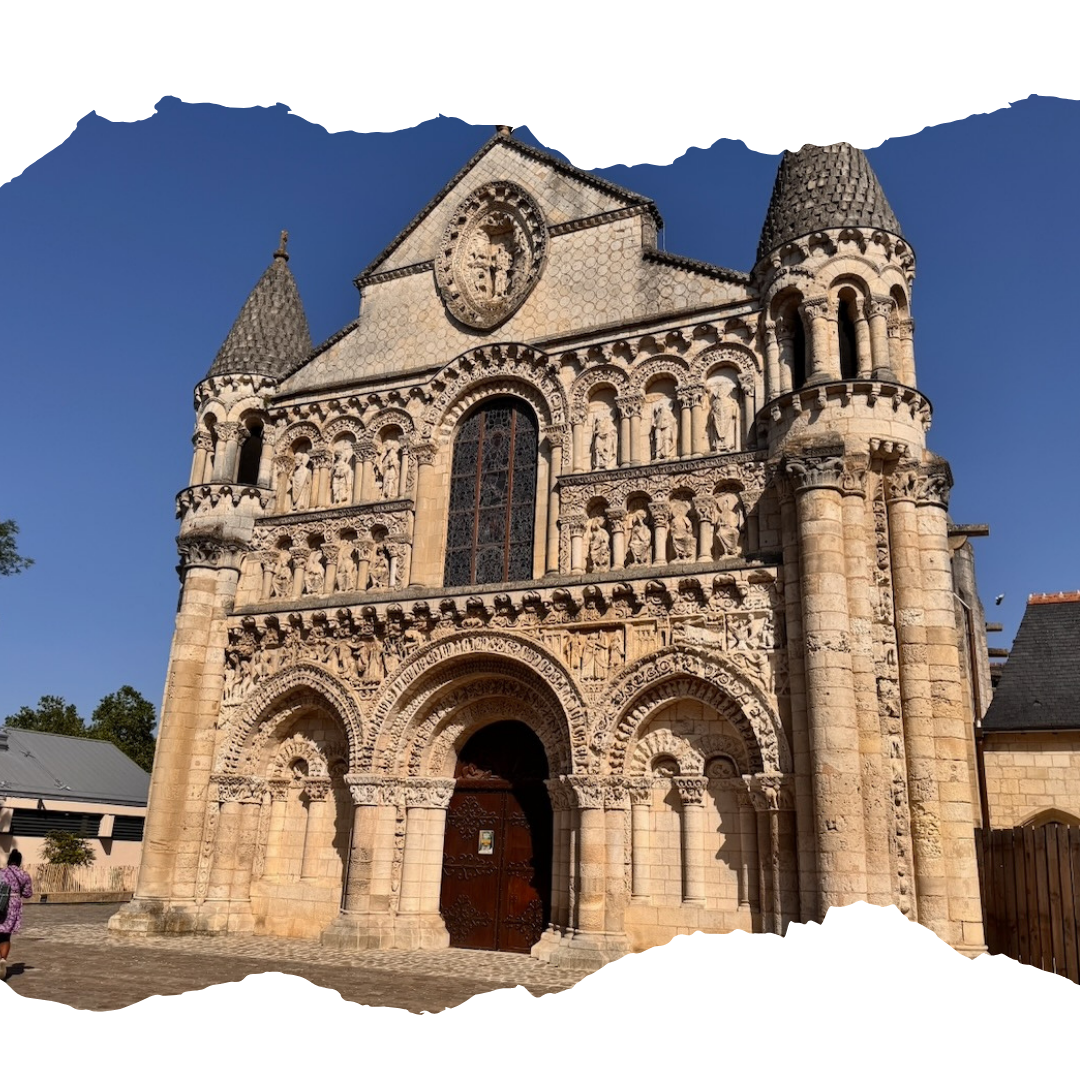

For the record, you'll find this lovely small city in the Aisne department, in northern France, roughly halfway between Paris and Reims in the region once known as Picardy. This is close enough for a day trip from Paris but far enough so that most travelers skip it on the way to Reims or the Aisne battlefields of World War I.
As for the vase, I'll tell you about that in a moment.
WHAT NOT TO MISS IN SOISSONS
- The monument on the main square — look for the vase panel
- The Rubens in the cathedral
- The rose window restoration — stone tracery believed to be from the cathedral's rose window is displayed on the floor of the Musée Saint-Léger
- The Maison Égyptienne on rue du Collège
- The abbey towers at Saint-Jean-des-Vignes
- Haricots de Soissons beans on any menu that offers them
The monument on the square
The best place to start visiting Soissons, which happens to be quite walkable, is the large open square in front of the cathedral.
It's new and didn't exist before World War I. At the time, houses and shops filled the area but German bombs leveled around 80% of the city center. Today's open space was created during reconstruction but standing in it, you'd never know.
At the center of the square is a monument that looks like a standard war memorial, but not quite.
A wealthy local woman commissioned the monument before the war as a tribute to the glory of Soissons but then war came and it was expanded to honor the dead as well.
Look closely at the carved panels and you'll find scenes that cover 15 centuries of local history - including, on one face, the famous vase.
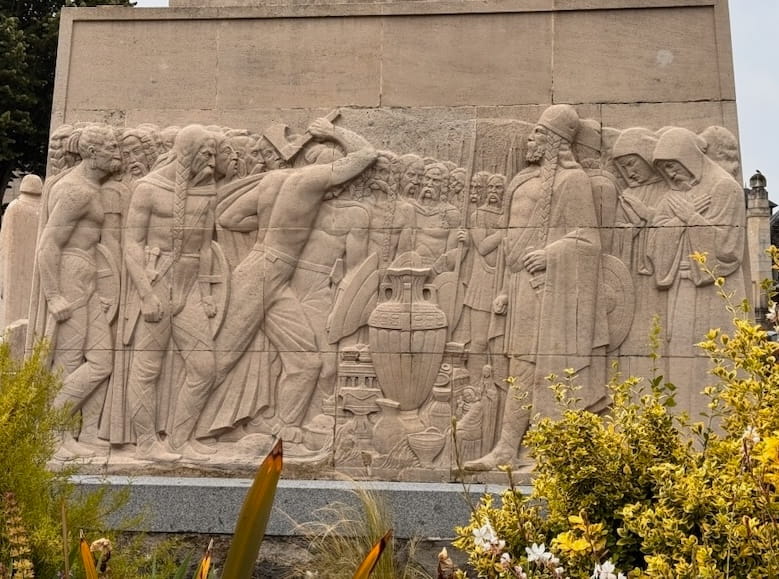
A well-known anecdote is linked to the monument. The original design was topped by a partially draped female figure, but veterans objected before the inauguration — not appropriate for a war memorial, they said — and had it removed.
That female figure can now be found in the city's main park, where generations of residents have called it the "Dame Blanche," the White Lady, without always knowing where it came from.
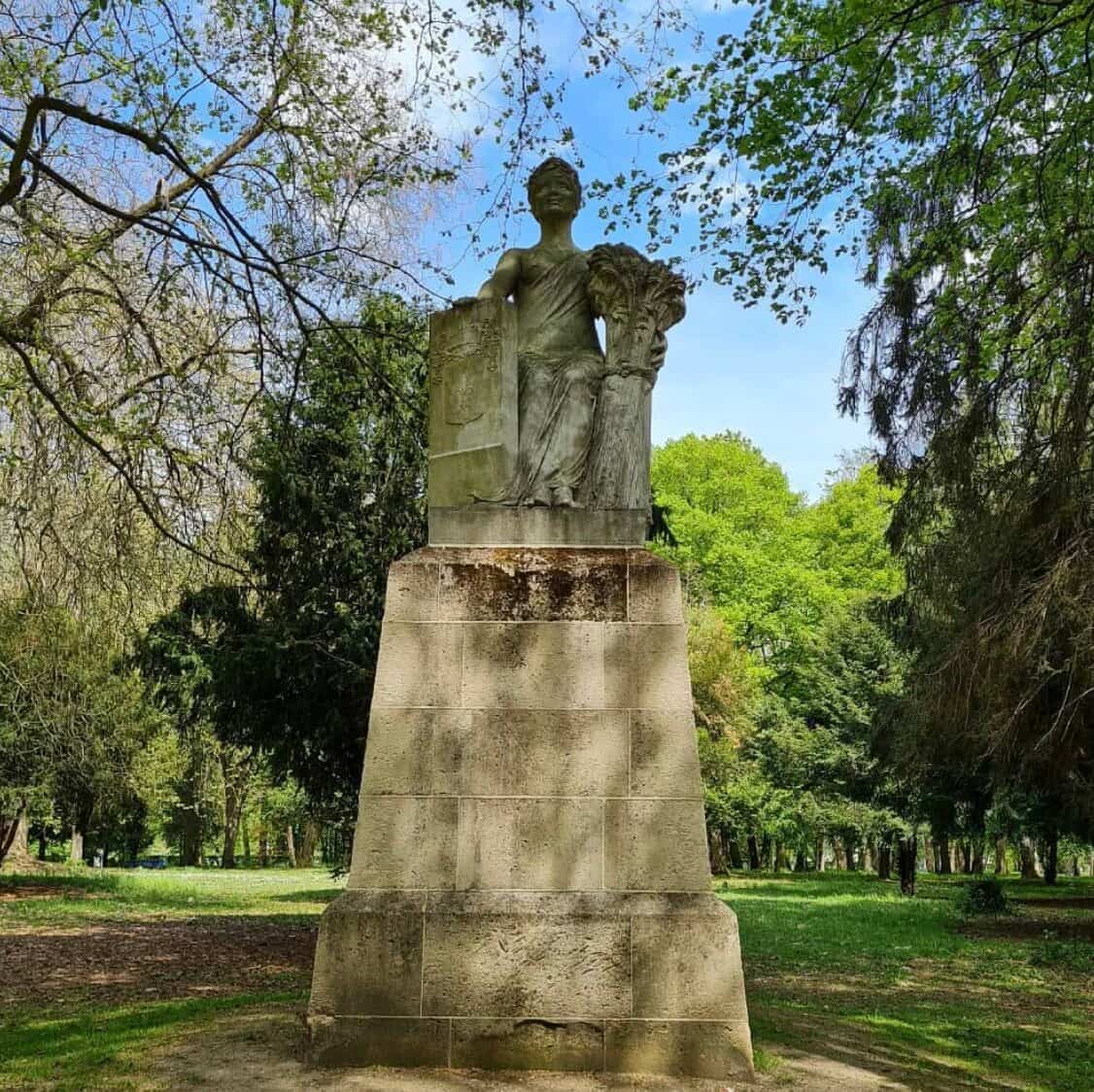 The "Dame Blanche", which once belonged to the war memorial on place Fernand Marquigny - it's now in Saint-Crépin park ©GrandSoissons Agglomération
QUICK FACTS ABOUT SOISSONS
- Department: Aisne (02)
- Region: Hauts-de-France
- Getting there: Train from Paris Gare du Nord, approximately an hour, or ~100 km (60 miles) drive
- How long to visit: Half day minimum, full day comfortable
- Market: Wednesday and Saturday mornings
- City designation: Ville d'Art et d'Histoire (City of Art and History)
The legend of the Vase de Soissons
And now, about that vase...
In the late 5th century, according to legend, a young Frankish king named Clovis (he would later unite much of what is now France) seized a valuable church vase during a military campaign. He wanted the Church to have it – actually, the Bishop of Reims had asked for it – as a gesture to the religious hierarchy whose political support he needed.
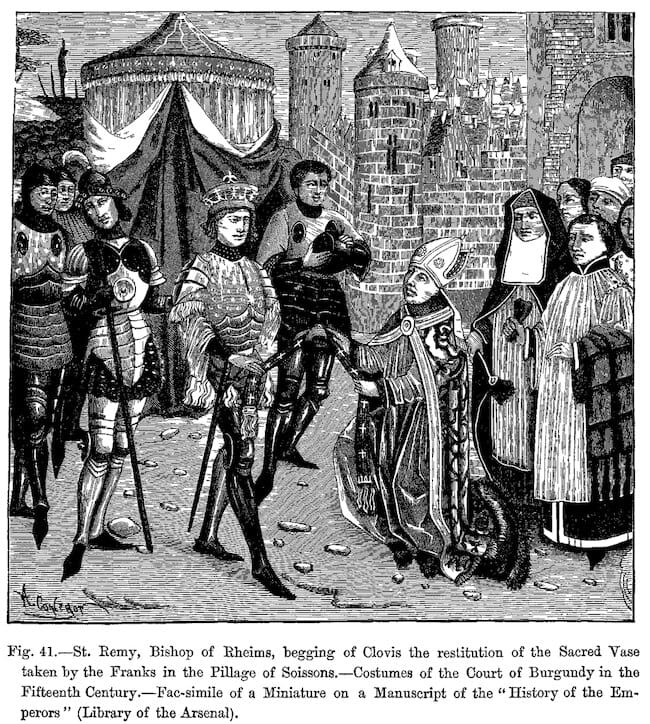
His soldiers had gathered to divide the loot by lot, as Frankish custom required, and Clovis asked if he could take the vase outside the draw. Most agreed. One man didn't — and struck and shattered the vase with his francisque, the short-handled battle axe that was the signature weapon of the Franks.
Clovis went quiet.
A year later, during a military inspection, he found himself facing the same soldier. He picked up the man's weapons and threw them to the ground, killing the soldier when he bent to pick them up.
"Remember the vase of Soissons," he said.
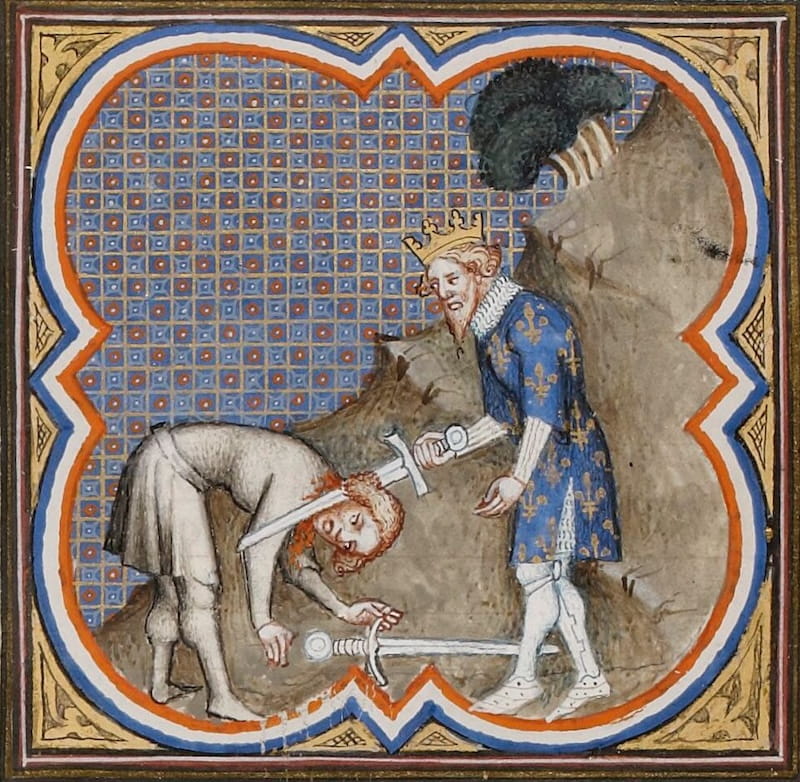 The Vengeance of Clovis, author unknown
It probably didn't happen this way at all — the account comes from a bishop writing decades after the fact. Still, the message was clear: don't mess with royal authority.
It also explains why Soissons appears in history books when little else about it is known, even though Clovis ruled from here for 22 years before moving to Paris around 508.
MEROVINGIANS AND CAROLINGIANS: WHO'S WHO?
Merovingians were the first dynasty of Frankish kings, ruling from the 5th to the 8th century. Clovis I was their most important early king; after defeating the Roman ruler Syagrius at Soissons in 486, he made the city his main seat of power before moving to Paris.
After Clovis's death, his kingdom was divided among his sons. Clotaire I, who inherited Soissons, eventually reunited it.
Meanwhile, another Frankish family, the Pippinids, accumulated power as maires du palais (roughly, chief ministers). Charles Martel was the most famous. His son Pépin le Bref would eventually depose the last Merovingian king and found the Carolingian dynasty.
Pépin's son was Charlemagne.
Soissons' royal connections didn't end with the Merovingians.
In 751, Pépin le Bref was elected king and anointed at Soissons, marking the transfer of power to the Carolingian dynasty. The city had played a role in the rise of two successive Frankish royal dynasties.
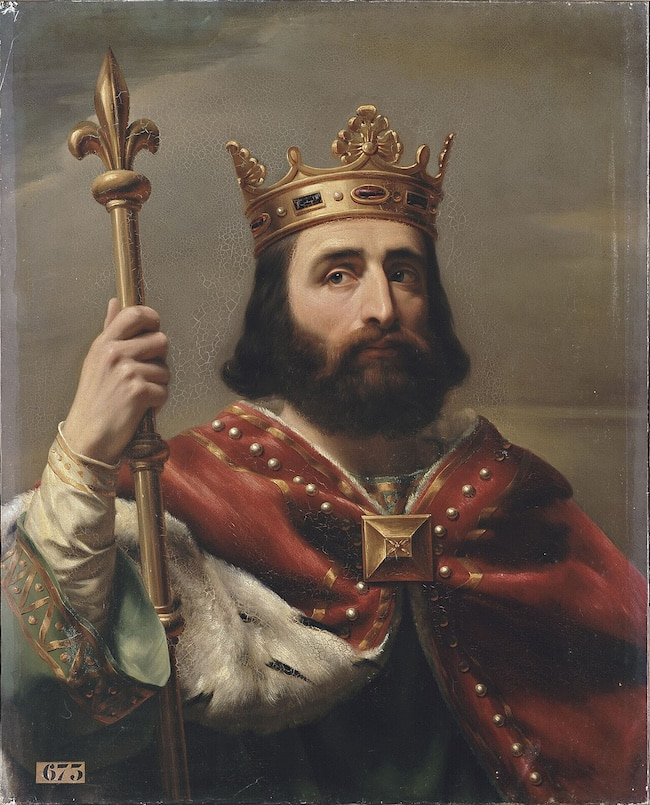 An artist's rendering of Pépin le Bref, painted by Louis-Félix Amiel at the request of Louis-Philippe in 1837
The cathedral
Picardy has seven Gothic cathedrals and the Cathédrale Saint-Gervais-et-Saint-Protais in Soissons is one of them. Named after two early Christian martyrs, it rises above the square in pale local limestone but looks a bit unfinished, with only one tower.
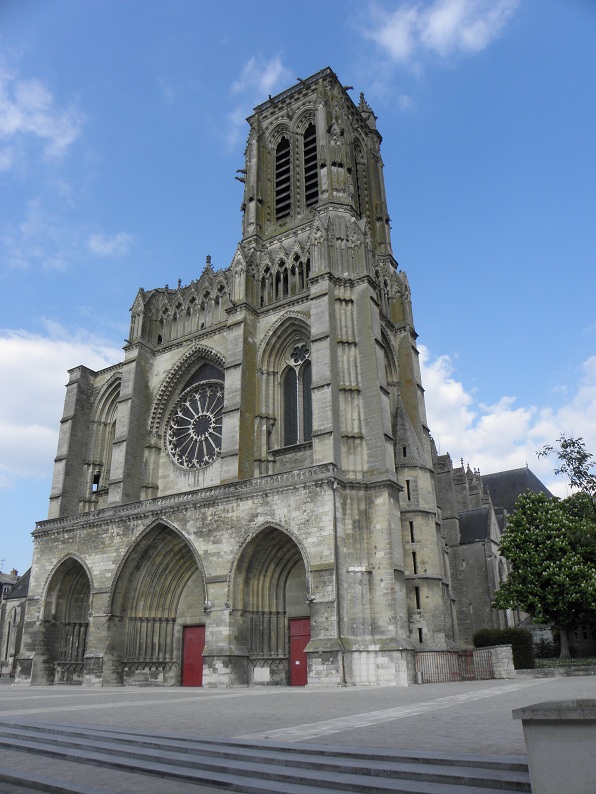 Outside the Cathedral ©GO69 via Wikimedia Commons
During the Hundred Years' War, as the English and French fought their way across the region, Soissons was sacked and locals used the stones intended for the second tower to rebuild their homes. The tower was never finished.
Inside, the cathedral is a lesson in how Gothic architecture evolved. From its start around 1176, construction would span generations and styles would evolve while it was being built.
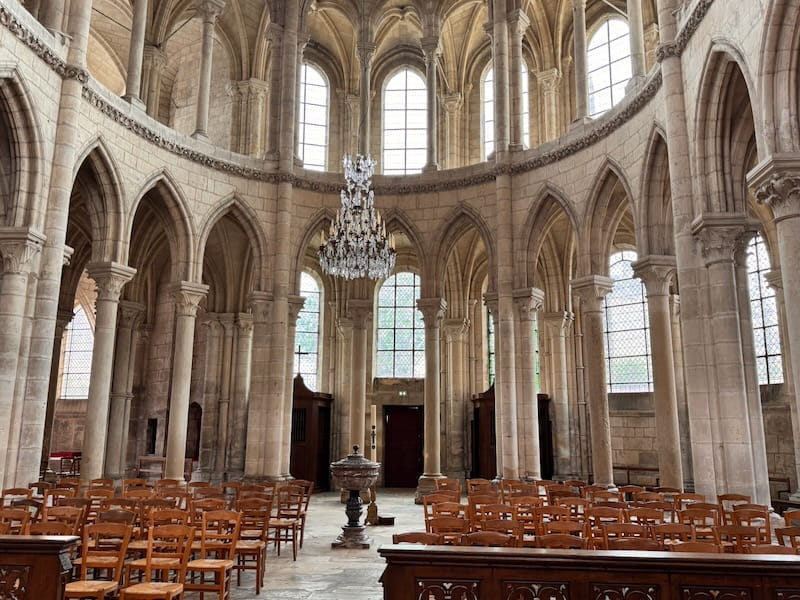 The cathedral's south transept, in transition from Romanesque to Early Gothic ©OffbeatFrance
The south transept, the oldest section, still feels Romanesque: (although it isn't – it's Early Gothic) heavy and rounded.
Move into the nave and everything seems to lift. The ceiling reaches nearly 31 meters (about 100 feet), almost exactly the height of Notre-Dame de Paris, and the windows flood the interior with light. The double-tier flying buttress — two arches supporting each other, an engineering solution developed here — is part of what made that height possible. (The buttresses are hidden behind the columns and I unfortunately did not get a photograph.)
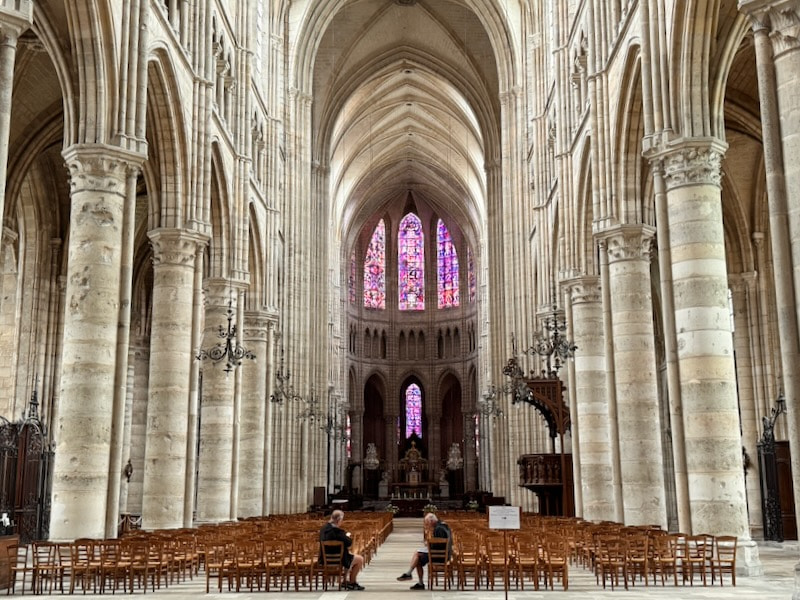 Soissons Cathedral - the nave ©OffbeatFrance
The cathedral has another unexpected treasure: a painting by Rubens. The Adoration of the Shepherds dates from around 1620 and originally hung in the Franciscan convent in Soissons.
Its exact history is uncertain, but it arrived in Soissons at the time of Bishop Simon Legras, who appears to have paid for it. When the painting was restored in 1992, restorers uncovered two coats of arms at the bottom: those of Legras and those of Soissons.
Legras' connection with the royal court was another sign of Soissons' importance. In 1654, when the Archbishop of Reims was unavailable, the Bishop of Soissons was called to Reims to crown a certain 15-year-old Louis XIV.
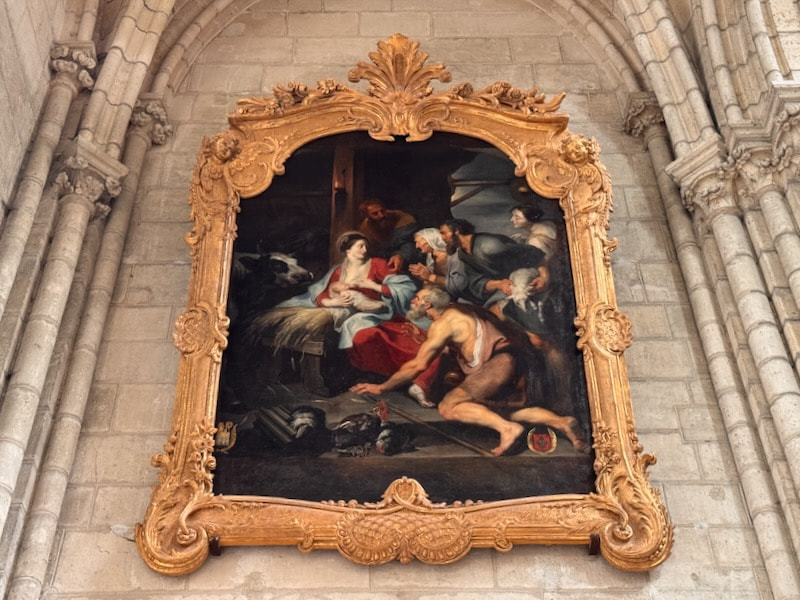 Peter Paul Rubens’ Altarpiece: The Raising of the Cross, in the Cathédrale Saint-Gervais-et-Saint-Protais ©OffbeatFrance
The cathedral's stained glass has its own complicated story.
Much of the medieval glass was sold off in 19th-century auctions — the Isabella Stewart Gardner Museum in Boston holds what's considered the finest example of 13th-century French stained glass in America, a window from this very cathedral.
The remaining choir windows survived World War I because someone had the presence of mind to dismantle them before bombs fell.
The great rose window on the western facade wasn't so lucky: it came down in the storm of January 2017, but remarkably about 90% of the glass was recovered intact and restoration was completed in the winter of 2021.
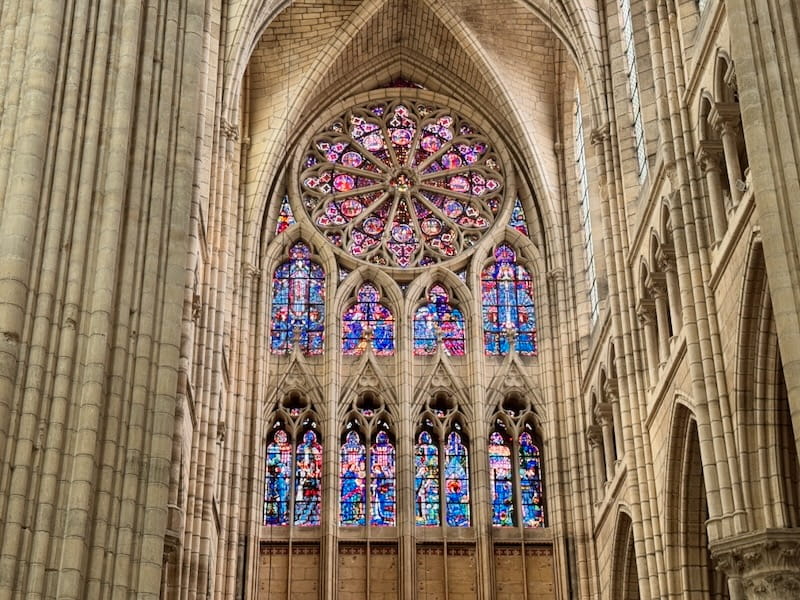
Soissons Cathedral may not have the fame of Amiens or the spectacular setting of Laon, but for anyone interested in Gothic architecture, it has a major advantage: you can see the style evolving within a single building.
From the early Gothic south transept to the more mature Classical Gothic of the choir and nave, this is the story of contrast and evolution, of how builders gradually found ways to make churches taller and lighter.
The Egyptian House
A short walk from the cathedral, on an ordinary street, is one of those buildings that makes you stop and wonder what you're looking at.
The Maison Égyptienne, at 22 rue du Collège, is covered in Egyptian-style decoration, but it's actually quite new.
It was built in the early 20th century by a local pharmacist during the wave of Egyptomania that followed major archeological discoveries, and it appeared in an art publication in 1925. It can't be visited and while it seems to exist for no particular reason, it's still worth the detour because it is so unexpected.
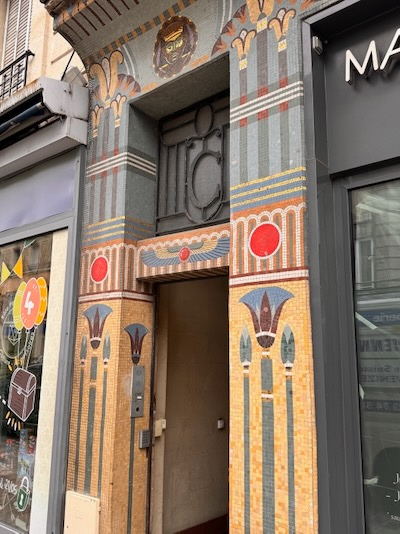
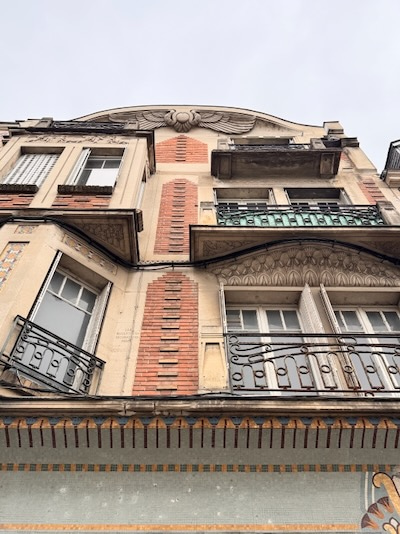
The Hôtel de Ville
Soissons' neoclassical Hôtel de Ville has a more interesting history than its name suggests.
Built in the 1770s, it wasn't initially designed to be a town hall but the palace of the intendant. This was the king's representative in the province, whose responsibilities included justice, policing and finances.
By then Soissons had become an important administrative center, and the intendant wanted a residence that reflected his status. The medieval castle of the Counts of Soissons was already abandoned, so it was demolished in 1772 to make way for the new palace, completed in 1775 (and visited that same year by Louis XV). It eventually became the Hôtel de Ville after the city's original town hall burned down in 1814.
It has kept much of its original character, including 18th-century woodwork, an elaborate wrought-iron staircase and vaulted cellars that once housed the kitchens and service rooms.
Its formal gardens, laid out beside the Aisne, are open to the public (this is the only part I got to see).
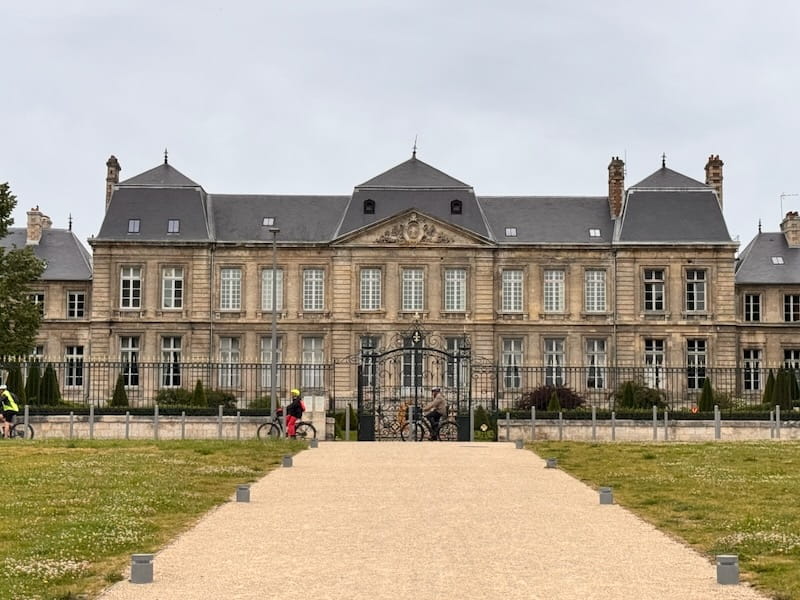
The abbey towers
At the southern edge of the city center, the twin towers of the Abbaye Saint-Jean-des-Vignes — the Abbey of Saint John of the Vines — rise above the rooftops and can usually be seen from well outside the city (I say usually because when I visited they were covered in scaffolding).
The abbey was founded in 1076 by the knight Hugues de Château-Thierry on the site of an older Gallic and Carolingian burial ground. It would eventually become one of the most powerful religious institutions in the region.
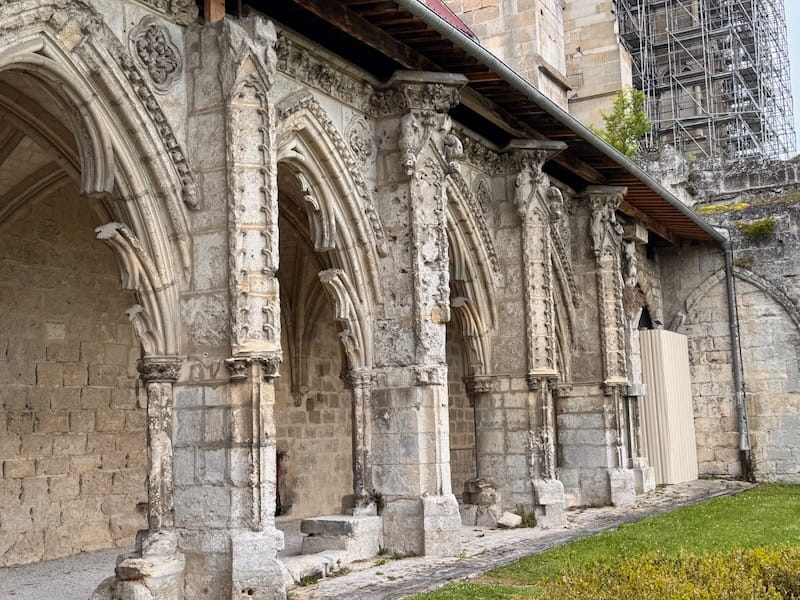 Restoration in progress at the Abbaye Saint-Jean-des-Vignes ©OffbeatFrance
The building is in poor shape and is being restored.
The abbey's monks were expelled during the French Revolution in 1789, but most of the physical destruction actually came later and from an unexpected direction.
Between 1805 and 1825, stones from the church — which had been briefly returned to the clergy under Napoleon — was quarried to help pay for the restoration of the cathedral across town, the same cathedral we looked at above.
The military then moved in from 1818, running an arsenal on the site until 1844 and dismantling much of what was left. The façade and towers were simply too large to take down easily, so they survived.
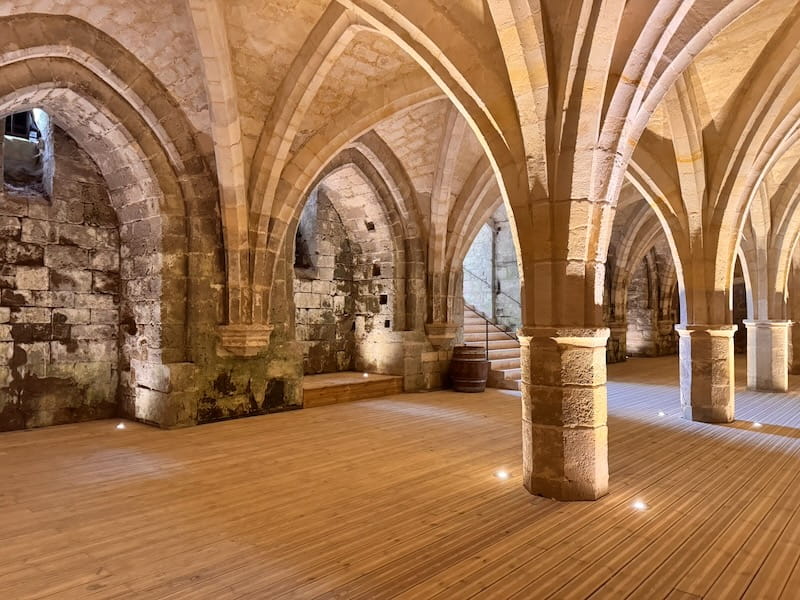 Inside the Abbaye Saint-Jean-des-Vignes: the cloister arcade, all that remains of a once-powerful religious complex ©OffbeatFrance
The old refectory and cellar, where monks once ate in silence while a passage of scripture was read aloud, have been renovated and can now be visited.
Anne Morgan and the Musée Franco-Américain
I didn't make it to Blérancourt on this trip — by the time I heard about the Musée Franco-Américain at the Château de Blérancourt, about 20 km (12 miles) northwest of Soissons, it was too late in the day. It's on my list for next time.
The story alone makes it worth the detour: Anne Morgan, daughter of the American financier J.P. Morgan, arrived in the Aisne in 1917 and spent years organizing relief operations across the villages devastated by war, recruiting American women who did everything from driving trucks to providing nursing care to communities.
And if you do go, I'm told that the food is excellent at the Hostellerie Le Griffon (this is their Facebook page), and not too pricey, so definitely on my 'must try' list.
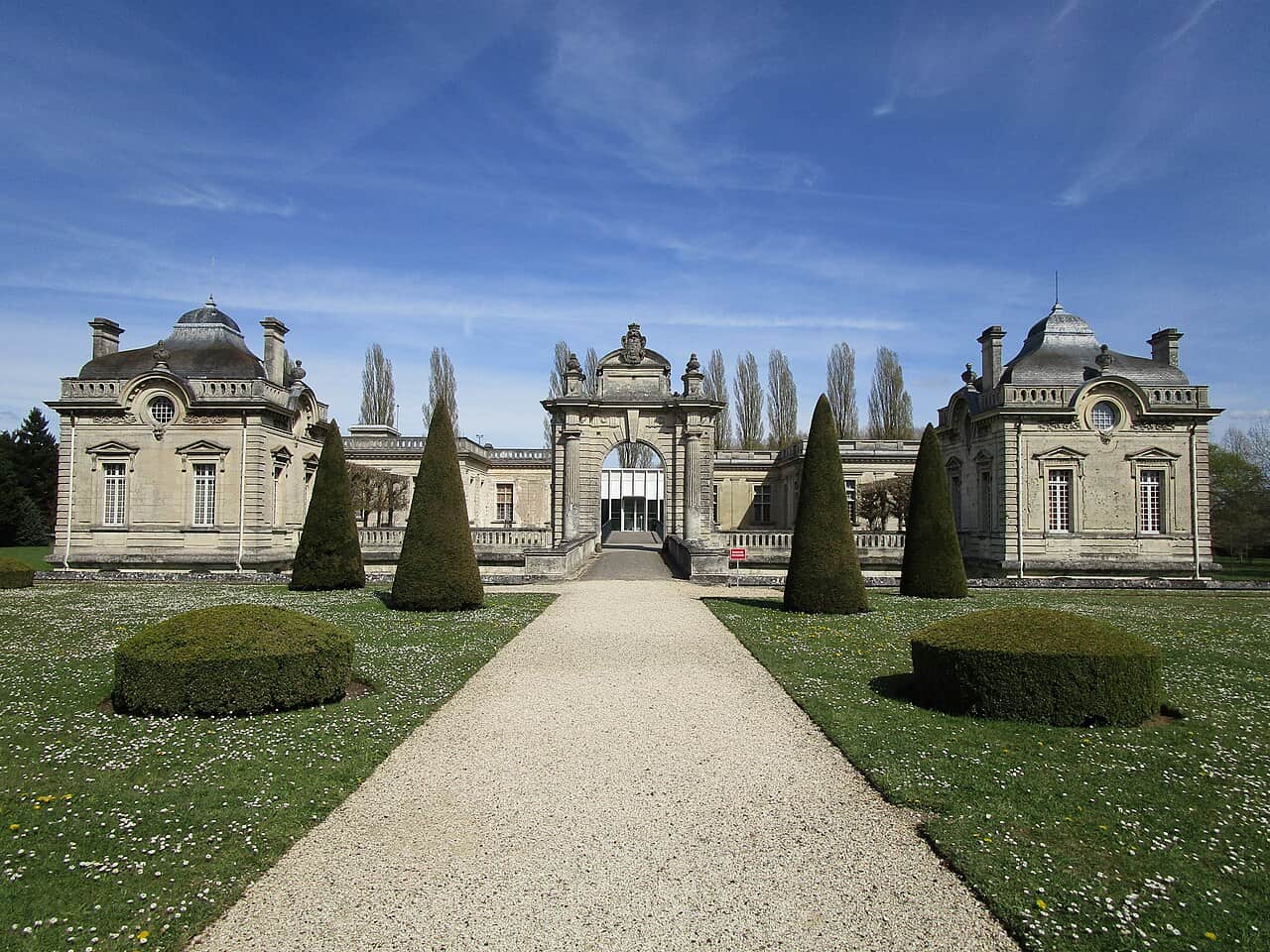 Outside the château ©Chatsam, CC BY-SA 3.0
Morgan restored the ruined château to house the museum, which covers both the relief work and the broader history of French-American cultural exchange.
More than a century later, the largest social services organization in the Aisne département still bears her name: the AMSAM, the Association Médico-Sociale Anne Morgan.
More to see and do in Soissons
The beauty of spending too short a time in a place is that it breeds a need to return. When I do revisit Soissons, here's what I plan to see.
Musée Saint-Léger
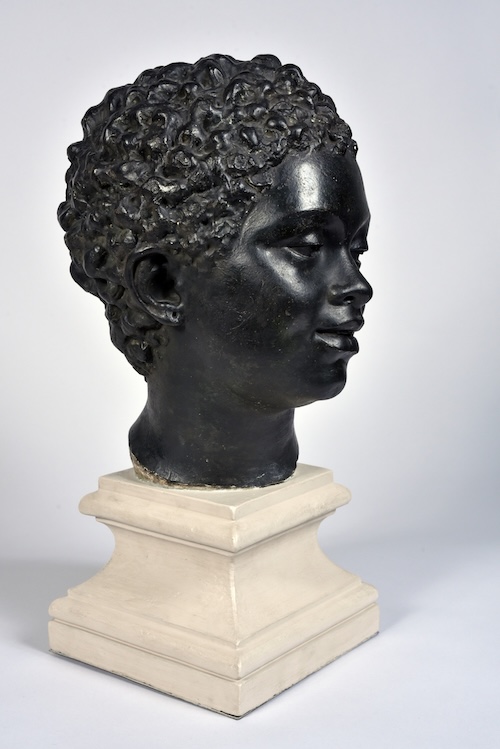 Tête de Femme Noire by Jean-Antoine Houdon
Soissons' municipal art and history museum has been headquartered in the old Saint-Léger abbey since 1933, having moved here after bombing during WWI damaged its original home in the Hôtel de Ville.
Among its holdings is a portrait bust by the sculptor Jean-Antoine Houdon, one of the best-known French sculptors of the 18th century, whose subject reflects the history of the transatlantic slave trade.
Roman Soissons
Before the Franks, before even the Romans, the area around Soissons belonged to a Gallic tribe called the Suessiones. The Romans founded Augusta Suessionum here around 20 BCE and, by some accounts, built one of the largest theaters in Gaul, with room for tens of thousands of spectators.
Traces of it are still visible today in, of all places, the courtyard of the Lycée Camille Claudel - a Roman theater hiding inside a contemporary school. Sadly, though, not much is left.
Crypte Saint-Médard
Beneath the ruins of the Abbaye Saint-Médard is a Carolingian-era crypt that was once part of a royal mausoleum. The abbey contained the tombs of the Merovingian king Clotaire I and his son Sigebert, making it an important royal and religious site long before the Carolingians came to power.
And Saint-Médard was itself the setting for that change of dynasty. In 751, Pépin le Bref was acclaimed king at Soissons and anointed by bishops at the abbey, with the Bishop of Soissons, who was also its abbot, playing a leading role. The ceremony marked the end of Merovingian rule and the beginning of the Carolingian dynasty.
The C215 street art trail
The stencil artist C215 (Christian Guémy) has scattered 25 portraits around the city. They're of historical figures with a Soissons connection — including Clotaire I, Joan of Arc and Rubens.
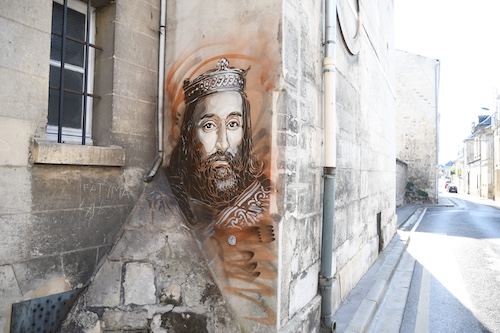 Clotaire I by C215 ©GrandSoissons
The tourist office hands out a free route map for anyone who wants to track them all down, which turns a walk through town into an open-air history lesson. You can also download it here (explanations are in French).
Soissons en Lumières
On summer evenings, roughly May through September, five of the city's landmark buildings are lit up as part of a free outdoor sound-and-light walk, each one narrated by a different historical Soissons character. It's a good excuse to see the town after dark, once the day-trippers have gone home.
Septmonts
About 7 km outside Soissons, this fortified village is built from the same pale limestone as the city itself, and its 14th-century keep was once the bishops of Soissons' summer residence. You can climb the keep, and the surrounding grounds include a small arboretum planted where the bishops once kept their orchard, along with a stretch of vines recalling the area's older winemaking past.
Local legend claims the village's name comes from a pope who thought the surrounding hills resembled the seven hills of Rome — charming, if not especially convincing.
PRACTICAL INFORMATION
- Getting there: Soissons is just over an hour from Paris by train from Gare du Nord. By car it's roughly 100 km (60 miles) northeast of Paris, about 1h15 depending on traffic.
- How long to stay? A half day covers the main sights at a reasonable pace, but a full day lets you linger in the cathedral, walk out to the abbey towers, and sit down for a proper lunch.
- Where to stay: Most of the attractions I've mentioned are concentrated around the historic center. Compare hotels and guesthouses in Soissons.
- Where to eat: Two places worth knowing: La Bourse au Grain, in the handsome 1900 grain exchange building on the main square, is good for lunch after the cathedral. La Passerelle has a second-floor terrace over the Aisne river — worth it for the view. If haricots de Soissons appear on any menu — the large white beans that are the city's most famous culinary product, with an IGP geographical indication — order them.
- More restaurant recommendations: Le Bouche à Oreille (unpretentious bistro with a terrace), Le Clovis (well-known central brasserie), Le 19cent11 (casual lunch steps from the cathedral).
- Best for: readers curious about where France's royal dynasties actually began, Gothic architecture, eclectic post-war rebuilding
- For more information, a street map, and guidance on what to do, head for the Soissons Tourist Office, which covers both the city and surrounding areas (and pick up a jar of Soissons beans while you're there!)
Before you go
Soissons makes a natural pairing with Saint-Quentin, about 60 km (37 miles) to the northeast. Both cities were devastated in World War I and both rebuilt from near-scratch in the 1920s — but where Soissons took a quiet, conservative approach, Saint-Quentin went full Art Deco and has never stopped showing off. The contrast is striking enough to make the two worth visiting on the same trip.
Header photograph by Zairon, CC BY-SA 4.0 , via Wikimedia Commons
Did you enjoy this article? I'd love if you shared it!

🇫🇷

Bonjour! I'm Leyla.
Born in Paris and now based in eastern France between Lyon and Annecy, I've spent years exploring the places and stories that explain why France is the way it is.
Offbeat France is for curious francophiles, whether you're planning a trip or simply fascinated by France. Here you'll discover the history behind the villages, castles, traditions, landscapes and everyday details that most visitors notice but few can explain.
Alongside practical travel advice, I share the context that helps you make sense out of France. The more you understand, the more rewarding every visit becomes.
If you finish an article thinking, "I never knew that... now I want to know more," then I've done my job.
Learn more about me!
Read my Substack historical essays
🇫🇷

🇫🇷
Booking.comWhat's New!


-
Poitiers in France: Why This Historic City Deserves More Visitors
Aug 02, 26 03:05 PM
Discover the best things to do in Poitiers, France, from Roman ruins and medieval streets to Eleanor of Aquitaine's legacy and remarkable architecture. -
Limoges, France: Much More Than Porcelain
Jul 25, 26 09:14 AM
Limoges France is more than porcelain. Discover medieval streets, enamel masterpieces and centuries of history. -
Saint-Quentin, France: The Art Deco City No One Talks About
Jul 15, 26 05:31 AM
Saint-Quentin France rebuilt itself in Art Deco after WWI left it in ruins. It's now one of France's most striking architectural cities. -
Visiting France In A Heatwave: What You Need To Know
Jun 26, 26 12:45 PM
Visiting France during a heatwave? Learn how to stay cool and enjoy your trip despite the heat. -
Angoulême: From Medieval Stronghold To France's Capital Of Comics
Jun 26, 26 12:44 PM
Medieval streets, a Romanesque cathedral, five centuries of papermaking, and giant comic murals. Angoulême surprises most visitors.