Fascinated by Gallo-Roman history? Click Here to download > > > Here are 6 ways Rome affected France





Follow me on
- Home ›
- Destinations ›
- Northern France ›
- Chemin des Dames
The Chemin Des Dames: 10 Reasons To Visit This Historic Road
Published 22 November 2026 by Leyla Alyanak — Parisian by birth, Lyonnaise by adoption, historian by passion
The Chemin des Dames is notorious for a disastrous French attack in 1917 that left tens of thousands dead without breaking through German defences. Beneath the battlefield, the Caverne du Dragon, or Dragon's Cave, changed hands repeatedly. At times, French and German soldiers occupied the same cavern, close enough to maybe hear each other's voices.
I came to the Chemin des Dames, which translates as the Ladies' Road, because of its World War I connections, so imagine my surprise to find its history stretched much further back than the war.
Julius Caesar fought nearby, and Napoleon fought here. Two daughters of Louis XV gave the road its name. Then came World War I, turning the Chemin des Dames into one of France’s most notorious battlefields.
Whatever happened above ground, visitors are keen to visit the Caverne du Dragon, or Dragon's Cavern, an enormous former limestone quarry that was used as an underground bunker during World War I.
MORE HISTORY IN NORTHERN FRANCE



Why visit the Chemin des Dames?
- 1. Julius Caesar fought nearby
- 2. It is a natural military fortress
- 3. Two royal princesses gave it its name
- 4. Napoleon fought one of his last campaigns here
- 5. World War I turned the ridge into a battlefield
- 6. There is a whole military world beneath your feet
- 7. French and German soldiers actually fought inside the Caverne du Dragon
- 8. The Germans came back in 1918
- 9. You can visit a headquarters built for Hitler
- 10. The landscape itself is the monument
Why visit the Chemin des Dames?
The ridge itself looks unassuming, but there are at least ten good reasons why those of you curious about history and culture should add the Chemin des Dames to your northern France itinerary.
1. Julius Caesar fought nearby
Long before France was France, in 57 BCE during the Gallic Wars, Julius Caesar's Roman army faced a huge coalition of Belgic peoples near the Aisne River, around Berry-au-Bac, east of the ridge crossed by what would later become our Chemin des Dames.
2. It is a natural military fortress
The ridge road runs east-west for about 26 kilometers (16 miles) across a limestone plateau.
Whoever controlled the heights had an excellent view over the surrounding countryside and the roads crossing it. In other words, the ridge would be in the way of anyone trying to move an army across the area, which explains why it has so often been fought over.
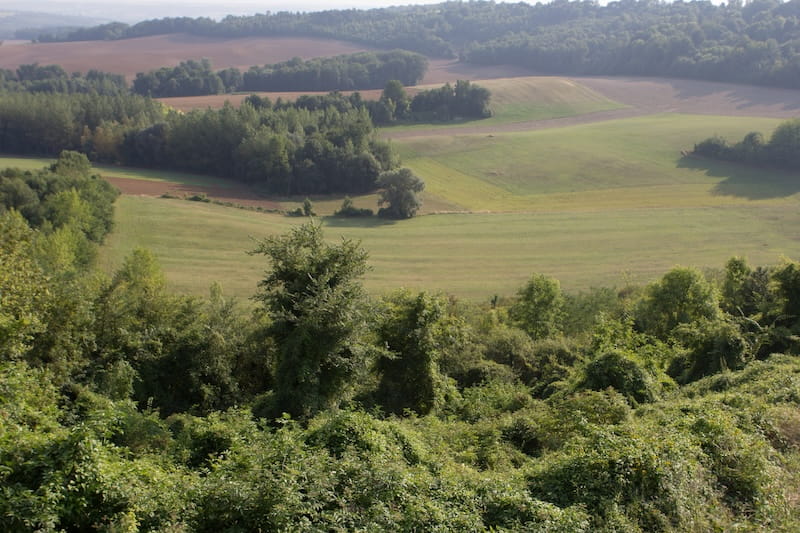 A view of the Chemin des Dames, calm today but with a commanding view by Poudou99 via CC BY-SA 3.0
3. Two royal princesses gave it its name
The Chemin des Dames takes its name from two daughters of Louis XV, Adélaïde and Victoire, known as Mesdames. In the 18th century, they were invited to visit the Château de la Bove near Bouconville, home of Adélaïde’s lady-in-waiting, the Duchess of Narbonne.
But there was a practical problem: the road was terrible for Mesdames and their carriages.
So the Duchess asked the administration to improve it, and work began in summer 1784. Adélaïde and Victoire visited that autumn, before the work was finished. Apparently, they never returned to see the completed road, but their name stuck.
4. Napoleon fought one of his last campaigns here
If you've ever wondered why there is a statue of Napoleon in this otherwise rural landscape, here's why.
On 7 March 1814, Napoleon defeated Russian troops at Craonne during his campaign to defend France from invasion. The statue commemorates that costly victory.
But winning at Craonne did not stop the Russian, Prussian and other Allied armies advancing toward Paris. The capital fell later that month, followed by Napoleon's abdication and his exile to Elba.
Today, there are several reminders of the 1814 battle around Craonne, including the monument at Hurtebise honoring Napoleon’s young conscripts, nicknamed the “Marie-Louise” after his second wife, Empress Marie-Louise (Josephine was the first but they divorced).
ARE THERE SEVERAL OF YOU? If you're staying in Laon and would rather have an English-speaking guide, this new full-day private tour will take you there and show you around.
5. World War I turned the ridge into a battlefield
A century later, in September 1914, German troops took up defensive positions on the ridge. French and British troops tried – and failed – to force them out.
A major French attack on 16 April 1917 is what sticks bitterly in most French minds about the Chemin des Dames.
On that day, General Robert Nivelle tried to break through German defences and end the war. Instead, soldiers trudging through rain and snow and mud were met by German machine-gun fire.
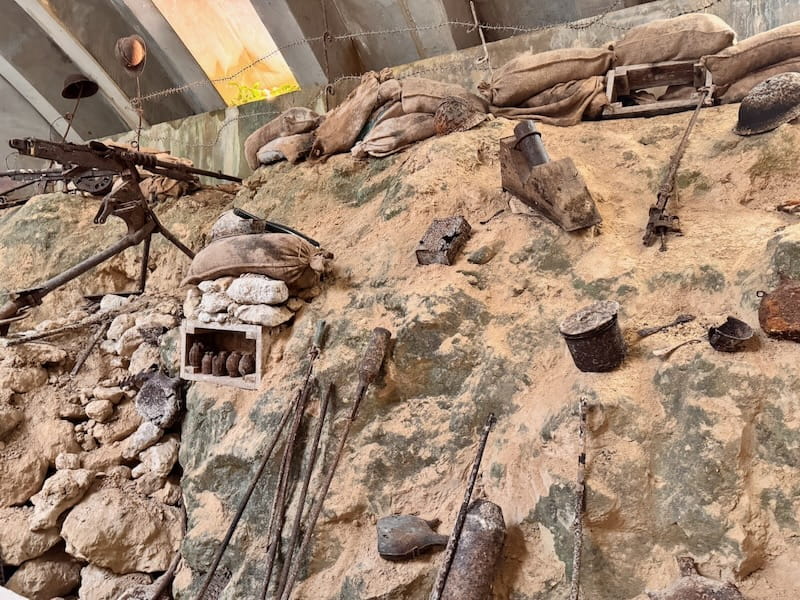 A reconstructed trench at the Caverne du Dragon displays weapons and equipment used during World War I ©OffbeatFrance
After repeated attacks achieved little, some French soldiers refused to attack again. They wanted leave and better living conditions, not more orders to risk their lives.
Nivelle was replaced the following month.
If the Germans resisted the French bombardments so well, it was partly because they hid in underground quarries. Each time the shelling stopped, the Germans would emerge to their positions, ready to fire on the advancing French soldiers.
6. There is a whole military world beneath your feet
The land beneath the Chemin des Dames was riddled with old limestone quarries known locally as creutes, which had been excavated for centuries to provide building stone. They also served as shelters for livestock, and to grow mushrooms and store wine.
During the war, the armies (on both sides) discovered they could offer something very different: shelter from artillery, storage space, medical facilities, communications centers and sleeping quarters. The Germans in particular developed extensive underground installations, connecting galleries and building tunnels.
7. French and German soldiers actually fought inside the Caverne du Dragon
The Caverne du Dragon wasn't just a bunker where soldiers waited for the shelling to stop, but a battlefield in its own right.
The French had initially occupied the cavern in September 1914, but only held it for about five months. The Germans then captured it and would stay for more than two years. They set up generators near the entrances to provide electricity and, more importantly, telephone communications with the trenches above.
The French recaptured it in June 1917, only to lose part of it a month later to the Germans.
From July to October, the opposing armies occupied different sections of the same underground complex simultaneously, with fighting inside the galleries, including the lobbing of grenades and probably hand-to-hand combat.
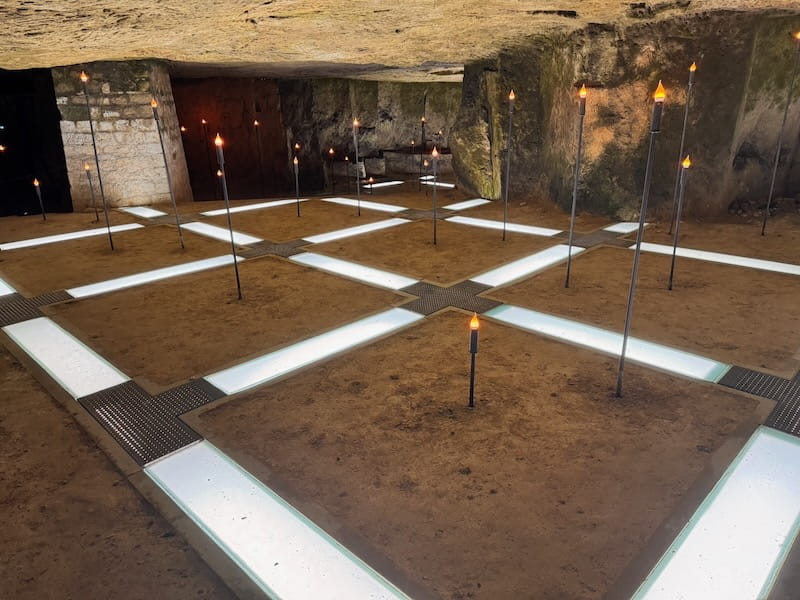 The Flambeaux de la mémoire, or “Torches of Remembrance,” mark the underground space that once separated French and German positions inside the Caverne du Dragon ©OffbeatFrance
8. The Germans came back in 1918
The fighting here didn't end with the failed French attack of 1917. The following spring, the Germans overran the French and British troops defending the ridge.
Then the German army pushed on toward Paris. They would be about 70 kilometers (44 mi) from the capital when they were finally stopped.
It took months to regain the lost ground, and the ridge was retaken just weeks before the war ended. After four years of fighting, men were still dying for this piece of land.
9. You can visit a headquarters built for Hitler
The area’s wartime history didn't end in 1918.
Near the western end of the Chemin des Dames, at Margival, the Germans built a sprawling complex of concrete bunkers known as Wolfsschlucht II, or “Wolf’s Ravine II.”
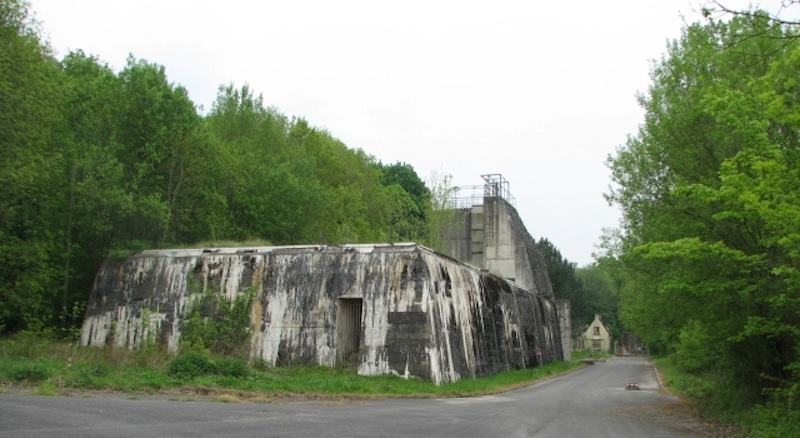 Hitler's bunker at Margival, known as Wolfsschlucht II, by TCY via Wikimedia Commons CC BY-SA 3.0
On 17 June 1944, Hitler met senior commanders Rommel and von Rundstedt here to discuss the Allied landings in Normandy. The fighting had shifted elsewhere, but this area had become a place from which Germany’s leaders tried to direct the war – and you can visit parts of the surviving bunker complex.
10. The landscape itself is the monument
For local families, the war also meant losing control of their homes and livelihoods. Under German occupation, civilians faced requisitions and compulsory labor.
At Craonne, you can walk the streets of a village that no longer exists. Destroyed during World War I, it was rebuilt elsewhere. A signposted trail leads through the original site, now an arboretum, where trees grow above surviving cellars.
Much of the devastated land returned to farming, but woodlands still cover trenches and shell craters. A century later, the ground still hasn’t recovered everywhere.
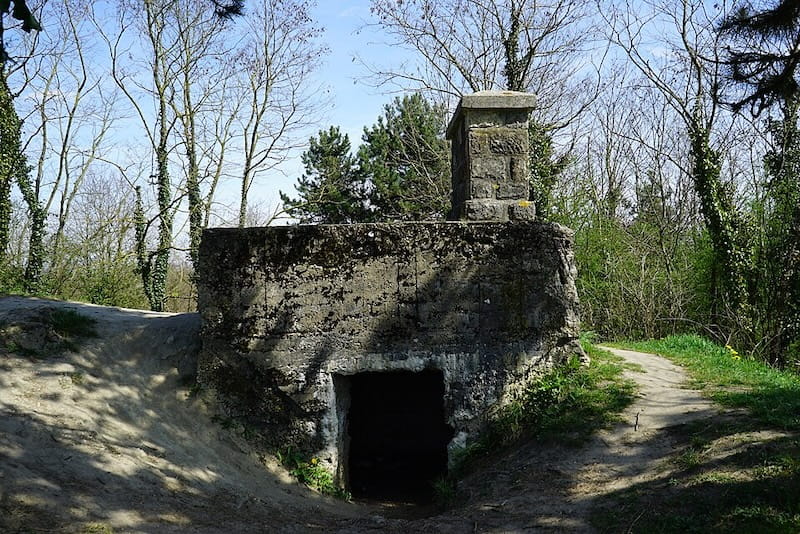 An old bunker survives at Craonne by G. Garitan via CC BY-SA 4.0
At Cerny-en-Laonnois, French and German military cemeteries face the same landscape their soldiers once fought to control.
 War graves at Cerny-en-Laonnois, where French and German military cemeteries commemorate soldiers killed in the fighting ©OffbeatFrance
Visiting the Caverne du Dragon
Of all the places I visited on the Chemin des Dames, the Caverne du Dragon most changed my understanding of what happened here.
From outside, there is little to suggest what is below ground, which you can explore on a guided tour (tours in French but they can provide you with an English audioguide).
 The visitor center entrance above the former quarry of the Caverne du Dragon ©OffbeatFrance
Our visit began with a descent beneath the parking lot. Before explaining the military installations, our guide Aloïs gave us a useful starting point.
“You should think of the Caverne du Dragon essentially as a shelter,” he said.
Imagine 400-500 men living underground while artillery hammered the ground above them.
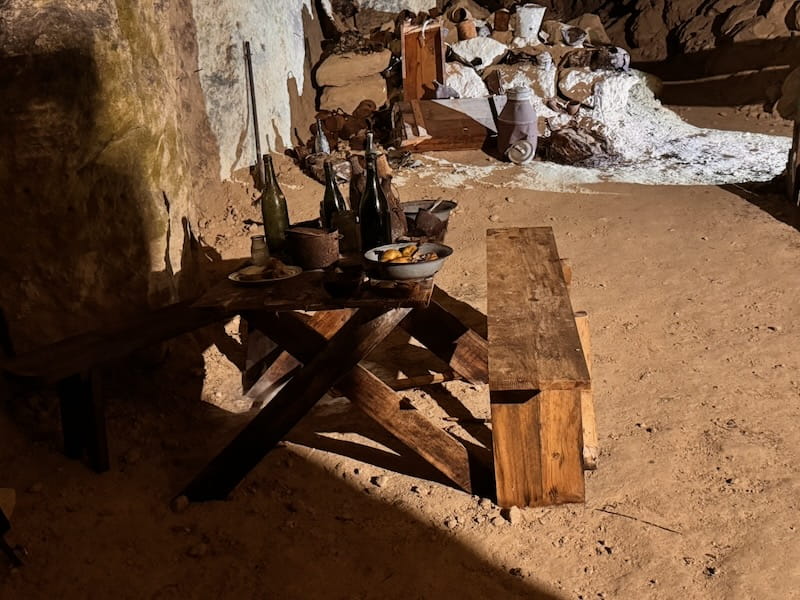 A reconstructed dining area shows where soldiers ate underground in the Caverne du Dragon ©OffbeatFrance
He pointed out that humidity inside the cavern could reach around 80 percent. Soldiers lived for long periods in their uniforms, with limited ventilation and primitive sanitation. When the artillery was particularly heavy, even leaving the cavern to use the toilets could become dangerous.
The ceiling could tremble and crack, leaving the men to wonder whether several meters of rock were really enough protection.
The reconstructed German command post shows how improvised that underground life could be. Some furniture came from houses in the surrounding villages; other pieces were built from whatever materials were available. One reconstructed bed uses wire mesh, all very spartan, as a mattress.
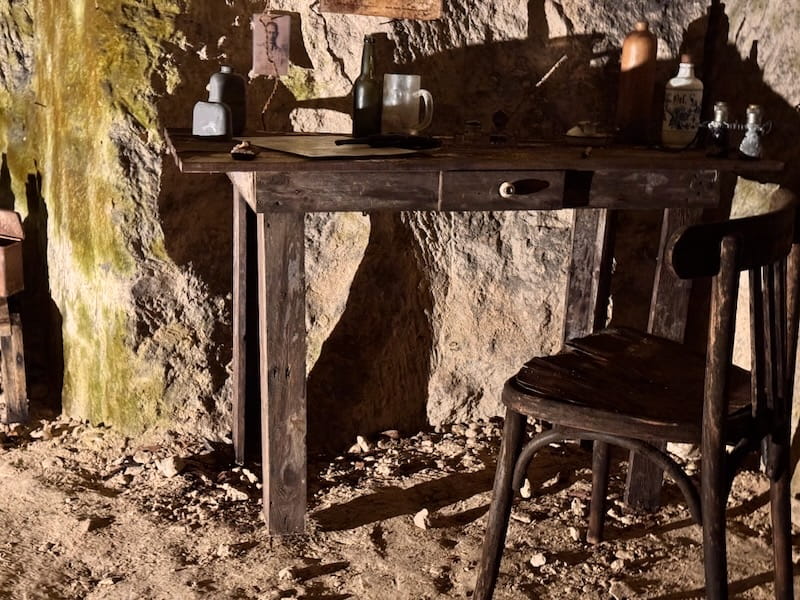 A desk and chair in the reconstructed German command post inside the Caverne du Dragon ©OffbeatFrance
Collapsed sections remain inaccessible, so visitors see only part of the original complex.
The cavern also contained a chapel, a medical post and burial spaces.
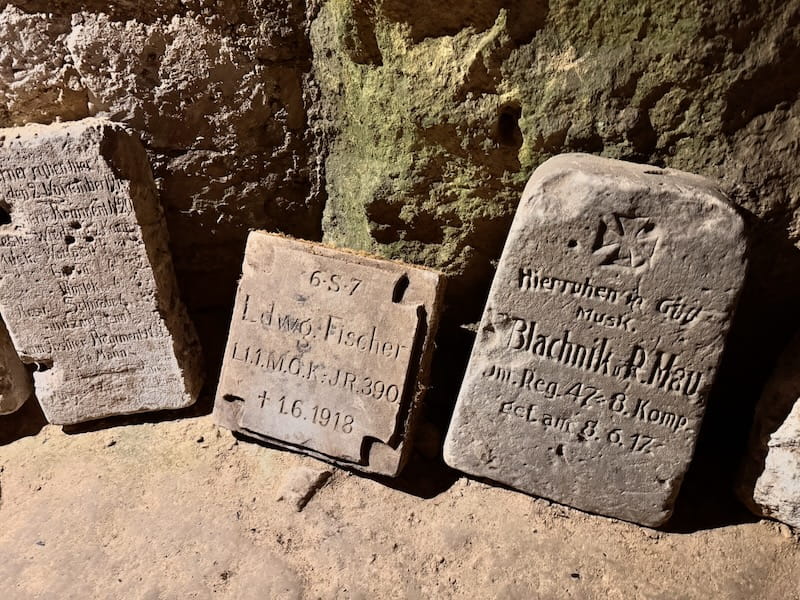 German gravestones recovered in the Caverne du Dragon, which served as both a shelter for the living and a burial place for the dead ©OffbeatFrance
After your visit, when you leave the building, turn left and look for Christian Lapie’s Constellation de la Douleur, nine upright figures made from charred wood. These commemorate the African troops who took part in the April 1917 offensive, suffering heavy losses in bitterly cold conditions.
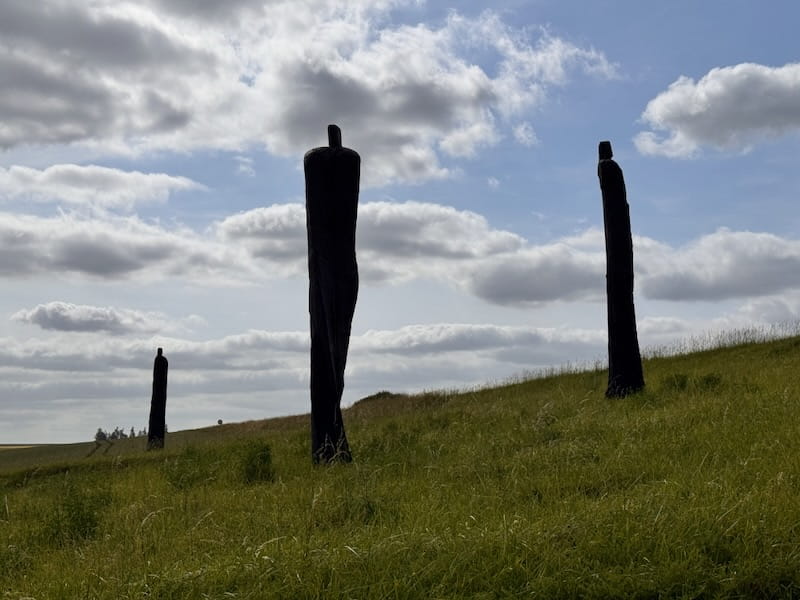 Christian Lapie’s Constellation de la Douleur honors the African soldiers who fought at the Chemin des Dames in 1917 ©OffbeatFrance
At nearby Cerny-en-Laonnois, Senegal’s poet and former president Léopold Sédar Senghor donated a plaque honoring African soldiers in the memorial chapel in 1983. Back past the Caverne des Dragons, you'll find the Napoleon monument and the remains of old Craonne.
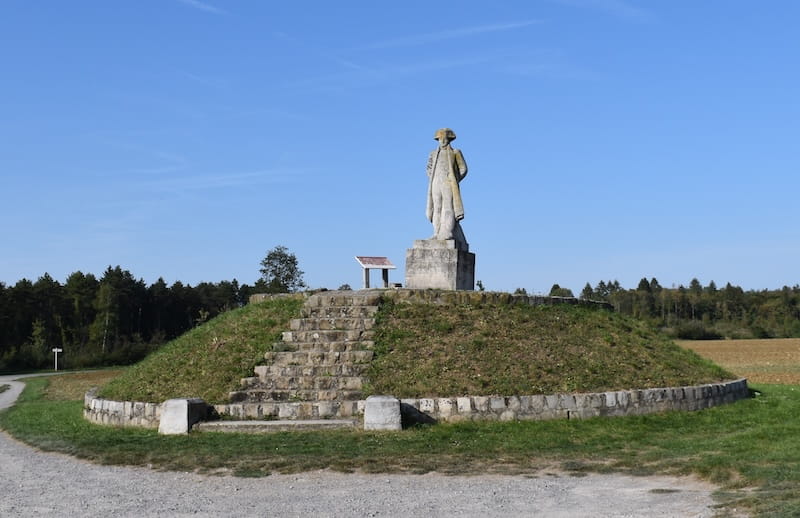 Sculpted by Georges Thurotte, this stone statue marks the exact spot of Napoleon's observation post during his hard-fought victory against Russian forces on 7 March 1814
PRACTICAL INFORMATION
- Getting there: The Chemin des Dames lies between Laon, Soissons and Reims in northern France, but you'll need a car to reach the various sites.
- How long to stay? Half a day should cover the cavern and nearby stops, a little longer if you want to visit old Craonne and walk across the Plateau de Californie.
- What to bring: A warm layer (the cavern is a cool 12℃/53℉).
- Where to stay: Laon is a good base but you can also find accommodation in the countryside nearby.
- Where to eat: I had a lovely lunch at the restaurant of the Golf de l'Ailette. Otherwise, bringing a picnic is a good idea between stops, especially if the weather is nice.
- Visiting the cavern: You'll need a guided visit for the cavern and can reserve your ticket from the official website.
- Best for: Travelers curious about French history and the daily lives of soldiers, even without an interest in military strategy.
Before you go...
If the Caverne du Dragon has sparked your interest in what lies below northern France's battlefields, there's another story to be told in Arras.
Here, thousands of soldiers prepared for a surprise attack during World War I, and you can visit part of it today at the Wellington Tunnels.
I visited the Chemin des Dames at the invitation of Aisne Tourisme.
Did you enjoy this article? I'd love if you shared it!

🇫🇷

Bonjour! I'm Leyla.
Born in Paris and now based in eastern France between Lyon and Annecy, I've spent years exploring the places and stories that explain why France is the way it is.
Offbeat France is for curious francophiles, whether you're planning a trip or simply fascinated by France. Here you'll discover the history behind the villages, castles, traditions, landscapes and everyday details that most visitors notice but few can explain.
Alongside practical travel advice, I share the context that helps you make sense out of France. The more you understand, the more rewarding every visit becomes.
If you finish an article thinking, "I never knew that... now I want to know more," then I've done my job.
Learn more about me!
Read my Substack historical essays
🇫🇷

🇫🇷
Booking.comWhat's New!


-
Chemin des Dames: Visiting the Caverne du Dragon and Battlefields
Nov 22, 26 06:03 AM
A disastrous WWI attack made the Chemin des Dames notorious. Visit its battlefields and the cavern where French and German soldiers lived almost side by side. -
Belleau Wood: Where the US Marines Made History
Oct 21, 26 03:12 AM
A peaceful French forest hides the scars of a fierce World War I battle. Walk through Belleau Wood, where US Marines made history, and visit the American cemetery. -
Wellington Tunnels and the Boves: Exploring Underground Arras
Oct 13, 26 11:12 AM
What if an entire army could hide beneath a city? Explore the Wellington Tunnels and medieval Boves of Arras, where centuries of history lie underground. -
Figurines Compiegne Museum: More Than Toy Soldiers
Oct 12, 26 05:10 AM
Visit the Museum of Figurines, Compiegne, where thousands of toy soldiers share the stage with ancient objects comic-book heroes. -
The Strange Story of Compiegne’s Armistice Wagon
Oct 07, 26 04:08 AM
Discover the strange story of the Compiegne Armistice Wagon, where Germany signed an armistice in 1918 and France signed one in 1940.