Fascinated by Gallo-Roman history? Click Here to download > > > Here are 6 ways Rome affected France





Follow me on
- Home ›
- Destinations ›
- Western France ›
- Limoges
Limoges, France: More Than Porcelain
Published 23 July 2026 by Leyla Alyanak — Parisian by birth, Lyonnaise by adoption, historian by passion
Best known for its world-famous porcelain, Limoges has far more to offer than fine china. This story tells you why this historic city in central France deserves a place on your itinerary: its Roman origins, medieval streets, remarkable enamel tradition, industrial heritage and vibrant food scene – and porcelain, of course.
For many of us, French included, the city of Limoges brings up a single word: porcelain.
For more than two centuries, porcelain guided the city - not just its economy, but its architecture and even its identity.
But porcelain is only part of Limoges's story.
 Limoges from above ©CDDLimoges/Manza Studio
QUICK FACTS ABOUT LIMOGES
- Population: ~130,000
- Département: Haute-Vienne (87)
- Region: Nouvelle-Aquitaine
- Historic industries: Limoges porcelain, medieval enamels
- Major landmarks: Gare des Bénédictins, Saint-Étienne Cathedral, Four des Casseaux
- Founded: Around 10 BC as the Roman city of Augustoritum
- Time needed: One full day, preferably two
- Status: UNESCO Creative City for Crafts and Folk Art; also a Ville d'art et d'histoire
From Augustoritum to Limoges
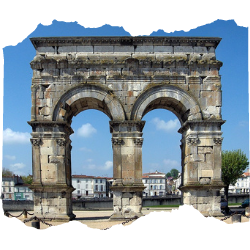
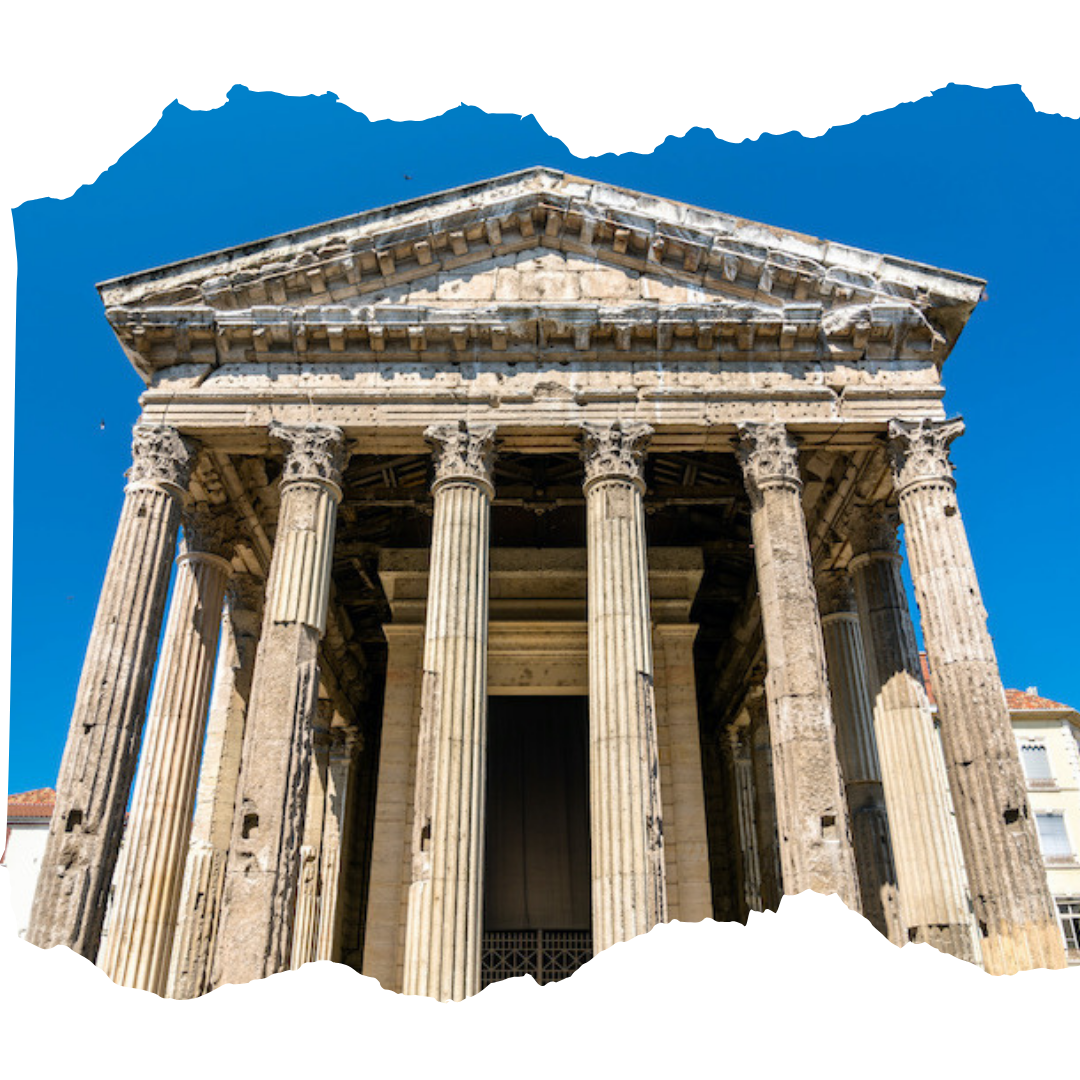
Long before it became synonymous with porcelain, Limoges was called Augustoritum, an important Roman city founded around 10 BC on the banks of the Vienne River.
Named after Emperor Augustus, the city stood at the crossroads of several major Roman roads and became the capital of the Lemovices, the Gallic tribe whose name eventually evolved into Limoges. Like many prosperous Roman settlements, Augustoritum had an amphitheater, baths, a forum and a bridge across the river, although much of this heritage has since disappeared.
IF YOU LOVE ROMAN RUINS

After the Roman Empire fell, Limoges gradually grew into an important medieval city.
By the 11th century, pilgrims were flocking to the tomb of Saint Martial, traditionally regarded as the city's first bishop. His shrine became an important stop on the Via Lemovicensis, one of the four great pilgrimage routes to Santiago de Compostela, bringing wealth and influence to the city.
The pilgrims also created a market for religious objects. By the 12th century, Limoges had become one of Europe's leading centers for champlevé enamel, in which colored enamel was fused into recesses carved into copper.
The city's workshops produced reliquaries and other religious objects that were sold far beyond Limoges. Their work found its way into churches and collections across Europe, making enamel an important international luxury trade centuries before porcelain appeared.
During the Renaissance, Limoges artists developed painted enamel, creating increasingly sophisticated works sought by royal and wealthy patrons.
 Today, the best place to discover this often-overlooked chapter of Limoges' history is the Musée des Beaux-Arts, whose outstanding enamel collection surprises many visitors who arrive expecting to find only porcelain ©OffbeatFrance
But in 1768, the city's future changed dramatically with the discovery of kaolin, the white clay used to make hard-paste porcelain.
The discovery that changed Limoges
Before kaolin's discovery near the village of Saint-Yrieix-la-Perche just south of Limoges, European manufacturers had struggled to reproduce the fine porcelain developed in China centuries earlier. Suddenly, France possessed one of the essential ingredients it needed.
But having kaolin on its doorstep wasn't enough to guarantee Limoges's success.
The city already had much of what porcelain manufacturers needed. The Vienne River supplied water, while the surrounding forests provided wood to fire the early kilns before coal, and later gas, took over.
Limoges also had generations of skilled craftsmen accustomed to working with enamel and ceramics, and the improvement of transport links and the arrival of railways made it easier to bring in raw materials and export finished pieces.
By the 19th century, Limoges had become France's porcelain capital and entire neighborhoods grew up around the factories. At its peak, the city counted more than 50 factories and workshops and around 130 kilns, producing millions of pieces for markets across Europe and North America.
One name, however, would become synonymous with Limoges porcelain.
DAVID HAVILAND AND LIMOGES
In 1842, American china merchant David Haviland came to Limoges looking for porcelain to export to the United States. He stayed.
Over the following decades, he built one of the city's largest porcelain manufacturers, helping transform Limoges into an international brand. His factories employed thousands of workers, cementing the city's reputation in the American market, where "Limoges" became almost synonymous with fine porcelain.
Inside the Four des Casseaux
Today, nearly all of Limoges's great industrial kilns have disappeared.
The best place to understand the role of porcelain in the city's growth is the Four des Casseaux, the last large porcelain kiln of its kind in France still in its original building. It is now a museum, not just about porcelain but also about the people whose lives revolved around it.
 The Four des Casseaux is the last large porcelain kiln of its kind still standing in France within its original building ©OffbeatFrance
Standing inside, I find it almost impossible to imagine the heat once generated within these brick walls, around 1400°C/2552℉. Men tended fireboxes, eight of them, working in exhausting conditions and rarely reaching old age – most died in their thirties.
 Braving the tremendous heat of the porcelain kiln
A single kiln like this one could fire around 20,000 pieces at a time, and the largest manufacturers operated several simultaneously. Haviland alone eventually ran around 20 kilns to satisfy demand from North America.
THE RED CITY
Limoges is often called la Ville rouge, or the Red City. Mostly it's because of the city's long tradition of labor activism and left-wing politics, which also earned it another sobriquet, the "Rome of socialism."
Limoges is also known for its rebelliousness – it was a center of the French Resistance during World War II, and is also the birthplace of the CGT, France's second-largest trade union. The red-brick chimneys and glowing porcelain kilns that once dominated the skyline reinforced the image.
More than a century later, the kiln still bears the marks of its working life. Vapors released during firing gradually settled on the brickwork, creating the glossy, almost glass-like surface that accumulated over decades of production.
One detail I found especially memorable involved the gazettes, the protective ceramic containers used during firing. After repeated exposure to intense heat they cracked and became unusable.
 Stacking the gazettes inside the kiln
Rather than throwing them away, factory owners recycled the broken fragments to pave their yards, and the city used them in streets and pavements. Look down as you wander around Limoges and you may find yourself walking on tiny, shiny fragments of the industry's past.
During the Christmas season, when festive lights reflect off the porcelain fragments, some streets are said to sparkle.
 Standing inside, it's almost impossible to imagine the heat once generated within these brick walls. You can see the decades of use on the walls, the vapors released during firing gradually settling on the brickwork and creating a glassy surface you still have today ©OffbeatFrance
Visit a working porcelain factory
It's one thing to admire a finished porcelain plate in a museum. It's quite another to watch it take shape.
I was fascinated by my visit to Ateliers Arquié, one of the few Limoges workshops that opens its doors to visitors. Tours are available in English (but you have to book ahead of time) and, even if you know nothing about porcelain, watching each stage unfold — from plaster moulds and liquid clay to glazing, painting and firing — gives you a new appreciation for the craftsmanship behind every piece.
Many of the techniques haven't changed in generations, even if modern technology now sits alongside traditional skills. At Arquié, historic mould-making shares workshop space with 3D printing, although every piece still passes through experienced hands before it leaves the factory.
The industry itself has evolved, too.
Along with the classic tableware and the famous apothecary jars, today's factories work with designers and luxury brands.
During my visit, I saw everything from perfume bottles and lighting fixtures to a porcelain stool. Hanging in the showroom was a smaller version of the spectacular porcelain chandelier the company created for the Opéra d'Avignon, proof that Limoges porcelain is no longer confined to the dining table.
 The porcelain chandelier ©OffbeatFrance
Things to do in Limoges, France
Beyond porcelain, this mid-sized French city has plenty to see and do. Its people are friendly and discreet – I was told by a local that this is a characteristic of the city's residents.
Because Limoges is not a major tourist destination, much of what you'll find feels refreshingly authentic. The independent boutiques, the cafés and restaurants, even the city's quiet confidence seem designed for locals first and visitors second.
Sit in a restaurant at lunchtime and you may notice an unusual gesture. Before the food arrives, people often turn over their empty plates to see where they were made.
It had better be Limoges.
Admire the train station
 Photo by Le train, c'est trop bien, CC BY 4.0
Granted, it's an unusual sightseeing stop, but the Gare des Bénédictins is widely regarded as one of France's most beautiful railway stations. Built in 1929, its copper dome and distinctive clock tower have become one of the city's best-known landmarks.
It's lit up at night, even more gorgeous then.
Explore the old quarter
The historic center around the Cathédrale Saint-Étienne feels very different from the industrial districts that grew up around the porcelain trade.
 Half-timbered houses line the Rue de la Boucherie, once the heart of Limoges's medieval meat trade ©OffbeatFrance
Wander through the narrow cobblestoned streets, especially Rue de la Boucherie, once home to the city's butchers and still one of Limoges' most atmospheric streets.
Don't miss the nearby Church of Saint-Michel-des-Lions, recognizable by its distinctive copper globe. Inside is a revered Black Madonna, one of more than 180 found across France.
 The Black Madonna in the Church of Saint-Michel-des-Lions ©OffbeatFrance
Then climb the steps to the cathedral and look for traces of the medieval city that existed long before porcelain made Limoges famous.
Visit the cathedral and gardens

Construction of Saint-Étienne Cathedral began in 1273 and continued for more than six centuries. Inside, don't miss the remarkable Renaissance stone screen (called a rood screen) separating the nave from the choir, along with the cathedral's stained-glass windows.
 Carved in the 16th century, the cathedral's Renaissance jubé is one of the rare rood screens still standing in a French cathedral ©GFreihalter, CC BY-SA 3.0
Outside, the Jardins de l'Évêché cascade down toward the Vienne River with some of the city's loveliest views. If you're lucky enough to visit during a fair or festival on the cathedral square (parvis), you'll get an even better taste of local life.
Discover Limoges' enamel tradition
Porcelain may dominate the city's image today, but centuries ago, Limoges was already an international center for enamel.
The Musée des Beaux-Arts, housed in the former Bishop's Palace, contains one of France's finest collections of Limoges enamels, from medieval champlevé masterpieces to exquisite Renaissance painted enamels.
Walk along the Vienne
The Vienne has been closely linked to Limoges since Roman times, long before railways and porcelain factories transformed the city.
If you're visiting the Four des Casseaux, cross the road and head down to the river. Turn right and you'll soon reach the Pont Saint-Étienne, one of France's best-preserved medieval bridges, linking the old city with what was once the tanners' quarter.
 Saint-Etienne Bridge in Limoges, with the cathedral in the background ©OffbeatFrance
Today the riverside paths are popular with walkers and joggers, but they're also one of the nicest places to slow down for a while. On a warm day, the river is so calm you may wish you'd brought a kayak.
Browse the Halles Centrales
No French city feels complete without a market, and Limoges's Halles Centrales also happens to be one of the city's architectural landmarks.
 Notice the frieze just below the name - all of it ceramic ©CDD Limoges/Manza Studio
Built in the late 19th century, the iron framework recalls the engineering of the Eiffel era, while the exterior is decorated with colorful ceramic friezes.
Come here for the food as much as the architecture. The produce is superb, whether you're preparing a picnic along the banks of the Vienne or looking for lunch.
I opted for a very French bavette with Béarnaise sauce at Chez Alphonse, just around the corner, for some non-touristy and authentic French fare. This is cattle country, and Limousin beef has a reputation that extends far beyond the region.
Look for architectural jewels
Most visitors associate Limoges with medieval streets or porcelain factories, but the city also has an overlooked collection of early 20th-century architecture.
Its Art Deco scene won't rival Saint-Quentin, but if you know what to look for you'll find geometric façades and decorative ironwork scattered throughout the center.
Limoges is something of an architectural patchwork, where medieval buildings, industrial heritage and the 20th century comfortably coexist.
 Once used to store imported meat from Argentina during the post-World War I shortages, the Pavillon du Verdurier is now an exhibition venue. Photo Sergey Prokopenko, CC BY-SA 3.0
And finally...
If 20th-century history interests you, the Musée de la Résistance explains why the Limousin region became one of the strongholds of the French Resistance during World War II, with exhibits focusing on the Occupation, deportation and local resistance networks.
Beware though, all the explanations are in French, although there are English audio guides.
PRACTICAL INFORMATION
- Getting there: Limoges is served by Intercités trains from Paris Gare d'Austerlitz (roughly 3 hours)
- How long to stay? I spent a day in the city and was able to visit everything I've described in this article – but I spent less time than I would have liked in the cathedral and the museum.
- Where to stay: Most of the attractions I've mentioned are concentrated around the historic center. Try this lovely guest house, Les Allois, right near the cathedral.
- Where I ate: I had a lovely lunch at Chez Alphonse near Les Halles, an area absolutely crowded with good restaurants with great regional food and plenty of locals. La Cuisine du Cloître, which I didn't have time to try, was highly recommended to me.
- Best for: travelers interested in history, architecture, industrial heritage, porcelain and enamel craftsmanship, and regional gastronomy.
FAQ
Why is Limoges famous for porcelain?
Why is Limoges famous for porcelain?
Limoges became a major porcelain center after deposits of kaolin, the clay needed to make hard-paste porcelain, were discovered nearby in the late eighteenth century. By the nineteenth century, its factories were exporting porcelain around the world.
What is kaolin?
What is kaolin?
Kaolin is a fine white clay used to make porcelain. It gives porcelain its whiteness, strength and translucency.
What is the Four des Casseaux?
What is the Four des Casseaux?
The Four des Casseaux is a 19th-century industrial porcelain kiln in Limoges. It is the last large porcelain kiln of its type still standing in France within its original building.
What makes Limoges porcelain different?
What makes Limoges porcelain different?
Limoges porcelain is made from a specific blend of kaolin, feldspar and quartz and fired at very high temperatures. Today, the name is protected by a geographical designation covering production around Limoges.
Why does porcelain matter to Limoges?
Why does porcelain matter to Limoges?
For more than two centuries, porcelain shaped Limoges' economy, workforce and urban development. At its peak, the city had more than 50 factories and over 130 kilns, earning an international reputation that continues today.
Before you go...
Limoges has been designated a Ville d'Art et d'Histoire, in recognition of the richness of its heritage and of the work the city has done to preserve and explain it to visitors. It's one of nearly 200 towns with this Ministry of Culture label – if you're curious how it stacks up against labels like Plus Beaux Villages or Villes Fleuries, this guide to France's tourism labels breaks down what they all mean.
Limoges is also a UNESCO Creative City for Crafts and Folk Art, which acknowledges that the skills which made the city famous — enamel, porcelain and other traditional crafts — continue to thrive today.
It would be easy to visit Limoges, buy a porcelain cup or plate, and move on, but you'd be missing out on all the remarkable history that made Limoges more than the capital of porcelain.
Did you enjoy this article? I'd love if you shared it!

🇫🇷

Bonjour! I'm Leyla.
Born in Paris and now based in eastern France between Lyon and Annecy, I've spent years exploring the places and stories that explain why France is the way it is.
Offbeat France is for curious francophiles, whether you're planning a trip or simply fascinated by France. Here you'll discover the history behind the villages, castles, traditions, landscapes and everyday details that most visitors notice but few can explain.
Alongside practical travel advice, I share the context that helps you make sense out of France. The more you understand, the more rewarding every visit becomes.
If you finish an article thinking, "I never knew that... now I want to know more," then I've done my job.
Learn more about me!
Read my Substack historical essays
🇫🇷

🇫🇷
Booking.comWhat's New!


-
The Strange Story of Compiegne’s Armistice Wagon
Oct 07, 26 04:08 AM
Discover the strange story of the Compiegne Armistice Wagon, where Germany signed an armistice in 1918 and France signed one in 1940. -
Arras, France: Where Things Are Not What They Seem
Sep 30, 26 04:34 AM
Discover things to do in Arras France, from grand Flemish-style squares to a hidden underground city, a curious citadel and a rebuilt historic center. -
Chateau De Pierrefonds: The Strange Curse Of A Fairy-Tale Castle
Sep 26, 26 02:16 PM
Discover Château de Pierrefonds, a fairy-tale castle in northern France with a turbulent history, spectacular restoration and plenty of strange surprises. -
The Louvre-Lens Museum: How A Former Mining Town Got The Louvre
Sep 21, 26 07:51 AM
Discover why the Louvre-Lens Museum brought the Louvre to a former mining town, plus 11 remarkable works worth the trip from Paris. -
Poitiers in France: Why This Historic City Deserves More Visitors
Aug 02, 26 03:05 PM
Discover the best things to do in Poitiers, France, from Roman ruins and medieval streets to Eleanor of Aquitaine's legacy and remarkable architecture.