Fascinated by Gallo-Roman history? Click Here to download > > > Here are 6 ways Rome affected France





Follow me on
- Home ›
- Historical Travel ›
- Medieval Places in France
8 Medieval Places in France Where the Middle Ages Are Still Visible
Published 31 August 2026 by Leyla Alyanak — Parisian by birth, Lyonnaise by adoption, historian by passion
These eight medieval places in France still exist and bring the Middle Ages to life, from imposing castles and fortified towns to villages, walls and ramparts that reveal how people once lived and worked.
We may love all the medieval corners of France's towns and villages, but the truth is that France has demolished an astonishing amount of its historic past.
Wars and religious upheaval have physically destroyed part of our medieval heritage, while urban redevelopment and changing ideas about what was worth keeping have also taken their toll.
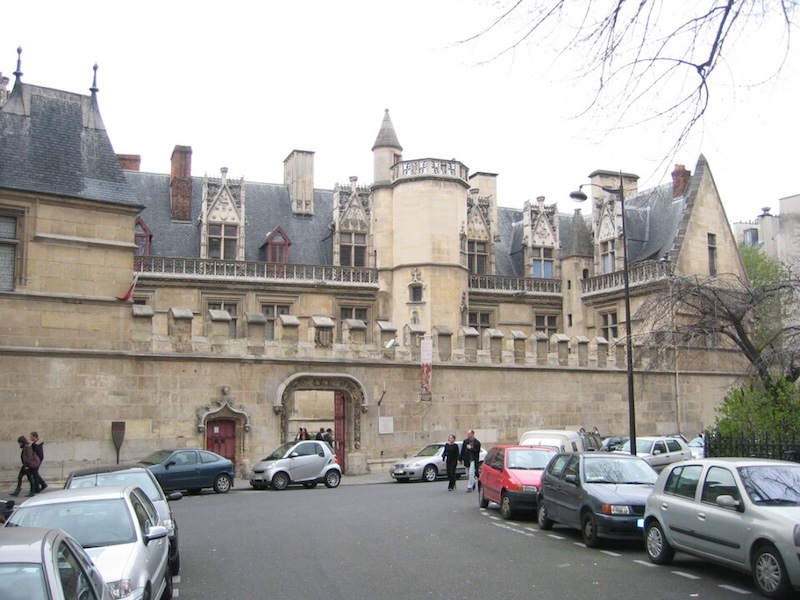 The medieval Hôtel de Cluny survives in the heart of modern Paris — with Roman ruins beneath it and 21st-century traffic passing outside
MORE MEDIEVAL PLACES IN FRANCE


But still, enough survives to make medieval France surprisingly easy to find.
And “survival” can mean different things. Sometimes an entire building remains, or just a fragment of something that was once much larger. The medieval structure may have been altered repeatedly over the centuries, and sometimes what is left isn't a building at all, but an object that has somehow made its way across nearly a thousand years.
For those of us who are fascinated by the Middle Ages, here are eight places where medieval France survives in one form or another.
1. Chartres: the medieval cathedral
Chartres Cathedral is one of those buildings that makes the phrase “medieval France” seem almost too obvious.
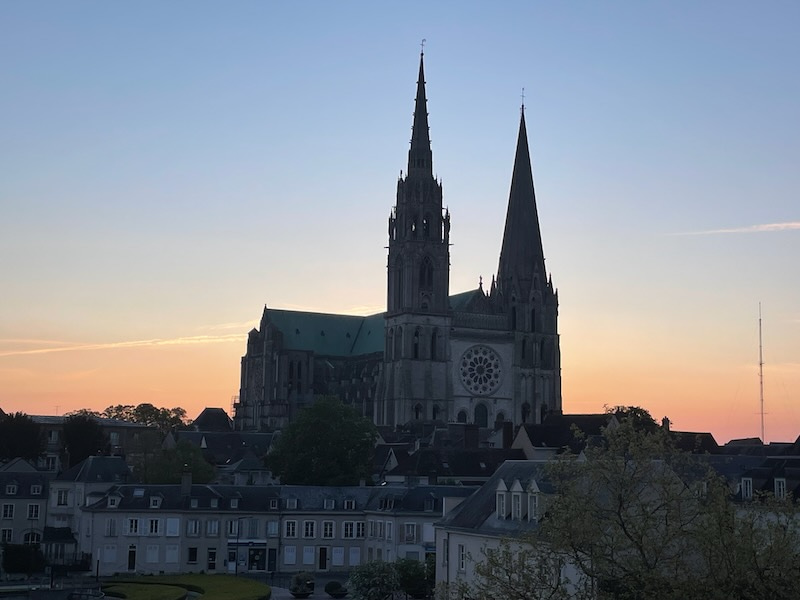 I fell for this view when I stayed at a hotel down the hill from the cathedral - and woke up to this ©️OffbeatFrance
An earlier Romanesque cathedral once stood here, but a devastating fire in 1194 led to its rebuilding. The main structure of the cathedral we see today was completed in only 26 years, an extraordinary achievement that produced one of the great monuments of French Gothic architecture, recognized as such by UNESCO.
What makes Chartres especially important is how much of the medieval decoration still exists.
The cathedral has an exceptional collection of 12th- and 13th-century stained glass, along with sculpted portals and statues.
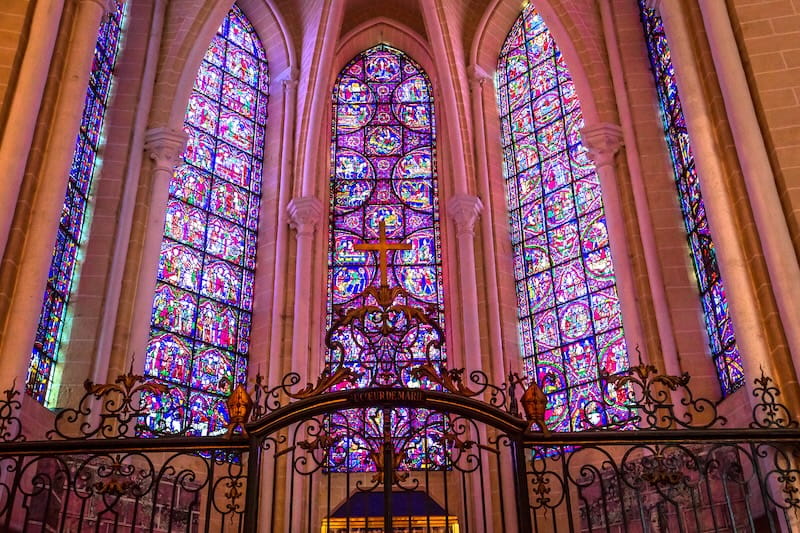
But don't just photograph the famous west façade – go inside and linger below the stained glass .
Look, too, at the floor. The medieval labyrinth covers the floor of the nave, a circular pattern of winding paths that pilgrims once followed as a symbolic journey. These days it is sometimes covered by chairs and other furniture so you might miss it if you're not looking carefully.
And then walk away from the cathedral and look back. Chartres was designed to dominate its surroundings, and it still does, its towers visible from a great distance across the Beauce plain.
2. Langres: the medieval walls
Langres gives you a different experience altogether: here, medieval France is something you can walk through and around.
The town stands above the surrounding land on a well-protected promontory, so well protected it has managed to escape capture over the centuries.
Its historic fortifications extend for about 8 kilometers (5 mi), with a 3.5-km sentry path around the town itself. The walls were repeatedly modernized and extended as warfare evolved, especially as newer weapons increased their reach.
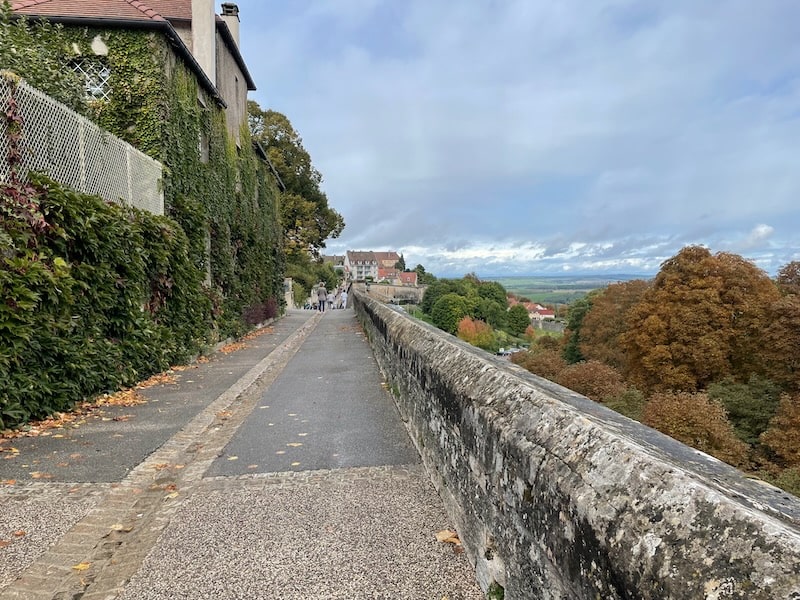 The Chemin de Ronde in Langres ©️OffbeatFrance
Take the chemin de ronde, the rampart walk, rather than simply admiring the walls from below. The circuit passes towers and gates while opening onto views across the surrounding countryside.
Once you're back inside the walls, explore the old streets around the cathedral. Langres has much more than its fortifications, including Renaissance houses and the birthplace of Denis Diderot, whose former home is now an excellent museum of the Enlightenment.
But walk the ramparts first. They anchor the city's history.
3. Guérande: the medieval walled town
Guérande takes the idea of a fortified town a step further.
Its walls enclose the historic center in a 1,300-meter circuit with six towers and four gates. Much of the existing enclosure was built during the 13th and 14th centuries, although some earlier elements have survived. It also shows how military architecture adapted to the arrival of artillery.
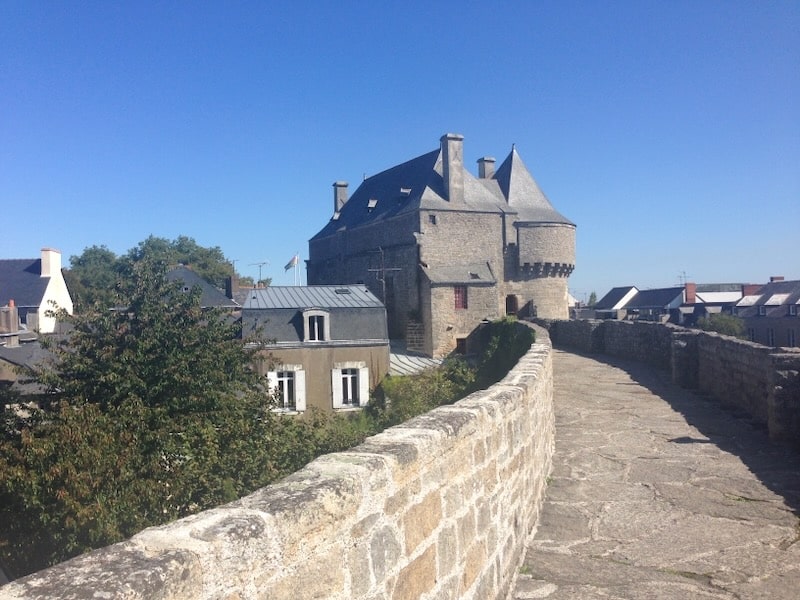 Part of the ramparts around Guérande ©OffbeatFrance
The walls nearly suffered the fate of so many French fortifications. In the 19th century, there were proposals to dismantle them as the town modernized. Instead, they were classified as historic monuments in 1877.
Today, you can enter the medieval town through its gates and then walk its streets before taking in the fortifications from outside.
The Porte Saint-Michel is particularly impressive. It wasn't simply a military entrance: it was also the residence of the town captain and later, after Brittany was united with France, the residence of the governor.
These walls still enclose a living town and that's what makes them so interesting.
4. Pérouges: the medieval village that nearly disappeared
If Guérande shows you the defences of a medieval town, Pérouges lets you walk through the town itself. This is the place you should visit to witness the survival of an entire medieval town rather than just one monument.
This small fortified town northeast of Lyon retains its medieval street plan, along with the corbelled upper floors that project over the street and timber framing, arcades and former merchants' houses. But Pérouges did not simply sail untouched through the centuries.
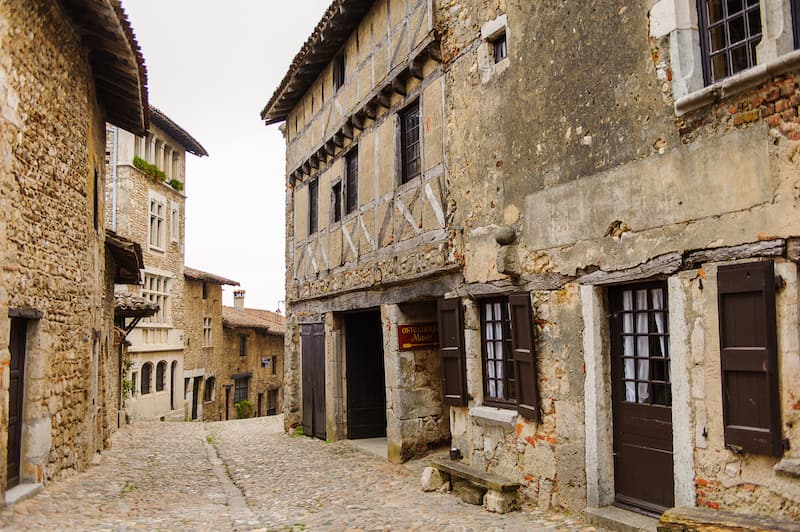 While parts of Pérouges have been "beautified" (with flower pots and building renovations) many parts of the village appear mostly untouched ©OffbeatFrance
By the end of the 19th century, it had fallen into decline and was partly abandoned. Its survival owes much to the Comité de Conservation du Vieux Pérouges, founded in the early 20th century, which began a long campaign of restoration.
So Pérouges is not a perfectly preserved medieval town. Some buildings contain Renaissance elements, others have been restored, and the village is now very much a living tourist destination, with permanent residents, restaurants, artisans and accommodation.
Once inside the walls, do what Pérouges is made for: walk, without much of a plan.
And yes, eat a sweet galette de Pérouges (don't worry, your nose will guide you). Medieval authenticity is one thing. Butter and sugar are another.
5. Chinon Castle: where medieval power played out
While Pérouges is about ordinary medieval town life, Chinon takes us back to the monarchs who ruled it.
The Royal Fortress of Chinon rises above the Vienne River on a long rocky spur, and its position tells you immediately why people wanted to control it.
The site had been fortified for centuries, but the medieval fortress became particularly important under the Plantagenets.
Henry II of England made Chinon one of his main continental strongholds and used it as a base for his political and military affairs, dying here in 1189.
Chinon later acquired another famous connection. In 1429, Joan of Arc came here to meet the future Charles VII. This is where she persuaded him to support her mission to help relieve Orléans.
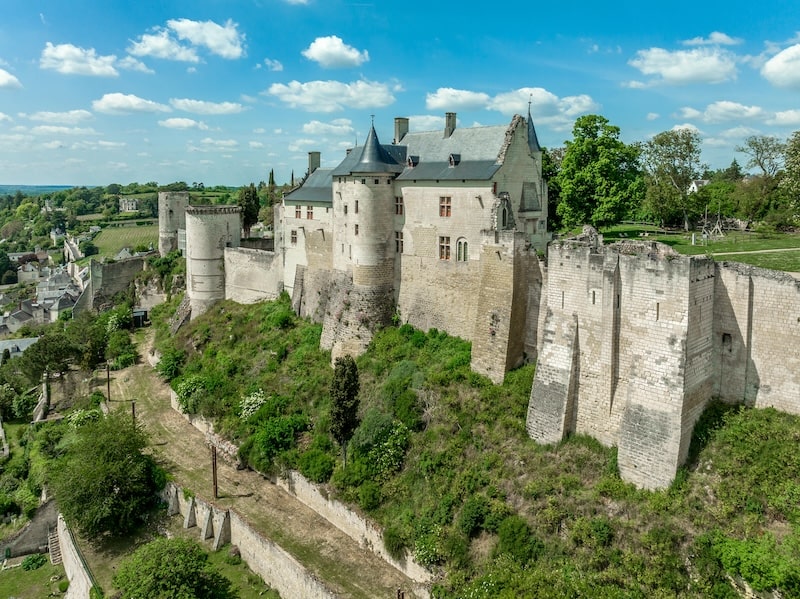
Today, the fortress is less a single castle than a sequence of fortified spaces stretching along the ridge. You can walk between the forts, towers and walls while looking down over the modern town and the Vienne River.
The link between the fortress and the town are part of its appeal, as the two aren't isolated from one another and can show you how closely royal politics and everyday life were intertwined.
6. Poitiers: a world of medieval power
In Poitiers, another royal stronghold, a very different kind of medieval building survived by continuing to be useful.
The Palais was the seat of the Counts of Poitou and Dukes of Aquitaine, and its history stretches back to the early Middle Ages. A new palace was built shortly after the year 1000, and the great ceremonial hall was rebuilt under the Plantagenets around 1200.
 The Salle des Pas Perdus in Poitiers ©OffbeatFrance
The Salle des Pas Perdus — literally the Hall of Lost Footsteps — is the building's great medieval survivor. Its huge fireplaces and monumental scale were designed for ceremony and the exercise of political and judicial power.
And then history did what it tends to do: the building changed function.
After the French Revolution, the palace became a courthouse and continued in that role until 2019. It is now owned by the city.
That makes the Palais especially good for understanding medieval architecture as something that remained part of a working city rather than becoming a museum piece.
Look across at the medieval fireplaces when you visit. They are difficult to miss.
7. Carcassonne: a medieval city rebuilt
And then there is Carcassonne, where rather than ask about medieval survival, you should ask about how much was reconstructed. This is where it hits home: “medieval” does not always mean untouched.
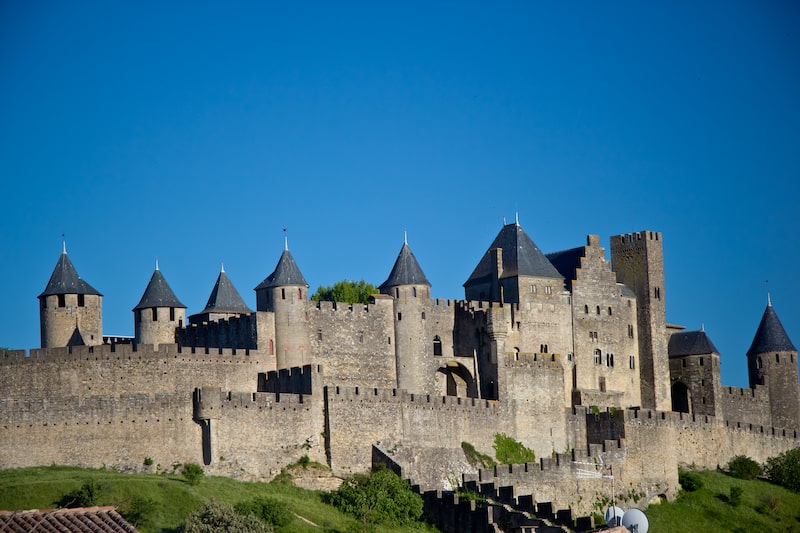
The Cité rises above the modern city inside two enormous rings of walls, with towers, gates, a castle and the Basilica of Saint-Nazaire enclosed within them. The fortifications incorporate Roman foundations and were substantially rebuilt and strengthened in the Middle Ages, particularly in the 13th century.
But much of what you see today is not the original but the 19th century restoration by Eugène Viollet-le-Duc, who reconstructed the fortress (after ample study and research, of course) as he believed it had appeared in the 13th century.
His work was controversial even at the time, including criticism of some of his architectural choices.
That controversy is now part of Carcassonne's history. UNESCO recognizes both the exceptional medieval fortress and the importance of Viollet-le-Duc's restoration to the development of modern conservation. At the same time, UNESCO notes that the 19th-century work means the Cité cannot be considered completely authentic as a medieval monument, even though much of the ramparts and towers is genuinely medieval or earlier.
So walk the ramparts, pass through the Porte Narbonnaise and the Porte d'Aude, and look closely at what you are seeing. Carcassonne is not a medieval city preserved exactly as it was. It is a medieval fortress that survived, deteriorated, was controversially reconstructed and eventually became one of France's most famous examples of medieval heritage.
8. Mont-Saint-Michel: a fortress of faith
I've kept this one for last because it covers all aspects of medieval life, from pilgrimage to monastic life and warfare, all atop this tiny rock.
The Benedictine abbey, begun in the 11th century, still rises above the village and its fortifications, while the 13th-century Merveille preserves the architecture of a major medieval monastery.
By the 14th century the village had been enclosed by ramparts, and during the Hundred Years’ War the Mont repelled English attacks and became a symbol of French resistance.
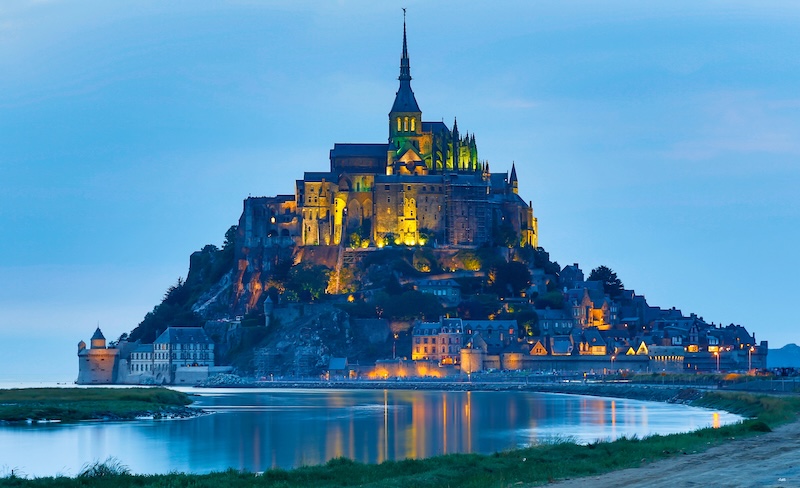
But it's not at all a medieval time capsule. Parts of it were rebuilt after fires and structural collapses; its Romanesque choir fell during the Hundred Years’ War and the abbey was later turned into a prison.
Despite this, its medieval core is incredibly present (if you ignore the shops and restaurants along the main street that leads to the top).
It's one of those iconic French sites that you should see once in your life – even if you're coming from afar. But it does require a bit of advance planning.
Seeing the medieval past in France
These eight places don't represent a single version of medieval France and I've chosen them to show you various ways the Middle Ages survived here, from fortifications to entire villages to reconstruction efforts.
Medieval places in France were never static and like the rest of the country, remnants of the era lived and breathed throughout the generations: they were added to, destroyed, reused, or even rescued.
But that is the point: whatever changes may have occurred, the medieval essence has somehow survived.
Did you enjoy this article? I'd love if you shared it!

🇫🇷

Bonjour! I'm Leyla.
Born in Paris and now based in eastern France between Lyon and Annecy, I've spent years exploring the places and stories that explain why France is the way it is.
Offbeat France is for curious francophiles, whether you're planning a trip or simply fascinated by France. Here you'll discover the history behind the villages, castles, traditions, landscapes and everyday details that most visitors notice but few can explain.
Alongside practical travel advice, I share the context that helps you make sense out of France. The more you understand, the more rewarding every visit becomes.
If you finish an article thinking, "I never knew that... now I want to know more," then I've done my job.
Learn more about me!
Read my Substack historical essays
🇫🇷

🇫🇷
Booking.comWhat's New!


-
Poitiers in France: Why This Historic City Deserves More Visitors
Aug 02, 26 03:05 PM
Discover the best things to do in Poitiers, France, from Roman ruins and medieval streets to Eleanor of Aquitaine's legacy and remarkable architecture. -
Limoges, France: Much More Than Porcelain
Jul 25, 26 09:14 AM
Limoges France is more than porcelain. Discover medieval streets, enamel masterpieces and centuries of history. -
Saint-Quentin, France: The Art Deco City No One Talks About
Jul 15, 26 05:31 AM
Saint-Quentin France rebuilt itself in Art Deco after WWI left it in ruins. It's now one of France's most striking architectural cities. -
Visiting France In A Heatwave: What You Need To Know
Jun 26, 26 12:45 PM
Visiting France during a heatwave? Learn how to stay cool and enjoy your trip despite the heat. -
Angoulême: From Medieval Stronghold To France's Capital Of Comics
Jun 26, 26 12:44 PM
Medieval streets, a Romanesque cathedral, five centuries of papermaking, and giant comic murals. Angoulême surprises most visitors.