Fascinated by Gallo-Roman history? Click Here to download > > > Here are 6 ways Rome affected France





Follow me on
- Home ›
- Destinations ›
- Northern France ›
- The Burghers of Calais
The Burghers of Calais: Six Men Who Saved Their City
Published 26 October 2026 by Leyla Alyanak — Parisian by birth, Lyonnaise by adoption, historian by passion
Rodin's Burghers of Calais are among France’s best-known public sculptures. This is their story: why Rodin created them for Calais, and how to understand them in eight easy steps.
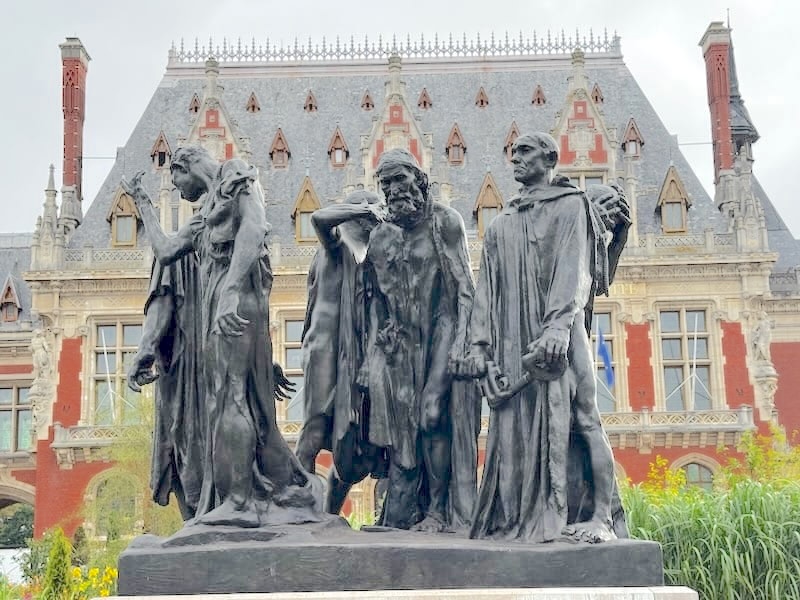
Several things come to mind when you hear the word "Calais" and while I have already written about Calais as a whole, there is perhaps one work whose name has become almost synonymous with the city: Les Bourgeois de Calais, or the Burghers of Calais, Auguste Rodin's monumental group of six men facing death.
"Les Bourgeois" just happens to be one of the most recognizable works of public sculpture in France.
But why exactly is it so famous?
It was created by Auguste Rodin, France's most famous sculptor. More importantly, it challenged the way public monuments portrayed heroes.
That is what makes the sculpture particularly interesting in Calais. Rodin did not present six triumphant heroes. He showed six men faced with the knowledge that they might die. Their different expressions, gestures and postures make the group feel less like a conventional monument and more like six individuals having to make an impossible choice.
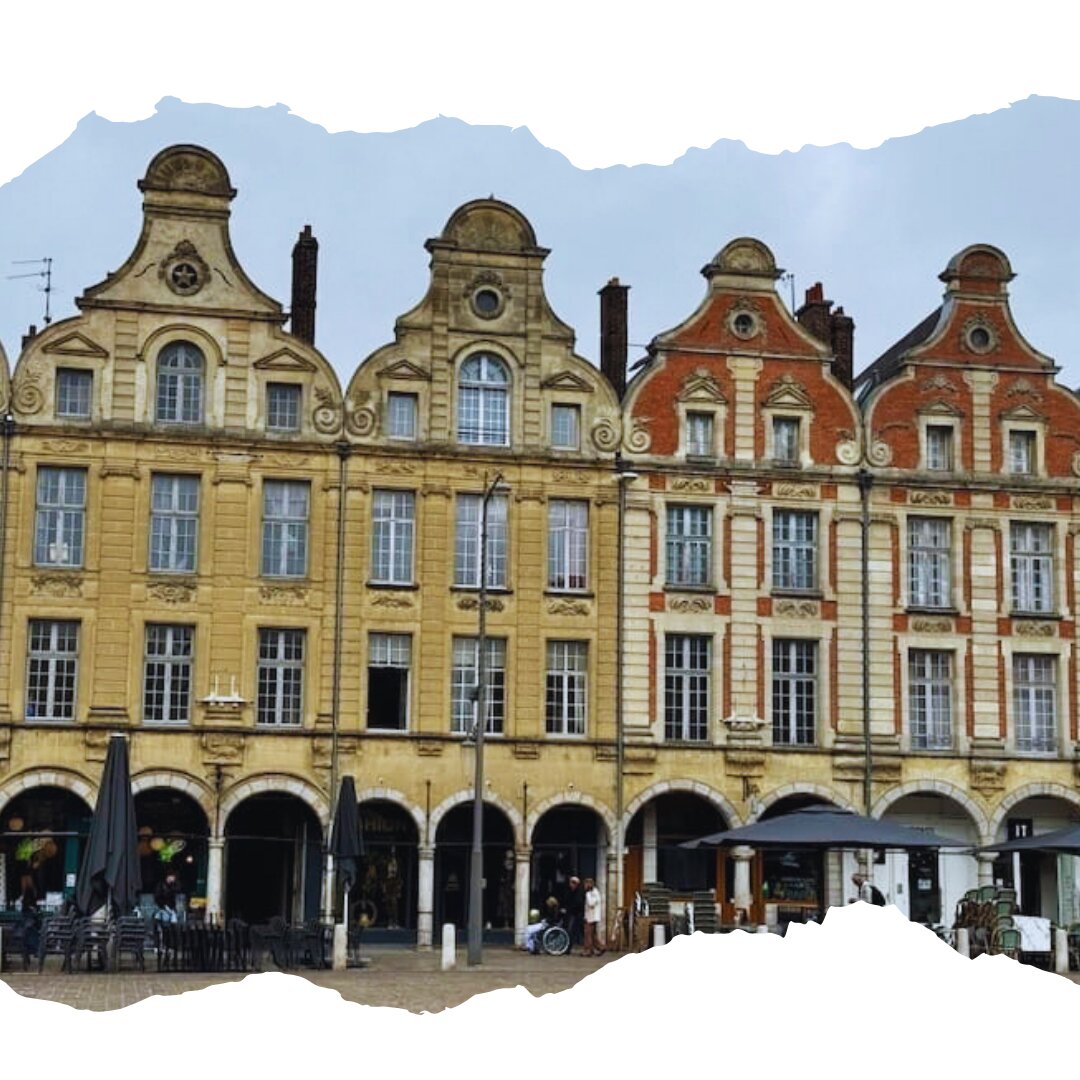
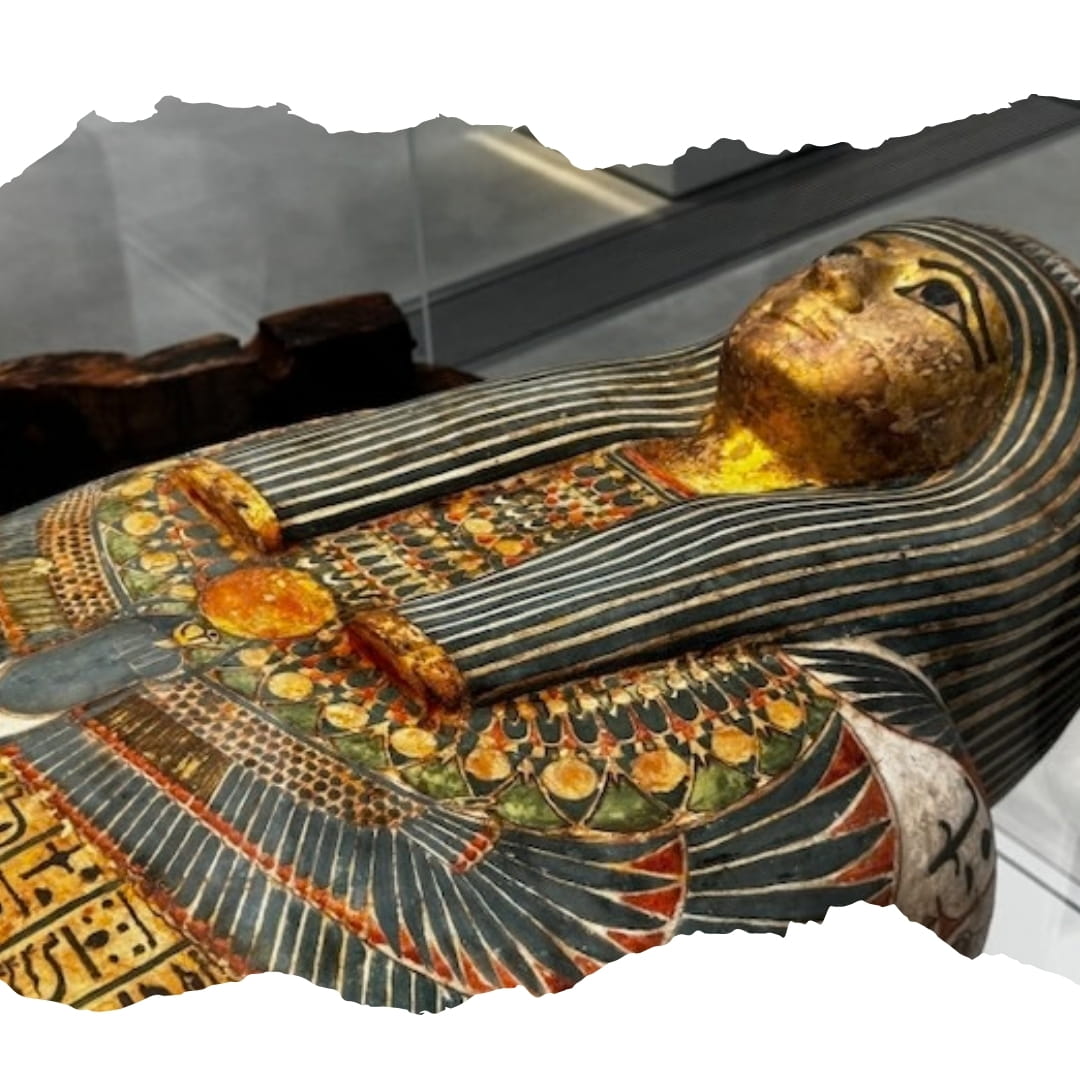
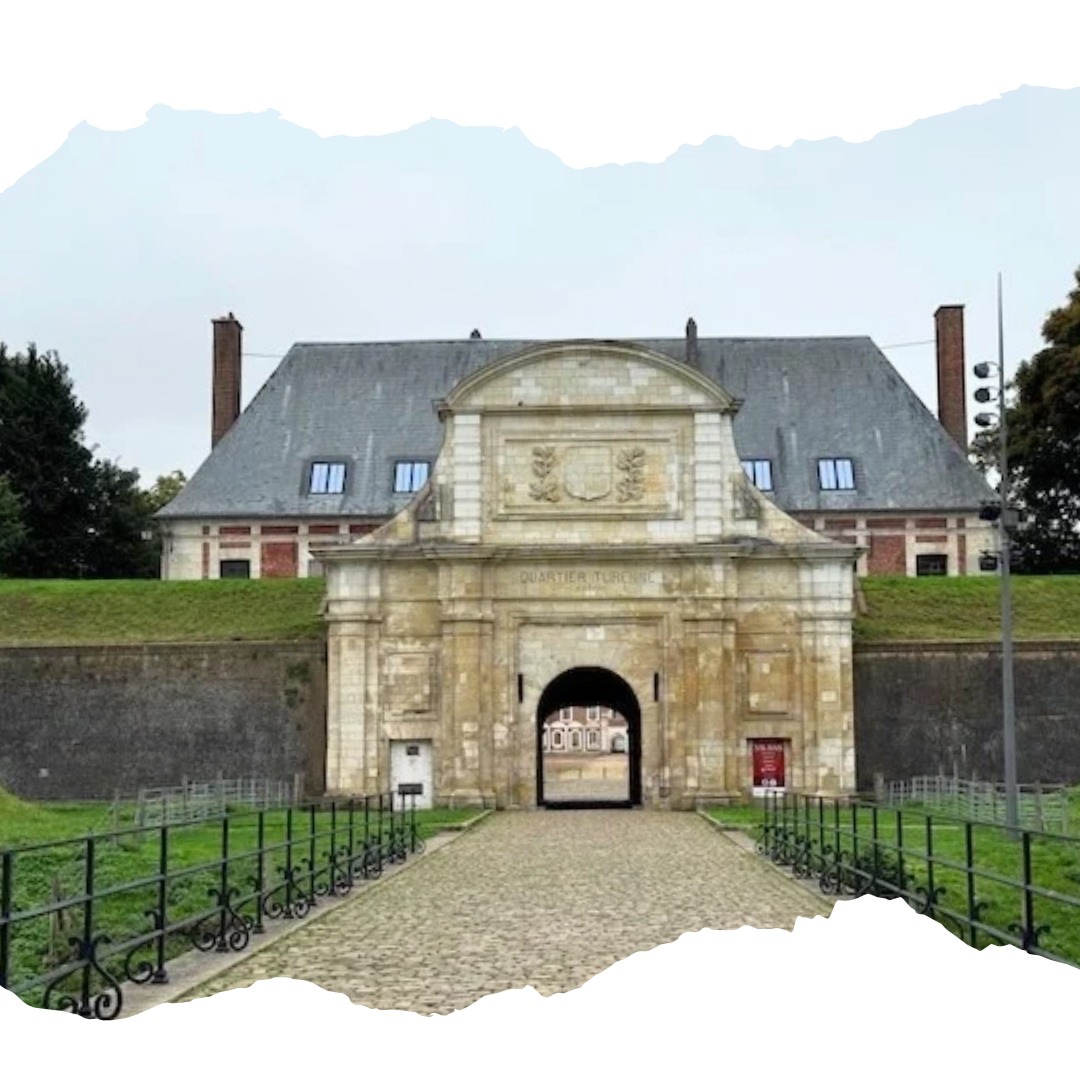
ALSO WORTH VISITING NEARBY
8 things to look for in the Burghers of Calais
- 1. The enormous hands
- 2. The ropes around their necks
- 3. The bare feet
- 4. Eustache de Saint-Pierre's bowed head
- 5. The heavy, rough clothing
- 6. Six different responses to the same fate
- 7. The absence of a single heroic viewpoint
- 8. The pedestal Rodin didn't want
Why Rodin's Burghers caused controversy
Look at them from ground level
NOTE: Pages on this site may contain affiliate links, which support this site. See full Privacy Policy here.
The six men who saved Calais
Calais may seem like an unlikely venue for a major Rodin work, but the story goes way back to the Hundred Years' War.
In 1346-47, the English king Edward III besieged Calais for almost a year, eventually forcing it to surrender. According to the medieval chronicler Jean Froissart, Edward demanded that six of Calais's leading citizens come to him barefoot, wearing simple shirts and with ropes around their necks, carrying the keys to the city. They would surrender themselves to the English, and in exchange, the inhabitants of Calais would be allowed to live.
Six men came forward: Eustache de Saint-Pierre, Jean d'Aire, Jacques and Pierre de Wissant, Andrieu d'Andres and Jean de Fiennes. According to Froissart, the men were spared when Edward’s wife, Queen Philippa, pleaded for their lives.
Rodin's sculpture captures the moment before their reprieve, when the six men were walking towards what they believed would be their execution.
8 things to look for in the Burghers of Calais
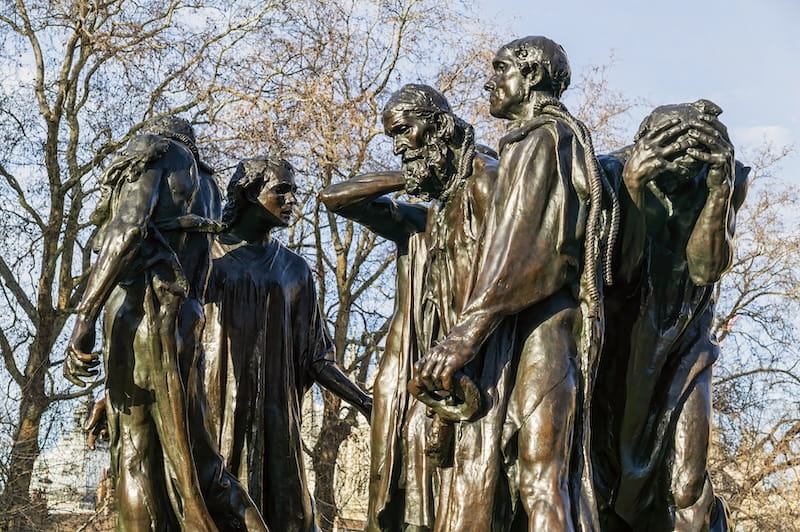
As you circle the sculpture, take the time to look at each individual. Here are eight details that show how Rodin approached the notion of heroism.
1. The enormous hands
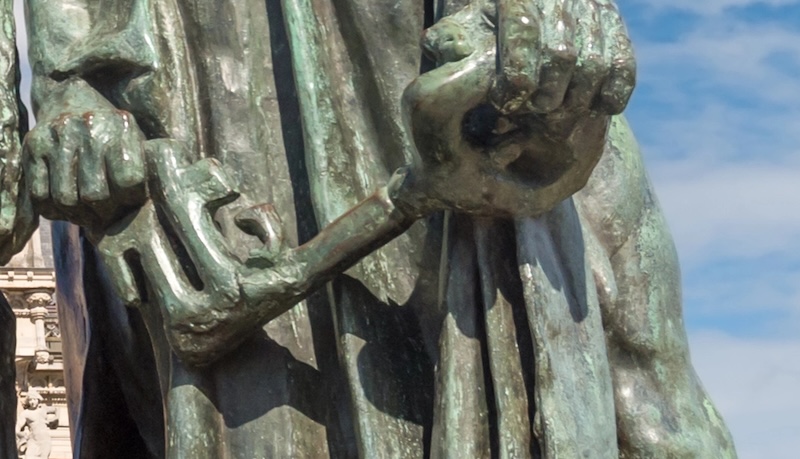
Rodin exaggerated their size, along with the heads and feet. The hands express anguish and hesitation, often more than the faces.
Find Jean d'Aire holding the city's keys. The keys represent the city's surrender, while his upright posture suggests the effort required to face what awaits him.
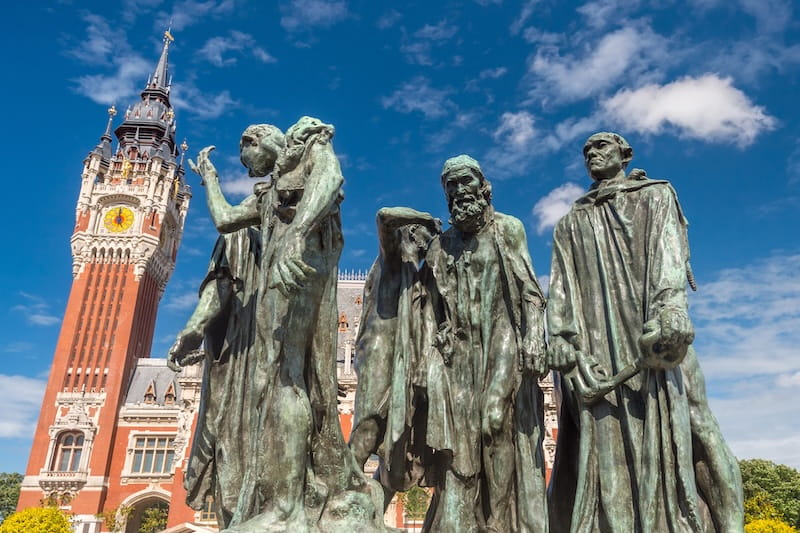
2. The ropes around their necks
According to Froissart's account, the English king ordered the men to appear with ropes around their necks, prepared for execution. Rodin reproduced this detail to highlight their vulnerability.
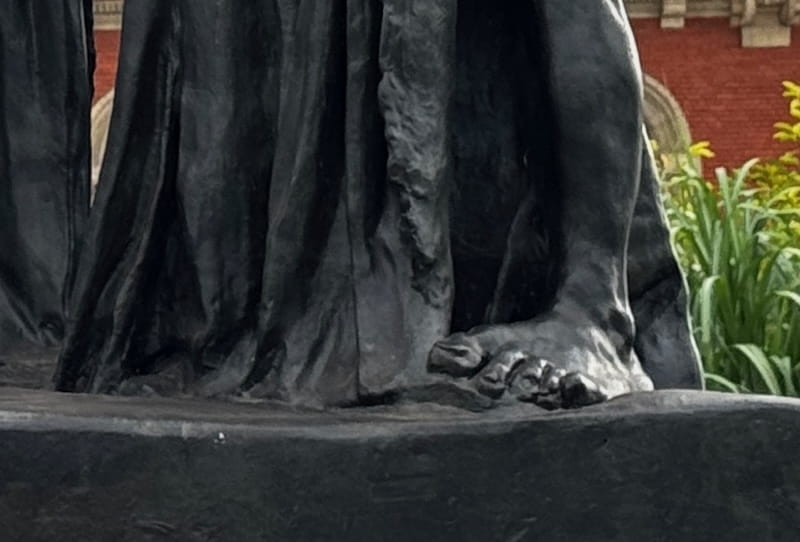
3. The bare feet
Like the hands, the feet are oversized and touch the ground differently. Some figures appear to move forward, others hesitate. Rodin used how they stood to suggest the psychological difficulty of taking the next step.
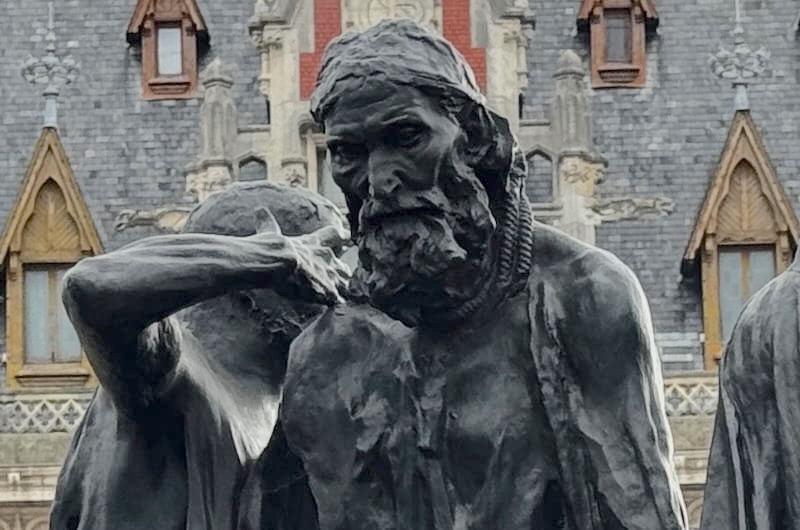
4. Eustache de Saint-Pierre's bowed head
He was traditionally identified as the leader and first volunteer, but he is not shown here as a triumphant commander. His head is lowered and his posture is heavy, a mixture of courage and suffering, it would seem.
5. The heavy, rough clothing
Heroic monuments usually involve ceremonial clothing, but not in this case. Here, they're wearing simple tunics. The folds emphasize the men's movements – Rodin studied the bodies first, and added the drapery afterwards.
6. Six different responses to the same fate
Compare their expressions: some suggest despair, others resignation or determination. The deeply set eyes and furrowed brows are part of Rodin's attempt to portray psychological distress.
The fact that the six men don't look at one another is to me one of the statue's most intriguing features. If you walk around the group, you'll see their heads turned in different directions. Although they share the same fate, they seem absorbed in their own thoughts, and this individuality is seen as central to Rodin's composition.
7. The absence of a single heroic viewpoint
Another intriguing feature is how you can't really see everything simply by looking at the front of the statue. Figures partly hide one another, and new gestures seem to appear as you move around it. Rodin intended the sculpture to be seen in three dimensions, not as a picture viewed from the front.
8. The pedestal Rodin didn't want
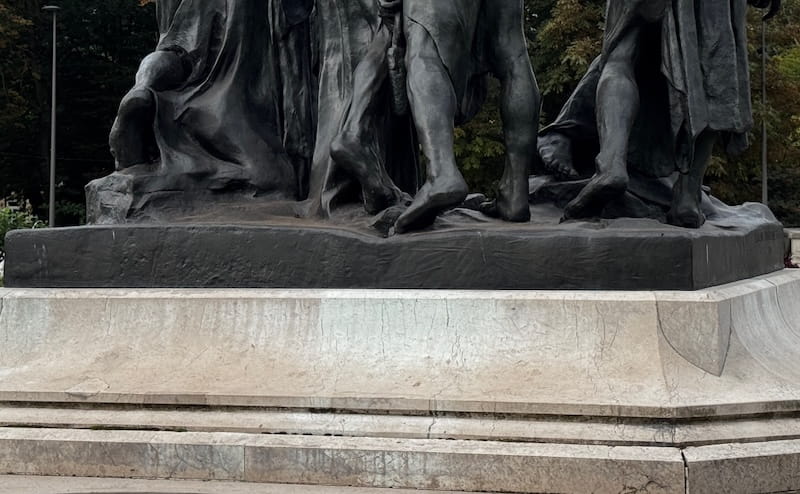
Rodin wanted the figures either raised against the sky or placed almost at street level, rather than on a conventional pedestal. Today, you can stand close enough to look the six men almost in the eye.
Who was Auguste Rodin?
Auguste Rodin, who lived from 1840 to 1917, is widely seen as the artist who helped shift Europe towards modern sculpture and away from the idealized forms of the 19th century.
You probably know him for The Thinker or The Kiss.
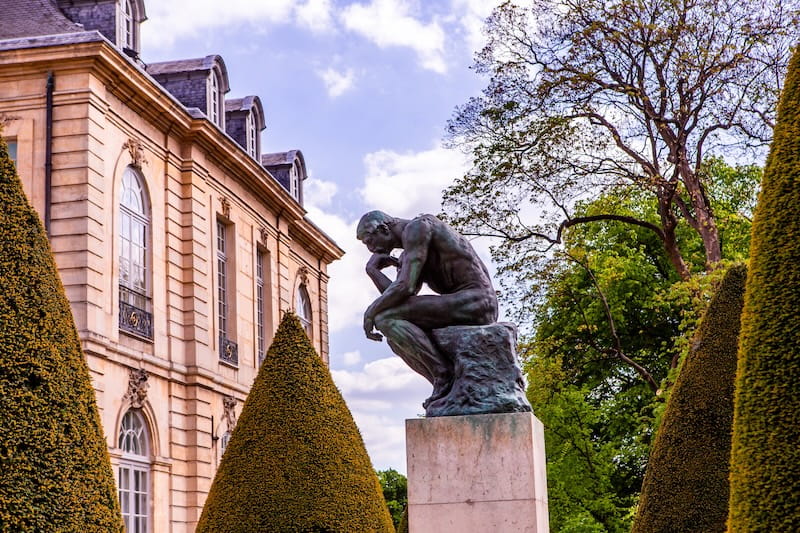 Rodin's famous The Thinker
This is a good time to see this sculpture – in 2025, the Musée des Beaux-Arts de Calais opened a completely redesigned gallery devoted to Rodin, with works from the museum's own collection and a substantial long-term deposit from the Musée Rodin in Paris.
The museum helps explain the sculpture because you can see the studies and experiments that show how Rodin worked.
Why did Calais want a Rodin?
The story of the six burghers became such an important part of Calais's historical identity that more than five centuries later, the city decided to commission a monument commemorating their sacrifice.
In 1884, Calais was getting ready to merge with neighboring Saint-Pierre, which had grown larger and more populous thanks to its lace industry. Calais had also destroyed its remaining ramparts, losing part of its historic identity in the process. A monument in honor of the city's medieval heroes would help claim back some of that identity and help residents accept the (not universally supported) creation of the new, merged municipality.
The commission
The mayor at the time, Omer Dewavrin, had met Rodin through Prosper-Alphonse Isaac, a painter originally from Calais who was living in Paris.
Rodin enthusiastically accepted the commission and produced his first model after just 11 months (although the entire project would occupy him for about a decade).
The sculpture in Calais is the first bronze cast of Rodin’s Burghers of Calais, though 12 authorized casts would later appear around the world in places including Paris, London, Copenhagen, Philadelphia, Washington, New York and Tokyo. But Calais had it first.
Why Rodin's Burghers caused controversy
Traditional public monuments tended to present their heroes as noble, confident figures, usually raised on pedestals above the people looking at them.
Rodin challenged that tradition. Instead of celebrating the burghers' sacrifice with an uplifting image of courage, he confronted viewers with the fear and uncertainty that might accompany such an act.
He also refused to single out Eustache de Saint-Pierre, the best-known of the six. Each man was given his own presence, with no single figure dominating the group.
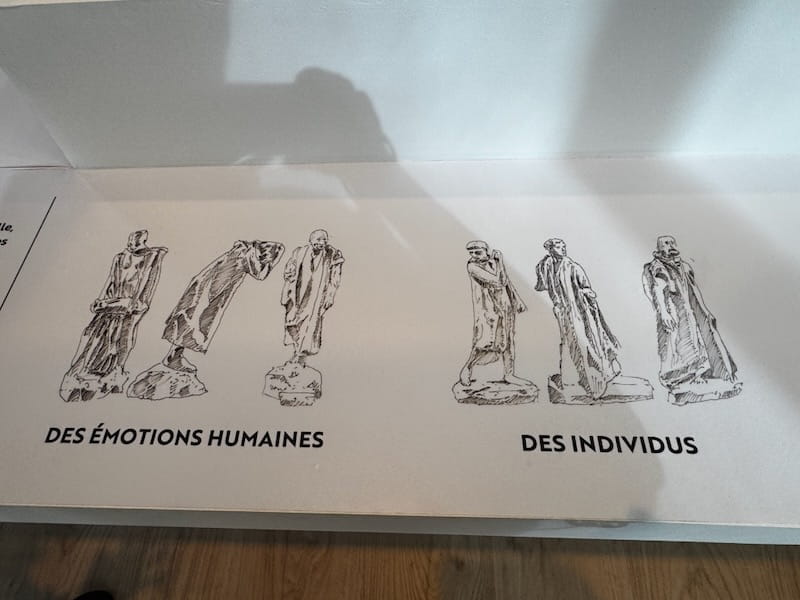 Rodin undertook many studies before finalizing his Burghers of Calais, like this one in the Musée des Beaux-Arts ©OffbeatFrance
Rodin arrived at this composition through extensive experimentation, studying individual heads, hands, bodies and gestures before bringing the figures together. You can see examples of that process at the Musée des Beaux-Arts.
The result was not quite the heroic tribute Calais's commissioners had expected. But that contrast between courage and fear is precisely what makes the sculpture so compelling.
Look at them from ground level
In a letter to Mayor Dewavrin dated 8 December 1893, Rodin explained that placing the figures very low would make them seem more familiar and allow visitors to enter more fully into the suffering and sacrifice of the scene. This was a particularly radical idea: instead of looking up at heroes, the visitor would stand among them.
The city, however, had other ideas. When the monument was unveiled in 1895, the six men stood on a tall pedestal, well above the people looking at them.
The Hôtel de Ville matters too
The six men standing in front of Calais's Hôtel de Ville and its tall brick-and-stone belfry connect several different periods of the city's history: medieval Calais, the industrial city that commissioned Rodin in the late 19th century, and the reconstructed city you see today.
The sculpture was inaugurated on 3 June 1895 near Jardin Richelieu, where it stood on a tall pedestal. In March 1918, during World War I, it was moved into the cellars of the museum to protect it from German bombardment. It emerged in November 1919, was briefly displayed outside the museum, and then returned to its original location.
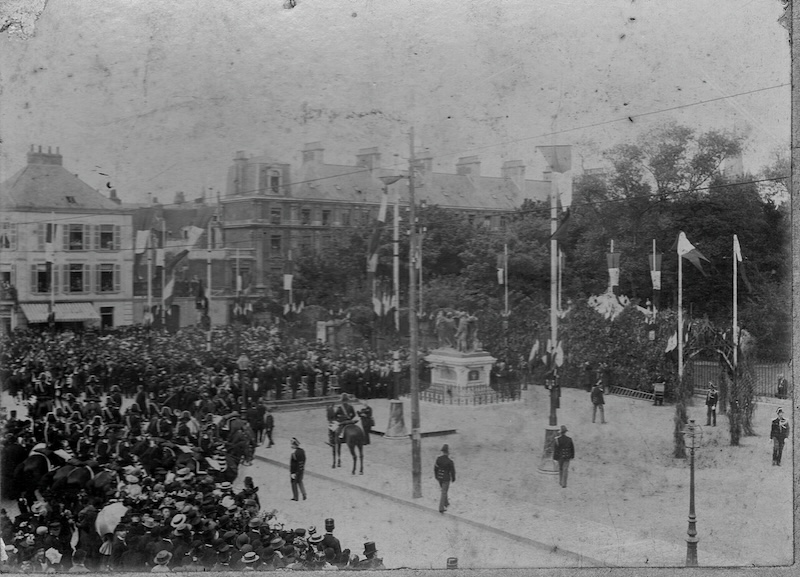 Inauguration of the Burghers of Calais. Photo Marc Mage, CC BY-SA 4.0, via Wikimedia Commons
In May 1924, the Burghers moved to Place d'Armes, this time on a low plinth. World War II brought further upheaval, and the sculpture was once again placed in safekeeping. In 1945, it was installed in front of the Hôtel de Ville, where it still stands today.
Inside the Musée des Beaux-Arts
Just a short walk from the Hôtel de Ville, the Musée des Beaux-Arts is a worthwhile second stop after seeing the sculpture. But you can just as easily visit the museum first, to better understand what you're about to see.
Rather than concentrating exclusively on the Burghers, the museum displays place the sculpture within Rodin's wider body of work. You'll find studies related to the six figures alongside other works that reveal how his artistic ideas developed.
Works such as L'Homme au nez cassé, L'Âge d'airain and material connected with La Porte de l'Enfer offer a broader look at Rodin's artistic development, beyond the Burghers themselves.
Before you go...
If Rodin has whetted your appetite for art, there's another major museum worth visiting in the Pas-de-Calais department: the Louvre-Lens. Built on a former coal-mining site, this branch of the famous Paris museum brings together works from different periods and civilizations in a striking contemporary setting.
Parts of my visit were hosted by Pas-de-Calais Tourisme, but all observations and opinions are entirely my own.
Did you enjoy this article? I'd love if you shared it!

🇫🇷

Bonjour! I'm Leyla.
Born in Paris and now based in eastern France between Lyon and Annecy, I've spent years exploring the places and stories that explain why France is the way it is.
Offbeat France is for curious francophiles, whether you're planning a trip or simply fascinated by France. Here you'll discover the history behind the villages, castles, traditions, landscapes and everyday details that most visitors notice but few can explain.
Alongside practical travel advice, I share the context that helps you make sense out of France. The more you understand, the more rewarding every visit becomes.
If you finish an article thinking, "I never knew that... now I want to know more," then I've done my job.
Learn more about me!
Read my Substack historical essays
🇫🇷

🇫🇷
Booking.comWhat's New!


-
Belleau Wood: Where the US Marines Made History
Oct 21, 26 03:12 AM
A peaceful French forest hides the scars of a fierce World War I battle. Walk through Belleau Wood, where US Marines made history, and visit the American cemetery. -
Wellington Tunnels and the Boves: Exploring Underground Arras
Oct 13, 26 11:12 AM
What if an entire army could hide beneath a city? Explore the Wellington Tunnels and medieval Boves of Arras, where centuries of history lie underground. -
Figurines Compiegne Museum: More Than Toy Soldiers
Oct 12, 26 05:10 AM
Visit the Museum of Figurines, Compiegne, where thousands of toy soldiers share the stage with ancient objects comic-book heroes. -
The Strange Story of Compiegne’s Armistice Wagon
Oct 07, 26 04:08 AM
Discover the strange story of the Compiegne Armistice Wagon, where Germany signed an armistice in 1918 and France signed one in 1940. -
Arras, France: Where Things Are Not What They Seem
Sep 30, 26 04:34 AM
Discover things to do in Arras France, from grand Flemish-style squares to a hidden underground city, a curious citadel and a rebuilt historic center.