Fascinated by Gallo-Roman history? Click Here to download > > > Here are 6 ways Rome affected France





Follow me on
- Home ›
- Culture & Civilization ›
- Unusual Museums in France
11 Unusual Museums in France You Probably Haven't Heard Of
Updated 18 October 2026 by Leyla Alyanak — Parisian by birth, Lyonnaise by adoption, historian by passion
There are many unusual museums in France, from niche collections to quietly fascinating stories you won’t find in the major institutions. This article highlights some of the more intriguing ones I've come across and explains why they’re worth seeking out.
Do you like small, quirky museums that show off unusual collections?
The most famous museums are household words, like the Louvre or the Musée d'Orsay, but there are plenty of fun and unusual museums in France that showcase things you'd never expect to see – up to 10,000 of them.
We'll never see them all but... here's a taster!
NOTE: Pages on this site may contain affiliate links, which support this site. See full Privacy Policy here.
1. The Laughing Cow Museum, Lons-le-Saunier

Some museums are so quirky they'll elicit a smile − and this is one of them.
Yes, a museum dedicated to the Laughing Cow, or La Vache qui rit, which happens to be everyone's favorite cheese (even those who won't admit it).
It's also one of the world's top 10 foods.
One of the most intriguing displays in the museum involves the evolution of the design of the cow − it wasn't always red, and it didn't always have its iconic earrings.
Not only La Vache qui rit, but the museum is actually a track record of early 20th-century marketing, including advertising billboards, branding, logo design, and sales. The family that (still) runs the company experimented with new methods and ended up becoming innovative business leaders.
Bottom line: this small museum is fun, an unusual look at a product one would not initially think is worthy of a museum. But oh it is.
― 25 Rue Richebourg, 39000 Lons-le-Saunier
✱ ✱ ✱ ✱ ✱ ✱ ✱
2. Miniatures and Cinema Museum – Lyon

In Lyon's Old Town, the Musée Miniature et Cinéma combines two rather different worlds: miniature scenes so realistic you have to look twice, and the tricks and special effects filmmakers use to make the impossible appear real.
The cinema collection includes more than 500 costumes and props from major film studios, including Mary Poppins' umbrella and the mask from The Mask.
But what really caught my attention were the more than 120 handmade miniatures created with astonishing attention to detail.
Inside the Maison des Avocats, the Renaissance building in Old Lyon which houses the museum, you'll find remarkably detailed miniature interiors, from furnished rooms to everyday scenes, where even the smallest objects have been carefully reproduced.
There's a tiny reproduction of Maxim's restaurant in Paris, along with miniature shops and interiors that look perfectly ordinary until you realize how small they are. It's the kind of museum where you find yourself leaning closer to check whether what you're seeing could possibly be real. It's definitely one of the more intriguing things to do in Lyon.
― 60 Rue Saint-Jean, 69005 Lyon
✱ ✱ ✱ ✱ ✱ ✱ ✱
3. Corkscrew Museum – Ménerbes

How many ways can you pull a cork out of a bottle? Quite a few, judging by the more than 1200 corkscrews on display at the Musée du Tire-Bouchon in Ménerbes, in the Luberon.
The museum is part of the Domaine de la Citadelle winery and was founded in 1993 by film producer Yves Rousset-Rouard, known for the iconic and risqué 1970s film Emmanuelle. Its collection stretches from the 17th century to the present, with corkscrews ranging from simple everyday tools to elaborate mechanical contraptions.
Some are beautifully crafted, others wonderfully eccentric, and there's even a discreet collection of erotic corkscrews. Very French, I thought.
What surprised me most was how recognizable even the oldest corkscrews were. Despite centuries of inventiveness, the basic principle hasn't changed much.
― 601 route de Cavaillon, 84560 Ménerbes
✱ ✱ ✱ ✱ ✱ ✱ ✱
4. Museum of Figurines – Compiègne
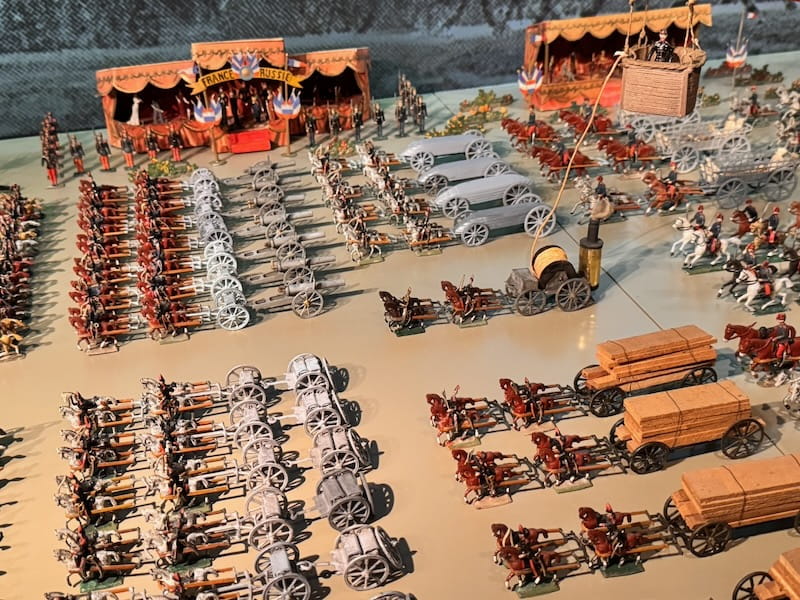
I went to Compiègne's Musée de la Figurine expecting lots of miniature soldiers. With a collection of nearly 155,000 figurines, I assumed military history would dominate.
And there were certainly many soldiers, including an enormous reconstruction of the Battle of Waterloo. But the museum has a much broader idea of what constitutes a figurine.
It might be a religious object, a toy, a chess piece or even an advertising gimmick. The displays range from traditional Provençal santons to fantasy figures used in modern tabletop games. But they have one thing in common: they must be under 25 centimeters, or 10 inches in height. (This is not an official requirement, and other venues will consider items up to 60 centimeters.)
The museum occupies Compiègne's former military staff college, a short walk from the historic center. Even if military miniatures aren't your thing, there's plenty here to keep you looking.
― 1 Pl. d'Orléans, 60200 Compiègne
✱ ✱ ✱ ✱ ✱ ✱ ✱
5. Cutlery Museum – Nogent
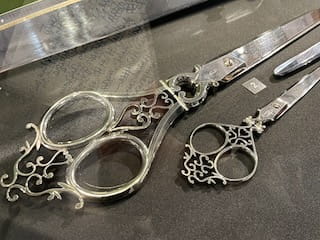
You might expect a cutlery museum to be filled with knives, but the Musée de la Coutellerie has plenty of surprises. There are plenty of knives, of course, but also scissors, pruning shears, surgical instruments and more.
Nogent, in the Haute-Marne department of northeastern France, has been making fine cutlery for centuries. Its craftsmen became known for the quality of their work, supplying prestigious French companies such as Christofle and Hermès.
The museum occupies a former cutlery workshop and includes more than 8000 objects, although only a selection is displayed at any one time.
It was interesting to discover how far the word cutlery extends beyond the kitchen and into such things as precision instruments for surgery. In fact, the museum even has a display resembling an operating room.
It's an unexpectedly interesting stop in a part of France that sees relatively few international visitors.
― 17 Pl. Charles de Gaulle, 52800 Nogent
✱ ✱ ✱ ✱ ✱ ✱ ✱
6. Horse Museum – Chantilly
If you didn't know better, you might mistake Chantilly's Great Stables for a palace. The building is enormous, with an imposing dome and grand façades and enough architectural flourishes to suggest it was designed for royalty.
Except that it was built for horses.
Commissioned in the 18th century by Louis-Henri de Bourbon, Prince of Condé, the Grandes Écuries are among the most spectacular stables in Europe. The prince apparently believed he would be reincarnated as a horse...
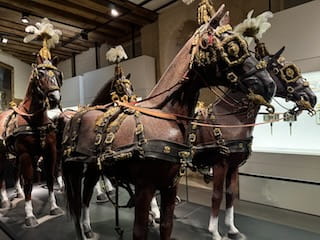
Today, the building houses the Musée du Cheval, where you can explore the history of horses and their relationship with humans, from transportation and warfare to sport and art. The collection includes saddles, harnesses, paintings and other objects that have to do with equestrian life.
Of course there are also real horses in the stables, and demonstrations take place beneath the great dome. Even if you have little interest in horses, the building alone is reason enough to visit.
― Grandes Ecuries, 7 Rue du Connétable, 60500 Chantilly
✱ ✱ ✱ ✱ ✱ ✱ ✱
7. Paper Museum – Angoulême

Paper doesn't sound like the most exciting subject for a museum, but Angoulême's Musée du Papier is worth a visit, if only to discover how an everyday material helped build an entire city's prosperity.
The museum occupies the former Le Nil factory beside the Charente River, where cigarette papers bearing the company's elephant logo were once produced and exported around the world.
Angoulême was one of France's major papermaking centers for centuries, with factories employing thousands of workers. By the 1970s, most had closed, taking a substantial part of the city's economy with them.
The museum keeps the memory of that industry alive, and its photo collection also shows us what things were like when paper making was in its heyday.
― 134 Rue de Bordeaux, 16000 Angoulême
✱ ✱ ✱ ✱ ✱ ✱ ✱
8. Museum of Burgundian Life – Dijon
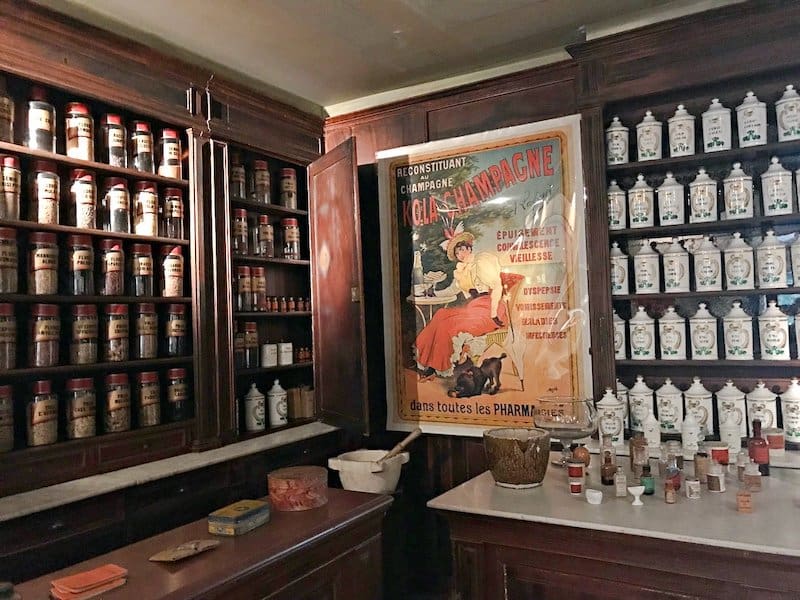
Imagine walking through streets and visiting shops built in 19th-century Dijon...
That's what the Musée de la vie Bourguignonne is all about. When you enter, it's a bit like a wax museum, with characters of all ages and professions busy with their everyday lives, going to school, working, sewing – a true ethnography of 19th-century Burgundian life.
The museum wouldn't even exist if it weren't for the tenacity of a 19th-century lawyer who, concerned that he was witnessing the disappearance of traditions and objects, set out to document his regional heritage.
Walking through these hallways is a voyage into Dijon's and Burgundy's past, brought to life in a way that will make you feel you're actually living it, and one of the top things to see in Dijon along the Owl's Trail.
— 17 Rue Sainte-Anne, 21000 Dijon
✱ ✱ ✱ ✱ ✱ ✱ ✱
9. French Commando Museum – Ouistreham
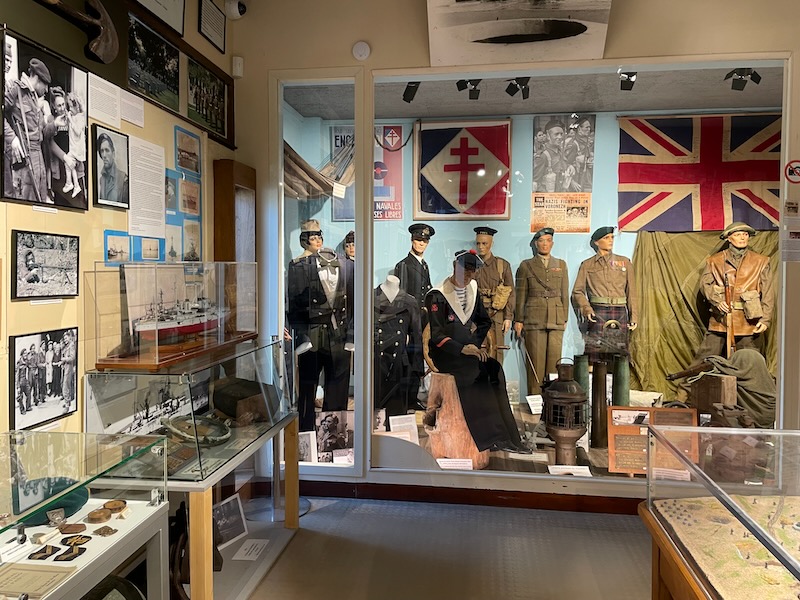
When the Allies landed in Normandy on 6 June 1944, 177 of the commandos who came ashore on Sword Beach were French. They were led by Philippe Kieffer, and after years of German occupation, they were finally back to fight on French soil.
Their story is told in the small Musée du Commando N°4 in Ouistreham, a museum that is easy to overlook among Normandy's larger D-Day attractions.
The museum was established with the involvement of veterans, including Léon Gautier, one of the French commandos. Inside, you'll find uniforms, photographs, personal belongings and other objects connected to the landings. One particularly interesting exhibit is a model of the beach, accompanied by Gautier's own account of what happened that morning.
It's worth visiting for a part of the D-Day story that tends to receive less attention than the American and British landings. The French commandos were a tiny contingent, but for them, 6 June meant something more: they were coming home. I've also written more in depth about the Kieffer Brigade here.
— Pl. Alfred Thomas, 14150 Ouistreham
✱ ✱ ✱ ✱ ✱ ✱ ✱
10. Musée Alice Taverne – Ambierle

This magical museum is all about how the French lived 100 years ago in this rural region west of Lyon.
The museum is named for Alice Taverne, a woman with an unusual occupation. She was, in a way, a social archeologist.
Madame Taverne was a local woman fascinated by history. She began collecting everyday objects used between 1830-1930 by local people in the Roannais and the nearby Forez regions of the Loire départment. And room by room, she built her museum.
Inaugurated in 1951, the Musée Alice Taverne is laid out like a house, with antique-filled rooms set up just as they might have been if people still lived in them. Even more unusual is the outdoor collection: in a crowded courtyard, arcades have been set aside for equipment once used by blacksmiths, vintners, cartwrights, cabinetmakers and farmers.
― 89 Rue de la Grye, 42820 Ambierle
11. Museum of Counterfeit Goods – Paris

You expect some things to be imitated or duplicated, things like software or music.
Wherever there's a market in a developing country, you'll see bottles of make-believe perfume wilting in the sun, plastic replicas of Vuitton bags (with a letter missing or mispelled) or a watch at one-tenth of the price.
What you might NOT expect is counterfeit food, or fake car parts just begging to break at the first jolt.
This little Musée de la Contrefaçon is tucked away on a quiet street in the most chi-chi neighborhood in Paris, and is one of those small museums you could easily walk past without seeing it. Yet it will provide a fascinating glimpse into a make-believe world that is run by international criminal gangs with profits ranging in the billions.
— 16 Rue de la Faisanderie, 75116 Paris
✱ ✱ ✱ ✱ ✱ ✱ ✱
Before you go...
France's smaller museums can be wonderfully surprising, and some of the most interesting are in places you might never otherwise think of visiting.
If you enjoy discovering places beyond the usual tourist circuit, have a look at my guide to France off the beaten path. You'll find plenty more ideas for exploring the less familiar side of the country.
An earlier version of this article included contributions from Explore Victoria, France Voyager, Le Long Weekend, and Girl With the Passport.
Did you enjoy this article? I'd love if you shared it!
🇫🇷

Bonjour! I'm Leyla.
Born in Paris and now based in eastern France between Lyon and Annecy, I've spent years exploring the places and stories that explain why France is the way it is.
Offbeat France is for curious francophiles, whether you're planning a trip or simply fascinated by France. Here you'll discover the history behind the villages, castles, traditions, landscapes and everyday details that most visitors notice but few can explain.
Alongside practical travel advice, I share the context that helps you make sense out of France. The more you understand, the more rewarding every visit becomes.
If you finish an article thinking, "I never knew that... now I want to know more," then I've done my job.
Learn more about me!
Read my Substack historical essays
🇫🇷

🇫🇷
Booking.comWhat's New!


-
Wellington Tunnels and the Boves: Exploring Underground Arras
Oct 13, 26 11:12 AM
What if an entire army could hide beneath a city? Explore the Wellington Tunnels and medieval Boves of Arras, where centuries of history lie underground. -
Figurines Compiegne Museum: More Than Toy Soldiers
Oct 12, 26 05:10 AM
Visit the Museum of Figurines, Compiegne, where thousands of toy soldiers share the stage with ancient objects comic-book heroes. -
The Strange Story of Compiegne’s Armistice Wagon
Oct 07, 26 04:08 AM
Discover the strange story of the Compiegne Armistice Wagon, where Germany signed an armistice in 1918 and France signed one in 1940. -
Arras, France: Where Things Are Not What They Seem
Sep 30, 26 04:34 AM
Discover things to do in Arras France, from grand Flemish-style squares to a hidden underground city, a curious citadel and a rebuilt historic center. -
Chateau De Pierrefonds: The Strange Curse Of A Fairy-Tale Castle
Sep 26, 26 02:16 PM
Discover Château de Pierrefonds, a fairy-tale castle in northern France with a turbulent history, spectacular restoration and plenty of strange surprises.