Fascinated by Gallo-Roman history? Click Here to download > > > Here are 6 ways Rome affected France




Follow me on
- Home ›
- Destinations ›
- Southern France ›
- Towns in the South of France
10 Dazzling Towns In Southern France For A First French Riviera Trip
Updated 05 April 2026 by Leyla Alyanak — Parisian by birth, Lyonnaise by adoption, historian by passion
There are so many gorgeous and striking towns in the south of France, each with its own history and atmosphere. How to choose? Here's a look at which to include on a Riviera trip, with a practical guide on what makes each one distinct.
No one is going to argue: the French Riviera has some of the prettiest towns in southern France.
In all of France, in fact.
But if this is your first trip to the area, you're going to have to make some difficult choices about where to go.
MORE BEAUTIFUL PLACES IN SOUTHERN FRANCE

NOTE: Pages on this site may contain affiliate links, which support this site. See full Privacy Policy here.
How to visit the French Riviera
- 1. Nice: Gateway to the French Riviera's best towns
- 2. Cannes: Queen of glamor on the Côte d'Azur
- 3. Antibes: Charm, history, and Picasso
- 4. Saint-Tropez, the exclusive
- 5. Grasse: World's perfume capital
- 6. Saint-Paul-de-Vence: Art galleries and medieval streets
- 7. Villefranche-sur-Mer: A seaside stunner
- 8. Eze: Priceless panorama
- 9. Monaco: In the lap of luxury
- 10. Menton, almost Italy
If you’re planning your first trip to the south of France, the Riviera is often the easiest place to begin.
On my most recent trip, I faced this decision myself: so many towns, so little time. In French they call it an embarrassment of choices, "l'embarras du choix".
If I, a Frenchwoman living in France, was overwhelmed by the possibilities, I can imagine you might be too, hence this practical article.
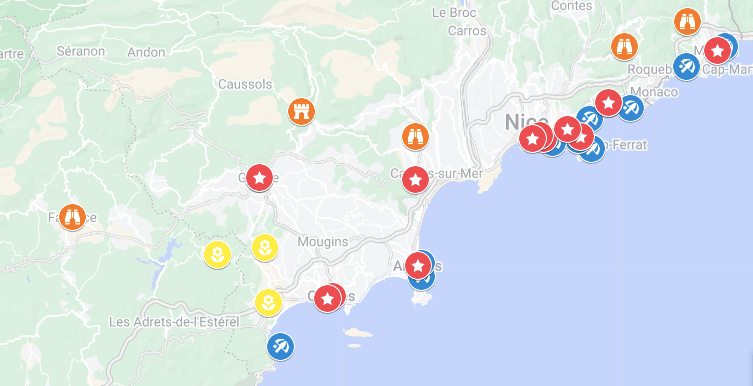
French Riviera: South of France Map
People still argue about what is and isn't the French Riviera, at least at one end.
Most agree that it stops at the Italian border, at Menton, in the east. But what about the west? Does it start at Hyères? Does it include Marseille? Or even more?
For our purposes here, I'll suggest that the Côte d'Azur, as the French Riviera is known, goes from Cannes to Menton.
SOUTHERN FRANCE VS THE SOUTH OF FRANCE
The terms “southern France” and “south of France” are often used interchangeably, but they don’t always mean exactly the same thing. “Southern France” can include a large part of the country, while “south of France” is often used to describe Provence and the French Riviera (Côte d’Azur).
To visit the rest of southern France, beyond the Riviera, here's a 10-Day South of France Road Trip Itinerary.
Here, then are the top 10 loveliest towns in southern France for your first visit if you're planning a trip to the south of France.
1. Nice: Gateway to the French Riviera's best towns
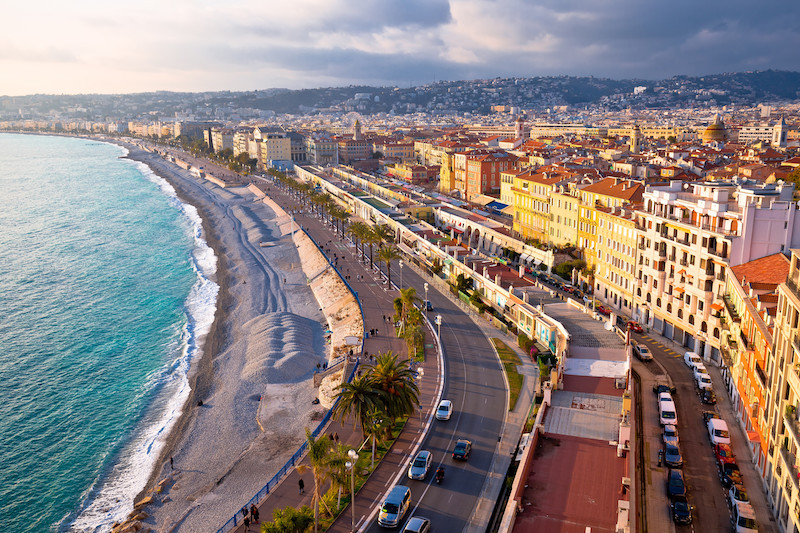
Without a doubt and from every perspective, Nice is one of France's most beautiful cities – from its graceful bay to the twisty streets of its old town.
(By the way, it's pronounced NIECE – as in niece and nephew.)
If this is your first visit to the region, you can't (and shouldn't) avoid Nice. In fact, for many people, Nice is the ideal base from which to explore the rest of the Riviera. I tend to agree. Here are just a few examples of day tours you can take while you're based the city.
Day tours from Nice
If you'd rather not deal with trains or buses, these guided day tours from Nice make it easy to see several towns in a single day.
Things to do in Nice
- Stroll along the Promenade des Anglais, the 7-km walkway that gracefully follows the contours of Nice along the bay.
- Take a free walking tour of Nice and get to know the city through the eyes of a knowledgeable guide.
- Get your art fix at the Musée Marc Chagall, the Matisse museum, or any number of other exhibitions you'll find throughout Nice, many of which are included in the Nice Riviera Pass sold by the tourist office.
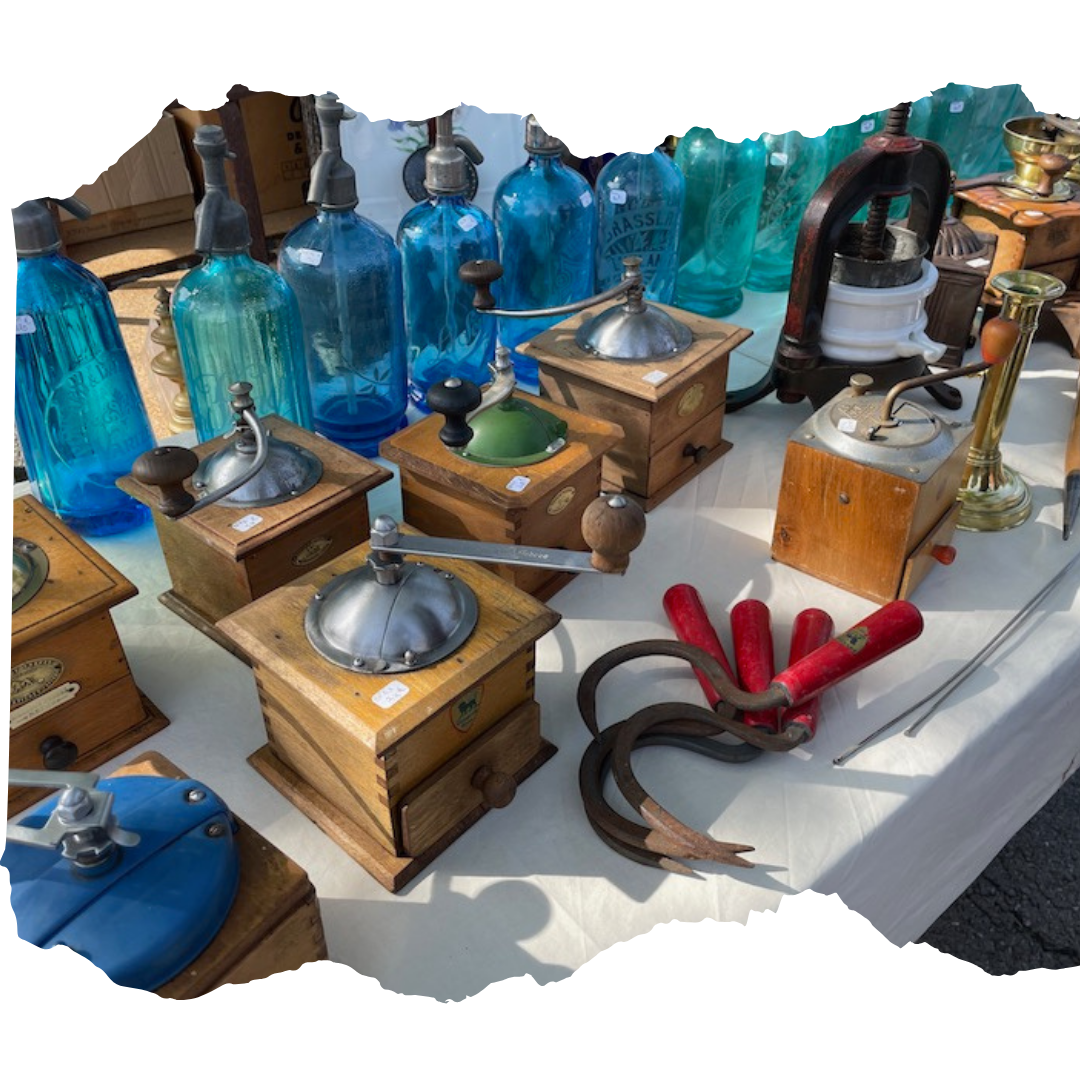
- Go shopping. Yes, seriously. Nice is heaven for antiques and has one of France's best flea markets along the Cours Saleya on Mondays (and in the antique shops around the old port). Every other day of the week, the Cours Saleya is a fantastic food market. Grab the makings of a French picnic, or try a local "socca" – look for Chez Thérésa, serving local Niçois food specialties since 1925. Don't forget that this IS a market, so hang on to your purse or better yet, get one of those cross-body anti-theft bags that I use whenever I'm in a crowd.
- Take any number of day trips into the interior if you'd rather be guided than tussle with public transport, like a tour of medieval hilltop villages.
- Walk up to Castle Hill to take that impossibly stunning photograph of the city and its bay from above. You can take the elevator if you're running out of steam...
Where to stay in Nice
Because Nice sits at the heart of the Riviera rail line, it makes an excellent base for exploring towns like Antibes, Cannes, Villefranche-sur-Mer, and Monaco.
It has the region's main airport, excellent train connections, and easy access to many towns.
This handy map shows you what's available on your dates, and at what price. Click around and get a sense of your vacation accommodation in Nice.
Accommodation fills quickly during summer and festival season, so it's worth checking availability early.

2. Cannes: Queen of glamor on the Côte d'Azur
You may remember the occasional TV snippet of the Cannes Film Festival... perhaps you swooned at images of an azure sea, dotted with superb yachts crowded with A-list celebrities ascending those famous red carpet stairs.
Yes, it is all those things.
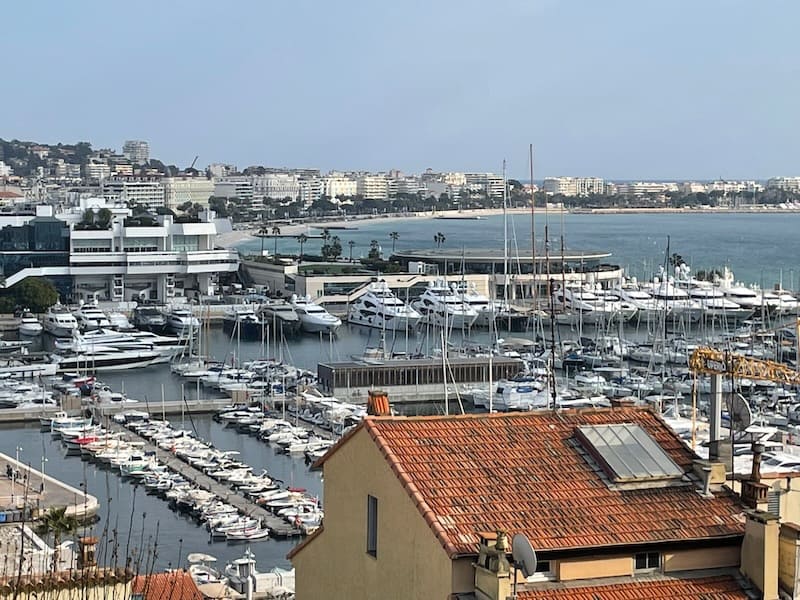 Viewing the sweeping bay of Cannes from above
It is also much more: a charming old quarter, Le Suquet, which towers above the city; delightful and affordable restaurants; a sweeping sea walk; gorgeous islands 15 minutes from shore – and despite the sleek seagoing vessels, a very unpretentious vibe (which undoubtedly disappears when the festival rolls around).
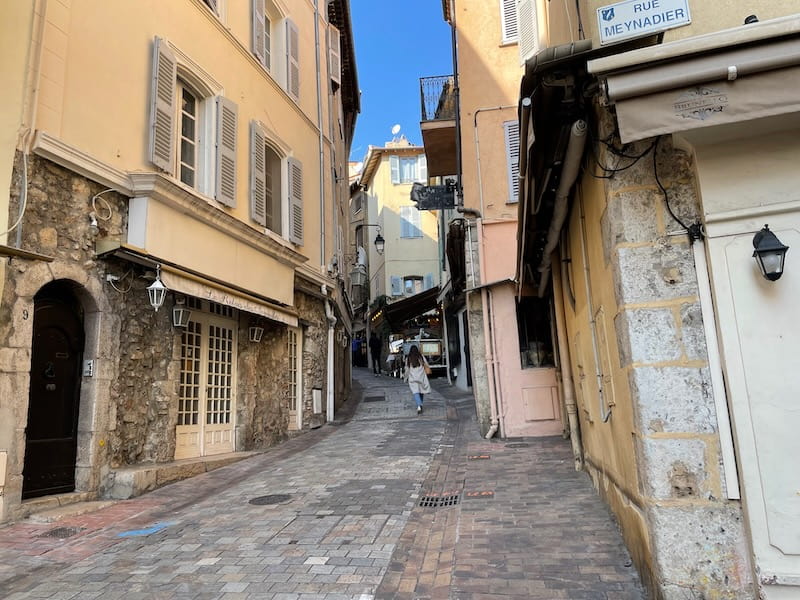 Cannes old town and its narrow streets
It is also unexpectedly diverse.
Walk out of the train station and you'll be assaulted by smells from other lands, Middle Eastern and Vietnamese aromas drifting out of homes and restaurants, giving Cannes a much more cosmopolitan feel than I expected.
When the Palais des Congrès isn't welcoming celebrities, it hosts plenty of other events. When I was there, it was an international gaming convention, a far cry from the gala gowns of Tinsteltown.
At 40 minutes by car or train from Nice, there's no question Cannes makes the cut for the top 10 list of must-see towns in southern France.
Things to do in Cannes
- Stroll down La Croisette, the Cannes equivalent of Nice's Promenade des Anglais and one of France's most famous streets. Just look up to see the wonderful Belle Époque buildings rising along the street.
- There's the beach, of course, all along the Croisette. Choose between the private (often hotel-owned) or public beaches, and stop for lunch in one of the beachside restaurants. They usually have menus outside so you can stroll along, read, and choose.
- If you're here in May, you'll run smack into the film festival. There are films for viewing all over Cannes even for those not involved in the festivities, but it's more about the atmosphere and the celebrity-spotting, especially along the Croisette. If you love film but not visiting during the festival, take advantage of a tour guided by a screenwriter and get some of the inside scoop.
- If that's not your thing, or if you're here in September, you can still ogle some luxury... Your timing is perfect, because this is when all the yacht designers show off their latest creations.
- Cannes has four lovely offshore islands, two of which are easy to reach by ferry. The largest is Île Sainte-Marguerite, famous for housing the unidentified Man in the Iron Mask, imprisoned for 11 years by Louis XIV (you can book your ferry tickets here). Visit his cell and the museum at Fort Royal. The second largest, Île Saint-Honorat, has an abbey where monks who have taken a vow of silence still make their own wine.
- One of my favorite parts of Cannes is Le Suquet, a charming warren of cobblestoned streets lined with pastel-colored houses that date back to the 18th century. This is where you want to go for a sweeping view of Cannes.
- Down below, perfectly visible from Le Suquet, is the Old Port, lined on the one side with super-yachts and on the other with a row of restaurants and bars. Sit outside and watch the comings and goings.
- Do something quirky and visit the French Riviera for half a day in a vintage car! Or at the other end of the spectrum, why not in a Ferrari?
3. Antibes: Charm, history, and Picasso
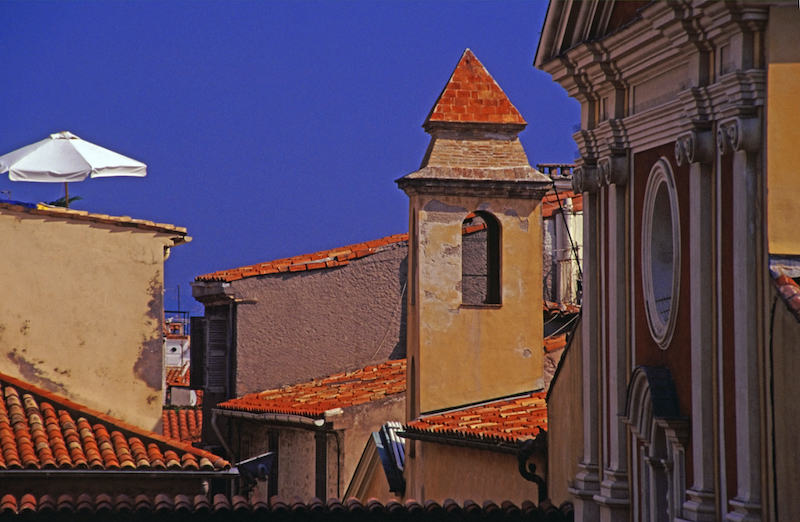
Antibes is a delightful village, bursting with charm and quirky contrasts: a 16th-century fortress, a Picasso museum, and the most luxurious mega-yachts in the Mediterranean, so it's hard to pigeonhole.
Head for the covered market and you'll feel like you're in a small French town anywhere in the country.
The fort was once the last French frontier before the Duchy of Savoy, to which Nice then belonged (the Var River was the border) before joining France in 1860.
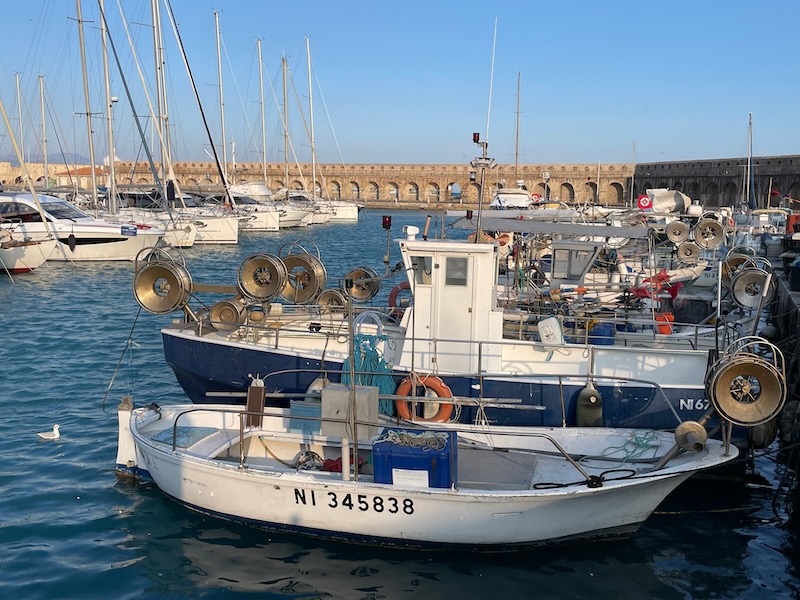 Port Vauban in Antibes, on the French Riviera
Things to do in Antibes
- Visit the Picasso Museum, with works from all periods − the first ever museum dedicated to Picasso. Or why not take a drawing tour with a local artist?
- You can walk for miles along the seashore path in Antibes, passing by the moored yachts, along to the Fort Carré, the 16th-century star-shaped fortress with a stunning mountain backdrop. Hike to Cap d'Antibes and Juan-les-Pins.
- Charter your own yacht for half a day and sail and snorkel with your friends and family in the bluest of Mediterranean seas.
- Stroll around the streets of the old town and enjoy the colorful architecture.
- Shop in the market and get your goodies for a picnic by the sea, or eat nearby and wait until the market turns into a craft display in the afternoon to buy some original gifts to take home with you.
- If you're basing yourself in Antibes, you can explore the region's wines without having to drive.
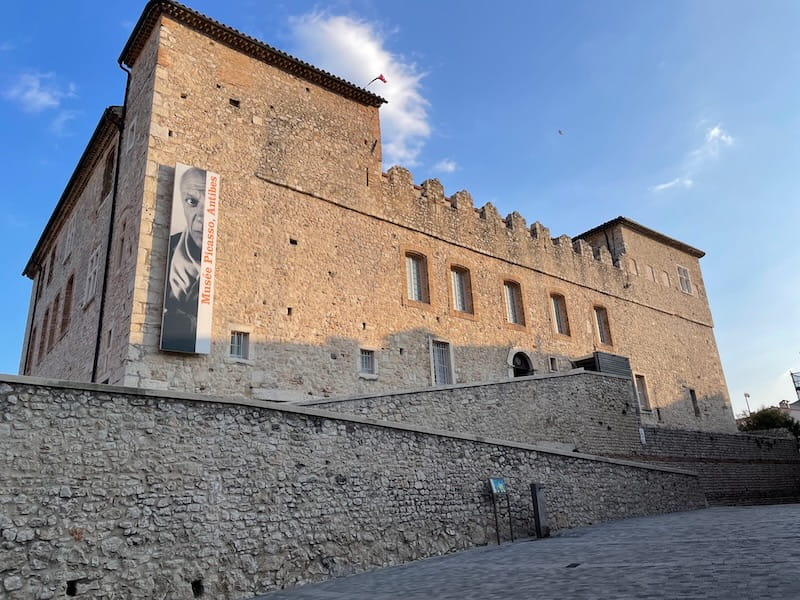 The exterior of the Picasso Museum in Antibes
4. Saint-Tropez, the exclusive
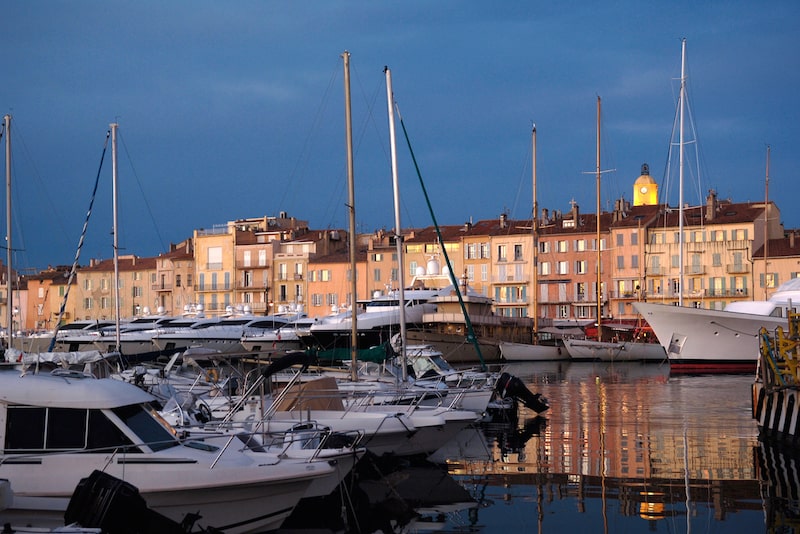
Here was another town I was prepared to dislike – except in this case, my instincts were confirmed. I'll chalk it up to the season: I visited in winter, when everything is closed and the only life seemed to be a rushed resident buying a quick baguette for lunch and a few poorly attended port-side market stalls.
I tried to imagine the glitterati sashaying from disco to trendy resto, shielding themselves from the hot sun with a tray-sized hat and sunglasses that were barely smaller. This didn't quite shake my first impression of what was apparently once a charming little fishing village.
But everyone reacts differently to a place, and if this is your first time on the French Riviera, then there's no question, St Tropez must be on your itinerary. So many people love St Tropez that I'm certain to eventually be proven wrong!
Things to do in Saint-Tropez
- Visit the St Tropez citadel and its Museum of Maritime History.
- Hunt for glimpses of famous residents or visitors who own homes or vacation here, like Elton John and Leonardo di Caprio (Brigitte Bardot, who cemented the village's popularity with the 1956 movie "And God Created Woman", lived here until her death in 2025.)
- Speaking of beaches, the ones around St Tropez (and nearby Ramatuelle) are perfect for sunbathing – try the celebrity-frequented Tahiti Beach of fine white sand, or the delightfully named Canoubiers or Bouillabaisse beaches.
- And speaking of Brigitte Bardot, hunt down a bakery and sample a Tarte Tropézienne, a type of brioche filled with lemon and vanilla cream which the actress reportedly made famous when she succumbed to its deliciousness while she was filming. A number of bakeries claim they have the best one – but first, try the original at La Tarte Tropézienne.
5. Grasse, world perfume capital
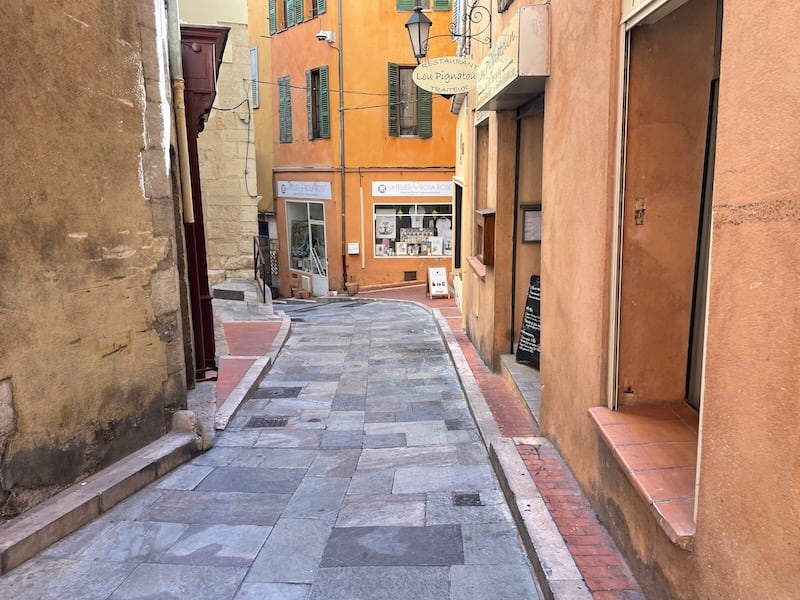
Grasse may be known as the world capital of perfume, but as a town, it also packs a punch, with its solid stone steps, winding streets and Mediterranean flora. I thoroughly enjoyed this town, which I expected would be a tourist trap, and which turned out to be anything but.
Even if you're not interested in perfume, the town is worth a stroll and perhaps a lunch stop – although it will be hard to avoid scent-related places no matter how hard you try.
Grasse is also an ideal jumping off point for villages of the interior, although the town is only 20 minutes from the sea. You can easily go everywhere from here!
If you drive here, there are parking lots at the edge of town. If you take the train, make sure you hop the bus from the station to the center of town – otherwise it's an uphill hike.
If you're heading to the hilltop villages or exploring inland from Grasse, a car becomes useful.
THINKING OF RENTING A CAR IN FRANCE?
Don't wait until the last minute, especially if you want one of the scarcer automatics.
🚗 Check availability at Discover Cars (it's what I use to compare prices).
Things to do in Grasse
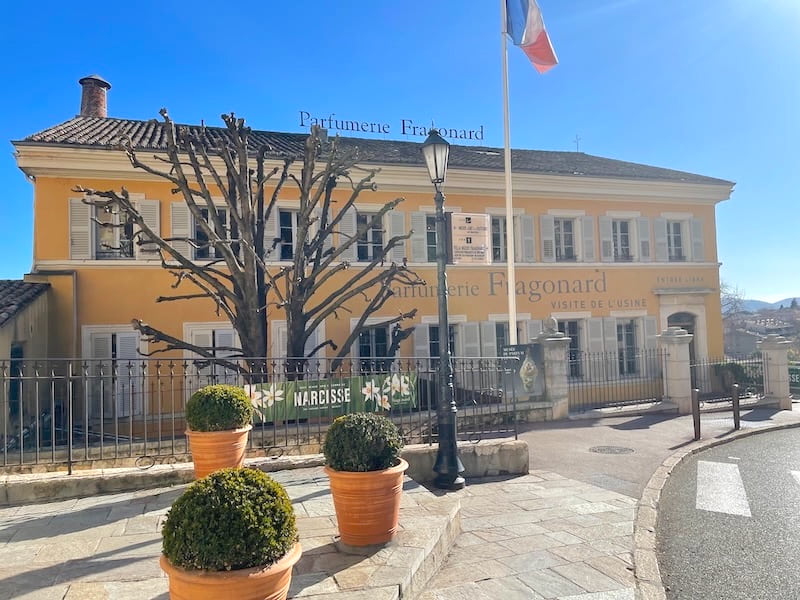 Fragonard is one of the three major perfumers in Grasse
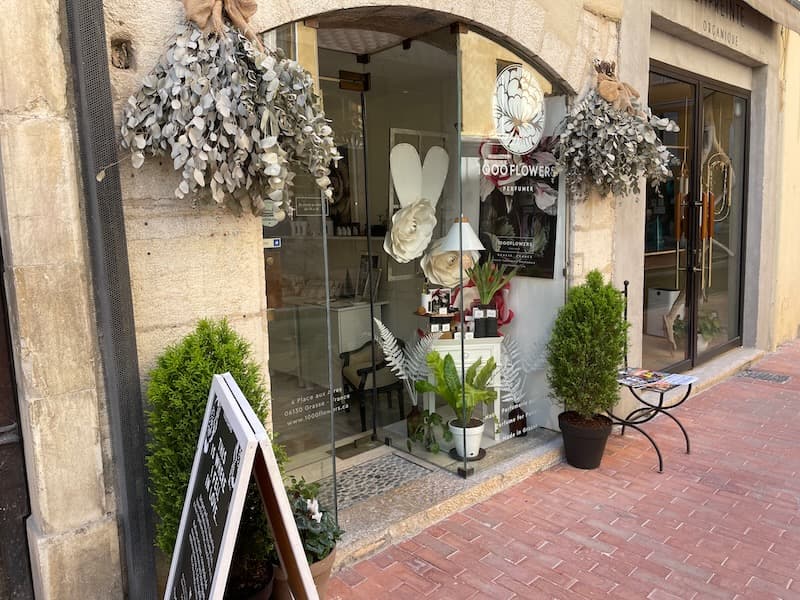 Grasse also has a handful of small, individual boutique perfumers, like 1000 Flowers
- The International Perfume Museum, of course, but also the guided tours at any one of the three major perfume factories – Fragonard, Galimard or Molinard.
- Wander around some of the smaller boutique perfumers, professionals who have developed their own fragrances and sell independently rather than to the big houses – drop by and see Jessica at 1000 Flowers in the old town.
- Get creative! One of the most fun activities in Grasse is to create your own perfume (with the help of an expert, of course).
- The town also has museums not dedicated to perfumes: the Musée Jean-Honoré Fragonard, in honor of the 18th-century painter from Grasse (no relation to the perfumers); Musée d’Art et d’Histoire de Provence, an eclectic museum with plenty of local exhibits; and the Musée Provençal du Costume et du Bijou, the costume and jewelry museum, highlighting 18th-century costumes. All these museums are in extraordinary settings, adding beauty to their collections.
- And finally, Grasse is the last stop along the Mimosa Route, if you happen to be visiting in the middle of winter. It's one of my favorite road trips in France.
6. Saint-Paul-de-Vence: Art galleries and medieval streets
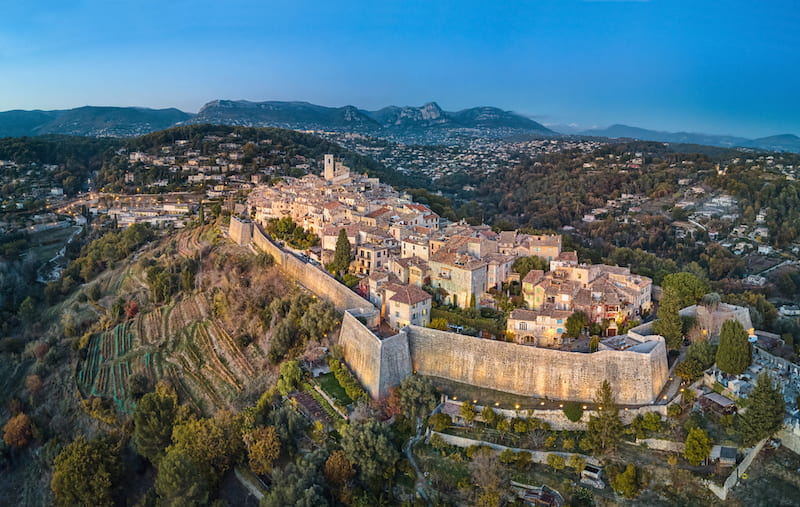
In a land of beautiful hilltop villages, Saint-Paul-de-Vence still stands out. I don't think I've ever seen as many art galleries per square meter, and even if you don't go inside, the window-shopping is superb if you love new creators and contemporary art.
I visited in winter and was surprised that the notoriously crowded village was almost empty. And while some art galleries were shut, many remained open, making it an exciting and relaxed visit.
Entrance into the village is through a quintessentially southern tableau: groups of (mostly) men playing pétanque on a sandy gravel court, next to an outdoor café, surrounded by ramparts and cobblestones. It doesn't get more iconic than that.
Predictably, over the years, artists from all disciplines would fall in love with St-Paul-de-Vence, from Chagall to Modigliani to Matisse, along with actors like Yves Montand and Simone Signoret.
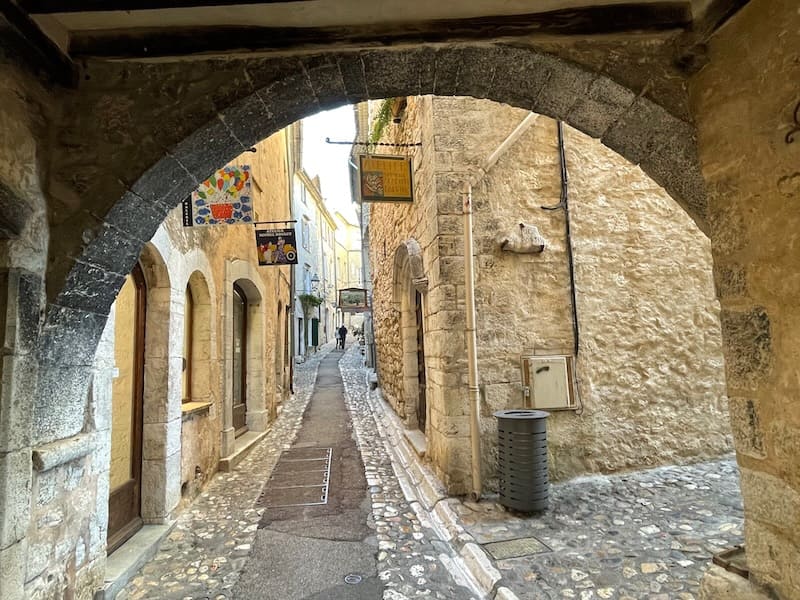
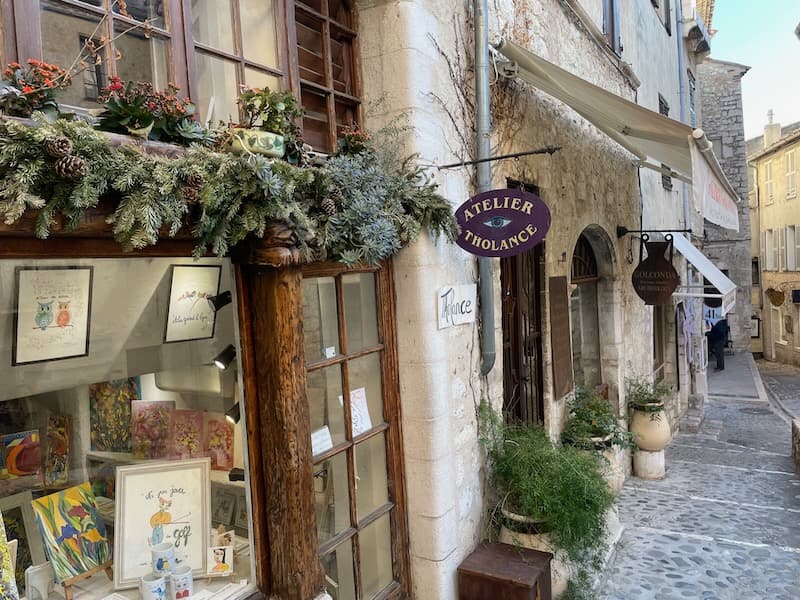 Empty streets in Saint-Paul-de-Vence, in winter, before the tourist season
Things to do in Saint-Paul-de-Vence
- Stroll the ancient streets and 16th-century ramparts, admiring the buildings within and the expansive view beyond.
- Visit the Maeght Foundation and its impressive collection of 20th- and 21st-century art.
- Stop by the Folon Chapel, named after a Belgian artist who used it to express his love for Saint-Paul-de-Vence.
7. Villefranche-sur-Mer: A seaside stunner
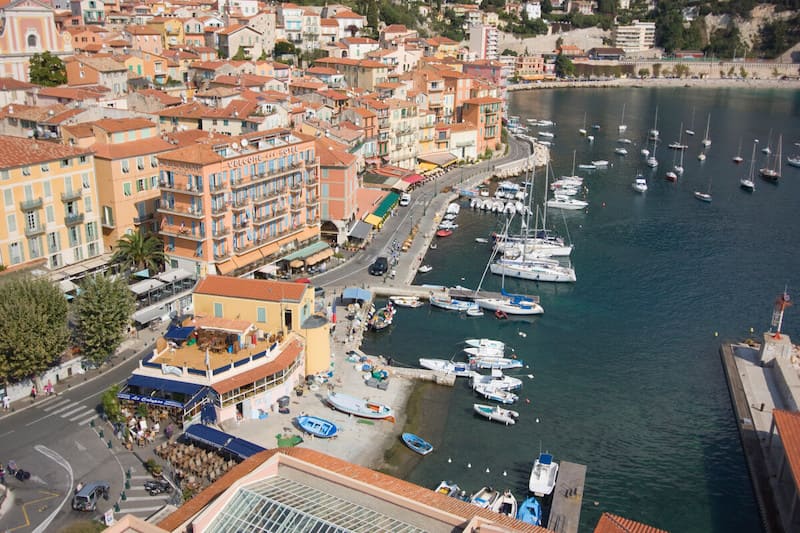 The view from above of Villefranche-sur-Mer ©CRT Cote d'Azur France/Pierre Behar
Villefranche-sur-Mer has such a laid-back and unpretentious vibe you may not want to leave. I stopped in for an hour and ended up having lunch and walking the length of town — which tells you everything about how the place attaches itself to you.
It's small, sunny, and genuinely cheerful in a way that doesn't feel performed. The waterfront is lined with pastel houses, the streets behind climb steeply, and the whole thing feels like the Riviera before it became the Riviera.
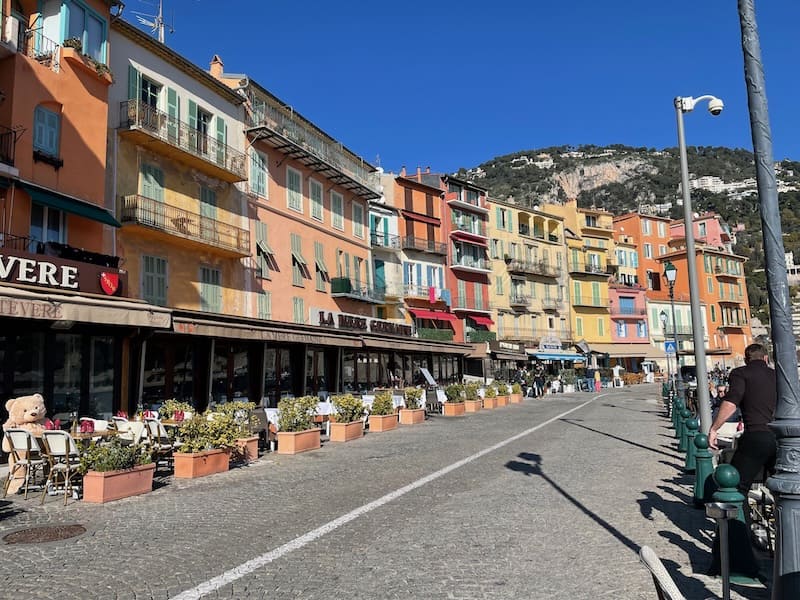 This beachfront street in Villefranche-sur-Mer is an ideal spot to stop for lunch
Things to do in Villefranche-sur-Mer
- Go to the beach and have lunch. Can you think of a more simple delight?
- And when you're done, take a walk from one end of town to the other. It's less than half an hour, but with the blue Mediterranean on one side and the colorful village on the other, you'll be walking the quintessential French Riviera.
- The old town is lovely, with its winding streets and colorful buildings, and a walk around the village is a bit like strolling into a sunburst.
- Visit one of the town's chapels and churches: the baroque Saint-Michel church and its historic organ, one of the oldest in the region; Sainte-Elisabeth (the striped façade might well remind you of Florence); and Saint-Pierre, by the water, with frescoes by the artist Jean Cocteau.
- Not far from Villefranche is the amazing Villa Ephrussi de Rothchild, a historical monument whose gardens have been classified as a Remarkable Garden of France. It's only a short bus ride away. Get off at Passable station. You can get your ticket online here or at the door.
FRENCH RIVIERA PRONUNCIATION GUIDE
Some words are harder to say than others, so I've put together this little guide to things and places that might not be that obvious to pronounce. Since some sounds don't exist in English, please bear with me – I've tried to get as close as I can!
- Nice – NIECE (I already mentioned this one above)
- Cannes – CAN
- Antibes – on-TEEB
- Èze – EZ
- Menton – mon-TOW
- Le Suquet – luh-soo-KAY
- La Croisette – lah-krwah-ZETT
- Fort Carré – for-car-RAY
- St Tropez – saint-trop-AY
- Tarte Tropézienne – tart-trow-pay-zee-EN
- Pétanque – pay-TONK
8. Èze: Priceless panorama
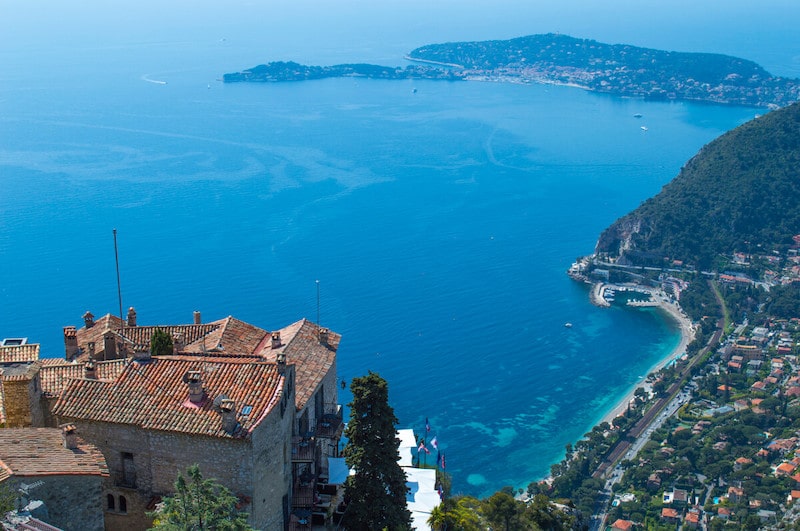
Both Èze and Saint-Paul-de-Vence are magnificent hilltop villages, or "villages perchés", and unable to choose one over the other, I've included both.
Èze will grip you with a sense of history: the village's first inhabitants moved here in the 2nd century BCE – more than 2000 years ago. But it came into its own as a fortified medieval village in the 14th century... one can imagine it hasn't changed too much since then, with the exception of restaurants and shops, of course.
While Èze is lovely, possibly its most spectacular feature is what you see when you turn your back to it: a swooping view down the mountain to the coast below.
Things to do in Èze
- Visit the Jardin Exotique, a botanical garden filled with exotic plants, including unusual cacti varieties.
- Tour the Fragonard perfume factory: if you didn't make it to perfumers in Grasse, this is your chance to catch up.
- Feeling athletic? You can also walk up (or down) the Nietsche Trail that links Èze to the coast. I haven't tried this, but the view sounds heavenly (and I'd probably hike it downhill rather than up!)
- If you're staying nearby but would like to explore the region, this full-day tour will take you to Monaco and Èze.
9. Monaco: In the lap of luxury
Monaco isn't France, but an independent principality ruled by its own prince — and the Grimaldi family has held it since 1297, which gives it a peculiar historical legitimacy amid all the glitz.
I'll be honest: Monaco makes me slightly uncomfortable. The wealth is so concentrated and so visible that it can feel alienating rather than glamorous.
But the views are sublime, the Oceanographic Museum is genuinely excellent, and there's enough history here — the Prince's Palace, the old town, the casino designed by Charles Garnier — to justify the trip even if luxury yachts leave you cold.
It's the world's second-smallest country (Vatican City is the smallest) and its name is confusing. People seem to flip-flop between the names Monaco and Monte-Carlo, so let me clarify: Monaco is the country, and it has four quarters, or neighborhoods, of which Monte-Carlo is the largest.
Things to do in Monaco
- Visit the Prince's Palace, of which some parts are open to the public between April and October.
- Play a few games at the casino, or simply take the guided tour – it's a stunning Belle Epoque building designed by none other than Charles Garnier, responsible for the beauty that is the Paris Opera building.
- If you've come to the Riviera for the Cannes Film Festival, you may be here just in time for the Monaco Grand Prix, which also takes place in May. Explore the circuit on foot with a guide to learn all the ins and outs of the race.
- And if you love fancy cars, you won't find more extravagant that the Prince's own collection.
10. Menton, almost Italy
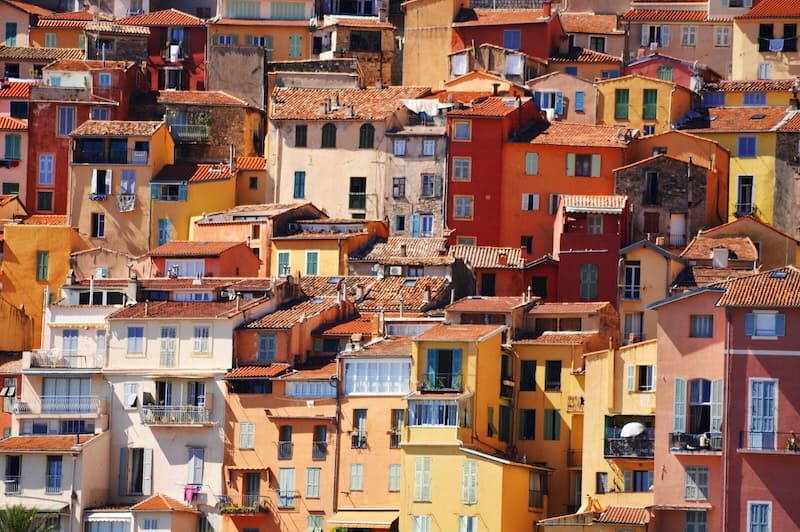
Menton is on the other side of Monaco, towards Italy, the last major stop before you reach the border. It does have a taste of the country next door, a French town with an Italian vibe.
When the sun hits it at a certain angle, Menton glows. I may be biased, because I also had the best lemon gelato of my life here (no surprise given that the town is famous for its lemons).
Things to do in Menton
- Head into the old town to breathe in the town's particular atmosphere.
- Visit the Basilica of the Archangel Michael, which looks as though it's been painted with lemons and sunshine.
- Visit not one, but two Jean Cocteau museums, either the original at Le Bastion, or the newer Severin Wunderman Collection (site in French).
- Stroll around the peaceful cemetery and quietly enjoy the stunning views out to the sea, reflecting on the beauty of your journey around one of France's most extraordinary regions.
THE BIGGER PICTURE
If you’re planning a broader trip to the south of France, these Riviera towns are often combined with inland Provence destinations such as Aix-en-Provence or Avignon. The Riviera works either as a standalone trip or as part of a longer journey across the south of France.
How to visit the French Riviera
If you want to visit several towns without constantly changing hotels, the simplest approach is to base yourself in one place - usually Nice - and take day trips by train or guided tour.
Another way of visiting the area is by car, which can provide a measure of freedom in the interior (but is less than convenient on small beachside roads at the height of the season).
The Riviera has an excellent public transportation network: you can take the train along most of the coast, and those towns not served by railway can be visited by bus.
Don't forget that if you're driving and need to rent a car, reserve one as soon as you have your dates, because the number of cars is limited, especially if you're hoping for an automatic transmission. Here's the availability and prices right now to help you get started.
A reliable guidebook is helpful both in planning your trip and as a reference when you're already at your destination. Fodor's Guide to Provence and the French Riviera will enhance your Riviera trip, but added bonus, it also covers the Luberon and the interior of Provence.
This overview of the top 10 towns in southern France is designed for the first-time visitor to the Riviera: these are the places I visited on my own trip. Of course I'll go back to deepen my explorations, but you have to start somewhere.
Overall, the French Riviera offers some of the most accessible and rewarding experiences in the south of France, whether you're looking for a relaxed beach vacation, a cultural getaway, or experience rubbing shoulders with the rich and famous. And... extraordinary natural beauty.
FAQ
Which town is best to stay in on the French Riviera?
Which town is best to stay in on the French Riviera?
For a first visit, Nice is usually the best base. It has the Riviera’s main airport, frequent trains along the coast, and easy bus connections to hilltop villages such as Èze and Saint-Paul-de-Vence. From Nice you can reach Antibes, Cannes, Monaco, and Menton in under an hour, making day trips simple even without a car.
Can you visit the French Riviera without a car?
Can you visit the French Riviera without a car?
Absolutely. The Riviera has one of France’s most convenient coastal train lines, running from Cannes to Menton with frequent stops in Nice, Antibes, Monaco, and Villefranche-sur-Mer. Buses reach many hilltop villages that trains do not serve. A car can be useful for inland Provence, but along the coast it is often easier to rely on trains and buses.
How many days do you need to visit the French Riviera?
How many days do you need to visit the French Riviera?
Between 4-6 days allows you to see the main Riviera towns without rushing. Many travelers spend two days exploring Nice, then take day trips to places such as Antibes, Cannes, Monaco, or Èze. If you also want beaches, museums, and hilltop villages inland, plan a full week.
Which French Riviera towns are easiest to visit from Nice?
Which French Riviera towns are easiest to visit from Nice?
Several towns are very easy day trips from Nice. Villefranche-sur-Mer is only minutes away by train or bus. Antibes and Cannes are under an hour by train. Monaco and Menton are also quick rail trips along the coast. Hilltop villages such as Èze or Saint-Paul-de-Vence are best reached by bus or guided tour.
What is the prettiest town on the French Riviera?
What is the prettiest town on the French Riviera?
This depends on what you enjoy. Èze offers dramatic cliff-top views over the Mediterranean. Villefranche-sur-Mer has one of the Riviera’s most beautiful harbors. Antibes combines beaches, a historic old town, and a lively market. Cannes offers luxury but also a lovely old town and delightful islands off the coast. To many, the Riviera’s charm won't be found in one town but in the contrast between them.
When is the best time to visit the French Riviera?
When is the best time to visit the French Riviera?
Spring and early autumn are ideal. July and August are the hottest – and most crowded, while winter may be uncrowded (and delightful) but many seasonal businesses are closed.
Is Monaco worth visiting on a Riviera trip?
Is Monaco worth visiting on a Riviera trip?
Yes, especially if it is your first time on the Riviera. Monaco offers the Prince’s Palace, the Oceanographic Museum, the famous Monte-Carlo casino, and the Formula 1 Grand Prix circuit. Even a half-day visit gives a sense of the principality’s distinctive mix of history and luxury.
Before you go...
Like many regions in France, southern France has its own culinary specialties, with a strong Mediterranean flavor. When you visit, make sure you try some of the French Riviera foods you'll find throughout the coast.
Did you enjoy this article? I'd love if you shared it!

🇫🇷

Bonjour! I’m Leyla. Born in Paris, now based in Eastern France between Lyon and Annecy.
After years abroad as a journalist and diplomat, I came home and began rediscovering France through its history and landscapes.
Offbeat France is for culturally curious travelers who want more than checklists. I write about castles, villages, museums, and landmarks — explaining France’s history while also showing you where to go and what to visit.
You’ll find context, backstories, but also practical advice, in equal measure.
My aim is simple: help you travel through France with historical insight, not guesswork.
If you think, “I didn’t know that,” I’m doing my job.
Learn more about me!
Read my Substack historical essays
🇫🇷
Booking.comWhat's New!


-
11 Memorable Day Trips From Nice On The French Riviera
Mar 16, 26 12:56 PM
Discover the best day trips from Nice on the French Riviera, including Monaco, Menton, Antibes, Èze and even Italy, all easy to reach by train or bus. -
Unique Food Festivals in France by Season
Feb 26, 26 07:49 AM
Discover unique food festivals in France where entire towns celebrate one ingredient, from truffles to oysters and garlic to chestnuts. -
Visiting Chambord Castle, France's Most Ambitious Renaissance Chateau
Feb 10, 26 05:24 AM
Explore Chambord Castle, France’s largest Renaissance château. Learn why it was built, how it was used, and what to look for when visiting today. -
Pierres Dorées: The Golden Stone Villages of The Beaujolais
Jan 05, 26 08:27 AM
The Golden Stones of Beaujolais: medieval villages built from iron-rich limestone that glows gold. A perfect day trip from Lyon for wine, hiking, and history. -
Riva Bella-Ouistreham: Complete Guide To 6 Best Things To See And Do
Dec 10, 25 02:05 PM
Visit Ouistreham-Riva Bella: explore D-Day sites, Pegasus Bridge, bunker museums, take the waters, and enjoy this charming Normandy port town.